Banner
Here's Where Your Backyard Was 300 Million Years Ago

We may use terms like "grounded" and terra firma to mean stability and consistency but geology...

Convergent Evolution Cheat Sheet Now 120 Million Years Old

One tenet of natural selection is a random walk of genes but nature may be more predictable than...

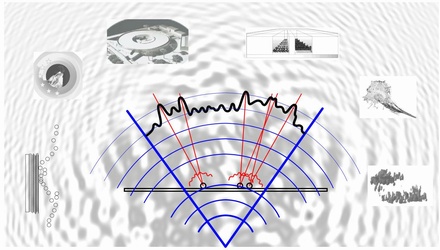
Synchrotron Could Shed Light On Exotic Dark Photons

There are many hypothetical particles proposed to explain dark matter and one idea to explore how...

The Pain Scale Is Broken But This May Fix It

Chronic pain is reported by over 20 percent of the global population but there is no scientific...

User picture.
News StaffRSS Feed of this column.

News Releases From All Over The World, Right To You... Read More »

Blogroll

While the origins of modern behavior will never be known, new discovery about  technological advancement among our ancestors in southern Africa some 70,000 years ago, has taken a step closer to firmly establishing Africa, and especially South Africa, as a primary hub for the early development of our behavior.

A new research paper is the first detailed summary of the time periods a group of international researchers have been studying in South Africa: namely the Still Bay techno-traditions (c. 75 000 – 70 000 years) and the Howiesons Poort techno-tradition (c. 65 000 – 60 000 years).

Scientists trying to investigate mechanisms at work in Alzheimer's and other neurodegenerative diseases have a new tool. A transgenic variety of zebrafish, which is transparent in the early stages of its life, called the "MitoFish" enables them to see how brain diseases disturb the transport of mitochondria, the power plants of the cell -  within individual neurons of living animals.

Economics messes everything up.  Just about the time we figure out a new way to make all boats rise, the boats don't play along.

So it goes with the Mediterranean diet, which went from food fad to inclusion in the UNESCO Olympus of the World heritage list and saw lots and lots of research grant money dumped into extolling its virtues, as kind of a cure-all for obesity.  And people listened.

Chemists have been using
the SPring-8 synchrotron at the Japan Synchrotron Radiation Research Institute
to get a detailed look at enzymes that could help power the green economy. 

One option for powering clean, environment friendly vehicles is to run them on hydrogen fuel rather than carbon-based fuels. Cheap catalysts to prepare hydrogen gas (H2) are a necessity if this future "hydrogen economy" is to become a reality.

Current man-made catalysts are based on platinum, a rare and precious metal. However, living cells contain enzymes called hydrogenases, based on the abundant metals nickel and iron, which can do the same job. Chemists are very interested in figuring out how these natural catalysts work and trying to mimic them.

If we will need climate-resistant corn and other food production plants sooner rather than later, applying a genetic-analysis method used to study and prioritize the genes in humans could improved the likelihood of finding critical genes in food production plants.

These genes control quantitate traits in plants, such as how the plants grow and when they flower. This method can be used to study how food production plants respond to drought, heat and other factors, giving scientists a greater chance at improving crops' resistances to harsh weather and environments.

The combined power of ESA's Herschel space observatory and the ground-based Keck telescopes mean hundreds of previously unseen starburst galaxies have been characterized, revealing extraordinary high star-formation rates across the history of the Universe. Starburst galaxies give birth to hundreds of solar masses' worth of stars each year in short-lived but intense events. By comparison, our own Milky Way Galaxy produces the equivalent of only one Sun-like star per year, on average.