Banner
Wavelengths Of Light Are Why CO2 Cools The Upper Atmosphere But Warms Earth

There are concerns about projected warming on the Earth’s surface and in the lower atmosphere...

Here's Where Your Backyard Was 300 Million Years Ago

We may use terms like "grounded" and terra firma to mean stability and consistency but geology...

Convergent Evolution Cheat Sheet Now 120 Million Years Old

One tenet of natural selection is a random walk of genes but nature may be more predictable than...

Synchrotron Could Shed Light On Exotic Dark Photons

There are many hypothetical particles proposed to explain dark matter and one idea to explore how...

User picture.
News StaffRSS Feed of this column.

News Releases From All Over The World, Right To You... Read More »

Blogroll
The dynamics behind signal transmission in the brain are extremely chaotic. 

The brain codes information in the form of electrical pulses, known as spikes. Each of the brain's approximately 100 billion interconnected neurons acts as both a receiver and transmitter: these bundle all incoming electrical pulses and, under certain circumstances, forward a pulse of their own to their neighbours. In this way, each piece of information processed by the brain generates its own activity pattern. This indicates which neuron sent an impulse to its neighbors: in other words, which neuron was active, and when. Therefore, the activity pattern is a kind of communication protocol that records the exchange of information between neurons.
About 250 million years about 70 percent of life on land was wiped out.   A new study says it has evidence to support massive volcanic eruptions that had broad impact on the global oceans and contributed to the extinction.

Researchers at the University of Calgary believe they have discovered evidence for the hypothesis that volcanic eruptions burnt significant volumes of coal, producing ash clouds that had broad impact and was a direct factor in the late Permian extinction.
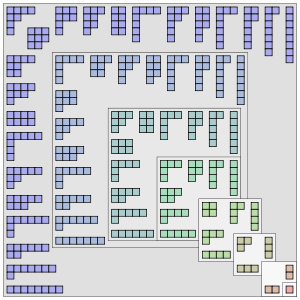
For hundreds of years, mathematicians even as great as Leonhard Euler(1) have tried to make sense of partition numbers, the basis for adding and counting.  Progress has been made but there has never been a full theory to explain partitions.   Answers have always led to more questions.

Basically, partitions are not considered by some to be part of number theory at all but to keep it simple for now, in number theory, a partition of a positive integer (n) is a way of writing n as a sum of positive integers.    

Here is an example from the Classic Encyclopedia:
Microbiologists have discovered a central metabolic pathway in microorganisms and the microorganisms use this pathway to survive under extremely salty conditions, like the Dead Sea.

The Dead Sea is not dead, in the science sense.  Many microorganisms which inhabit it belong to a group of salt-tolerant archaea (from the Greek archaĩos, from which we also get"archaic“).   Archaea are among the most primordial life forms on earth and have managed to survive in extreme environments. 
For robots to get 'smart', they have to learn to adapt.   University of Vermont roboticist Josh Bongard has created both simulated and actual robots that, like tadpoles becoming frogs, change their body forms while learning how to walk.

Over generations, his simulated robots also 'evolved', spending less time in infant tadpole-like forms and more time in adult four-legged forms.

These evolving populations of robots were able to learn to walk more rapidly than those with fixed body forms and, in their final form, the changing robots had developed a sturdier gait,  better able to withstand being knocked with a stick, than the ones that had learned to walk using upright legs from the beginning.

Was the fall of the Roman Empire or, as often predicted, the coming fall of the American Empire, numerically predictable?

It is, according to research led by Sergey Gavrilets, associate director for scientific activities at the National Institute for Mathematical and Biological Synthesis and a professor at the University of Tennessee-Knoxville published in Cliodynamics: The Journal of Theoretical and Mathematical History.