Banner
Here's Where Your Backyard Was 300 Million Years Ago

We may use terms like "grounded" and terra firma to mean stability and consistency but geology...

Convergent Evolution Cheat Sheet Now 120 Million Years Old

One tenet of natural selection is a random walk of genes but nature may be more predictable than...

Synchrotron Could Shed Light On Exotic Dark Photons

There are many hypothetical particles proposed to explain dark matter and one idea to explore how...

The Pain Scale Is Broken But This May Fix It

Chronic pain is reported by over 20 percent of the global population but there is no scientific...

User picture.
News StaffRSS Feed of this column.

News Releases From All Over The World, Right To You... Read More »

Blogroll
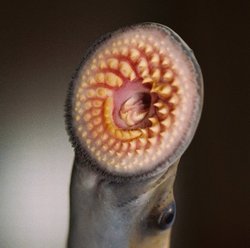
Researchers writing in Proceedings of the National Academy of Sciences say they have discovered that the sea lamprey, which emerged from jawless fish first appearing 500 million years ago, dramatically remodels its genome. Shortly after a fertilized lamprey egg divides into several cells, the growing embryo discards millions of units of its DNA - one fifth of its genome. 

Mayo Clinic investigators say a proof-of-concept study has demonstrated that induced pluripotent stem (iPS) cells can be used to treat heart disease.  iPS cells are stem cells converted from adult stem cells so don't involve the ethical concerns involved in using human embryonic stem cells.

In their study, the researchers reprogrammed ordinary fibroblasts, cells that contribute to scars such as those resulting from a heart attack, converting them into stem cells that fix heart damage caused by infarction.

This is the first application of iPS-based technology for heart disease therapy. Previously iPS cells have been used on only three other disease models: Parkinson's disease, sickle cell anemia and hemophilia A.

Neanderthals were stoutly-built and human-like and lived at the same time and in the same areas as some modern humans.  But they went extinct.

Anthropologists have tried to solve the mystery of Neanderthal's fate since the first fossils were discovered in the small valley of the river Düssel called Neandertal, about 7 miles east of Düsseldorf in Germany.

Speculation is they they inter-bred with modern humans or failed to compete for food or resources  or perhaps were even hunted to extinction by humans.
Stars don't die without being noticed and sometimes the results are pretty spectacular.  At the end of its life cycle, a star begins to collapse and throws new material into space, which eventually becomes incorporated into new planets and life.

How evolution can bridge the gap between two discrete physiological states is a question that puzzles biologists and therefore delights critics.

Most evolutionary changes happen in tiny increments; an elephant grows a little larger, a giraffe's neck a little longer and if those tiny changes prove advantageous there is a better chance of passing them to the next generation, which might then add its own mutations until you may end up with a huge pachyderm or the stretched neck of a giraffe.

But when it comes to traits like the number of wings on an insect or limbs on a primate there is no apparent middle ground. How are these sorts of large evolutionary leaps made?

Ever say someone's actions were 'in their genes'?   That's not only a simplification, according to a group of University of Iowa scientists, scientists who have debated nature versus nurture for centuries are guilty of 'intellectual laziness.'

They support evolution but not the idea that genes are a one-way path to specific traits and behaviors. Instead, they argue that development involves a complex system in which genes and environmental factors constantly interact.