Banner
Here's Where Your Backyard Was 300 Million Years Ago

We may use terms like "grounded" and terra firma to mean stability and consistency but geology...

Convergent Evolution Cheat Sheet Now 120 Million Years Old

One tenet of natural selection is a random walk of genes but nature may be more predictable than...

Synchrotron Could Shed Light On Exotic Dark Photons

There are many hypothetical particles proposed to explain dark matter and one idea to explore how...

The Pain Scale Is Broken But This May Fix It

Chronic pain is reported by over 20 percent of the global population but there is no scientific...

User picture.
News StaffRSS Feed of this column.

News Releases From All Over The World, Right To You... Read More »

Blogroll
Revered in India as "holy powder", the marigold-colored spice known as turmeric has been used for centuries to treat wounds, infections and other health problems. In recent years, research into the healing powers of turmeric's main ingredient, curcumin, has increased as scientists have examined claims of antioxidant, anti-cancer, antibiotic, antiviral and other properties, though little has been learned about exactly how curcumin works inside the body.

University of Michigan researchers led by Ayyalusamy Ramamoorthy now say that curcumin acts as a disciplinarian, inserting itself into cell membranes and making them more orderly, a move that improves cells' resistance to infection and malignancy. 

During the television program Ulysses which aired in Italy on Saturday the 28th of February, the well-known scientific divulgator Piero Angela stated that a secret drawing, a youthful self-portrait of Leonardo da Vinci, had just been discovered. Actually, the Leonardo3 ( http://www.leonardo3.net) research center in Milan, Italy, had published its own edition of the Codex of Flight (book interactive software) in the October of 2007: this work included the digital restoration of page 10, revealing the underlying portrait. The same center had also created a 3D reconstruction of the image.

At the beginning of 2007, within the Leonardo3 research center, Massimiliano Lisa (the center's President) had noted the resemblance between the Self-Portrait and the sanguine at page 10.

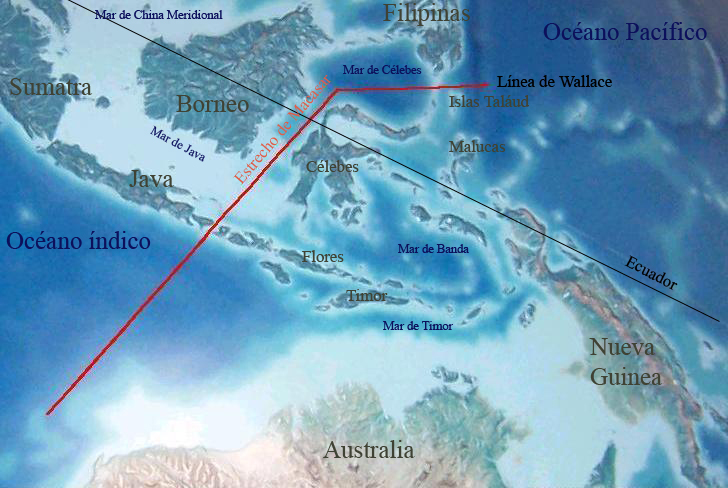
The Wallace Line is called such because when Alfred Russel Wallace made his way to the East Indies to tackle the secrets of biology, he found there was a 'line' in the Malay Archipelago that divides Indonesia into two parts and west of it the species were Asian while to the east they were more Australian.

Since the distance is short in places, Bali and Lombok are only about 35 km apart, it was a prime example of species distinction and biogeography and he wrote on it in The Malay Archipelago.

The abrupt switch in the kinds of mammals found along the Malay Peninsula, from mainland species to island species, in the absence of any daunting geographical barrier has fascinated scientists since then.
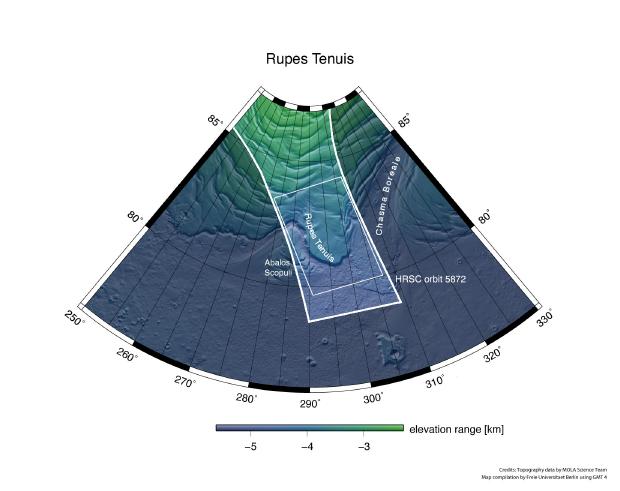
The snow-laden region of Rupes Tenuis on the martian north pole got some images courtesy of ESA’s Mars Express orbiter. The images are centred around 81° north and 297° east and have a ground resolution of 41 m/pixel. They cover an area of about 44 000 km2, almost as large as the Netherlands.

Rupes Tenuis is located at the southern edge of the martian north polar cap, approximately 5500 km northeast of the Tharsis volcanic region.

At present, polar caps contain the largest water reservoir on the Red Planet. Recent data from the Mars Advanced Radar for Subsurface and Ionosphere Sounding (MARSIS) on board Mars Express has revealed that both polar ice caps are 3.5 km thick.
Artemisinin is the most powerful anti-malaria drug in use today and it commonly obtained by extracting the drug from Artemsisia annua, the sweet wormwood tree.    
When threatened, many animals release chemicals as a warning signal to members of their own species, who in turn react to the signals and take action. Research by Rice University psychologist Denise Chen suggests a similar phenomenon occurs in humans. Given that more than one sense is typically involved when humans perceive information, Chen studied whether the smell of fear facilitates humans' other stronger senses.

Chen and graduate student Wen Zhou collected "fearful sweat" samples from male volunteers. The volunteers kept gauze pads in their armpits while they were shown films that dealt with topics known to inspire fear.