Banner
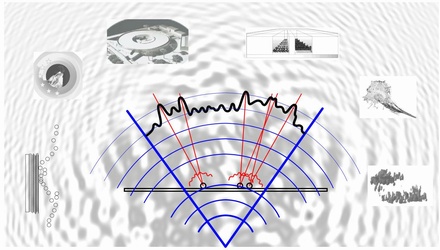
Synchrotron Could Shed Light On Exotic Dark Photons

There are many hypothetical particles proposed to explain dark matter and one idea to explore how...

The Pain Scale Is Broken But This May Fix It

Chronic pain is reported by over 20 percent of the global population but there is no scientific...

Study Links Antidepressants, Beta-blockers and Statins To Increased Autism Risk

An analysis of 6.14 million maternal-child health records  has linked prescription medications...

Pilot Study: Fibromyalgia Fatigue Improved By TENS Therapy

Fibromyalgia is the term for a poorly-understood condition where people experience pain and fatigue...

User picture.
News StaffRSS Feed of this column.

News Releases From All Over The World, Right To You... Read More »

Blogroll
Researchers at the UC Davis M.I.N.D. Institute have found that infants later diagnosed with autism exhibited unusual exploration of objects long before being diagnosed. Studying a group of children at high risk for developing autism, the researchers found that those eventually diagnosed with the disorder were more likely to spin, repetitively rotate, stare at and look out of the corners of their eyes at simple objects, including a baby bottle and a rattle, as early as 12 months of age.

These findings could help pediatricians diagnose and treat autism earlier, reducing some of the social and educational challenges associated with the disorder.
Computers are getting smaller and smaller and as hand-held devices like mobile phones and music players get more powerful the race is on to develop memory formats that can satisfy the ever-growing demand for information storage on those tiny formats.

Current memory technologies fall into three separate groups: dynamic random access memory (DRAM), which is the cheapest method; static random access memory (SRAM), which is the fastest memory — but both DRAM and SRAM require an external power supply to retain data; and flash memory, which is non-volatile — it does not need a power supply to retain data, but has slower read-write cycles than DRAM.
Listening to your favorite music may be good for your cardiovascular system. Researchers at the University of Maryland School of Medicine in Baltimore have shown for the first time that the emotions aroused by joyful music have a healthy effect on blood vessel function
Illustrating the power of submillimetre-wavelength astronomy, an APEX image reveals how an expanding bubble of ionised gas about ten light-years across is causing the surrounding material to collapse into dense clumps that are the birthplaces of new stars. Submillimetre light is the key to revealing some of the coldest material in the Universe, such as these cold, dense clouds.
A study in rats shows that exposure to a high-fat diet during pregnancy produces permanent changes in the offspring's brain that lead to overeating and obesity early in life, according to new research by Rockefeller University scientists. This surprising finding, reported in the Nov. 12 issue of the Journal of Neuroscience, provides a key step toward understanding mechanisms of fetal programming involving the production of new brain cells that may help explain the increased prevalence of childhood obesity during the last 30 years.
A reaction essential for the biosynthesis of hemoglobin and chlorophyll, when catalyzed by the enzyme uroporphyrinogen decarboxylase, causes production in cells to be "increased by a staggering factor, one that's equivalent to the difference between the diameter of a bacterial cell and the distance from the Earth to the sun."

Without the enzyme?  2.3 billion years.  

All biological reactions within human cells depend on enzymes. Their power as catalysts enables biological reactions to occur usually in milliseconds. But how slowly would these reactions proceed spontaneously, in the absence of enzymes – minutes, hours, days? And why even pose the question?