Banner
Synchrotron Could Shed Light On Exotic Dark Photons

There are many hypothetical particles proposed to explain dark matter and one idea to explore how...

The Pain Scale Is Broken But This May Fix It

Chronic pain is reported by over 20 percent of the global population but there is no scientific...
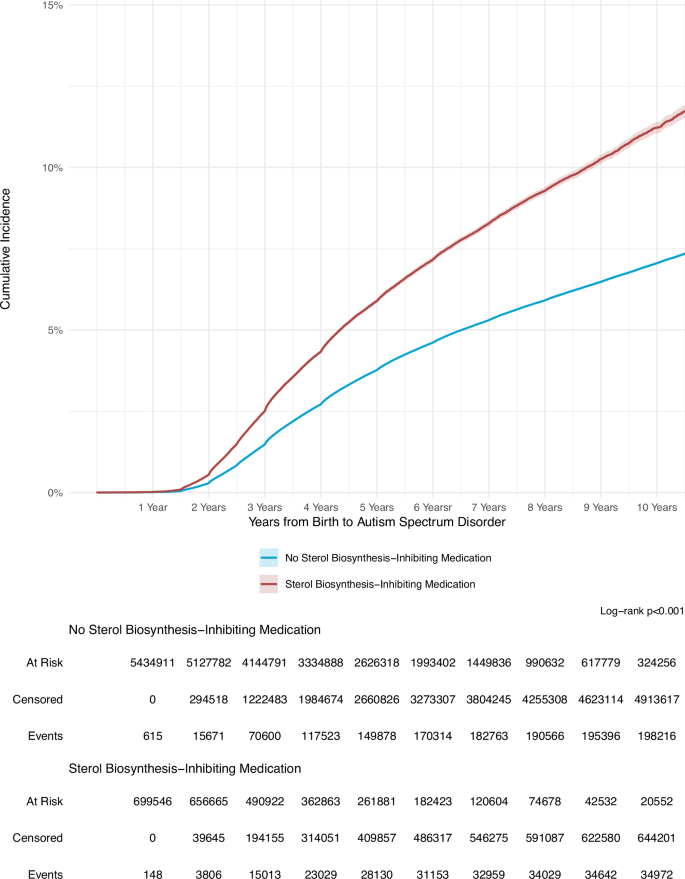
Study Links Antidepressants, Beta-blockers and Statins To Increased Autism Risk

An analysis of 6.14 million maternal-child health records  has linked prescription medications...

Pilot Study: Fibromyalgia Fatigue Improved By TENS Therapy

Fibromyalgia is the term for a poorly-understood condition where people experience pain and fatigue...

User picture.
News StaffRSS Feed of this column.

News Releases From All Over The World, Right To You... Read More »

Blogroll

If you're riding a bike at Copenhagen's November 2009 U.N. Climate Change Conference, you may be able to take advantage of some new 'Smart Biking' techology created by MIT - it will help you make friends with people you pass and even tells you how much CO2 you didn't use by taking a bike(1).

MIT researchers unveiled the project today called Smart Biking, aimed at transforming bicycle use in Denmark’s largest city, promoting urban sustainability and building new connections between the city’s cyclists.

The project utilizes a self-organizing 'smart-tag' system that will allow the city’s residents to exchange basic information and share their relative positioning with each other.

Hospital for Special Surgery researchers writing in the Journal of Clinical Investigation say that statins may be able to prevent miscarriages in women who are suffering from pregnancy complications caused by antiphospholipid syndrome (APS), according to a study in mice. In this autoimmune syndrome, the body produces antibodies directed at phospholipids, the main components of cell membranes.

In low risk pregnancies, APS is associated with a nine-fold increase in miscarriage. In high-risk pregnancies (women who have had at least three prior losses), APS is associated with a 90 percent risk of miscarriage.

Scientists have confirmed the second-ever case of a 'virgin birth' in a shark, further confirming that female sharks can reproduce without mating and that many female sharks may have this incredible capacity.

Lead author Dr. Demian Chapman, shark scientist with the Institute for Ocean Conservation Science at Stony Brook University, Beth Firchau of the Virginia Aquarium & Marine Science Center, and Dr. Mahmood Shivji, Director of the Guy Harvey Research Institute and Professor at Nova Southeastern University in Florida, have proven through DNA testing that the offspring of a female blacktip shark named 'Tidbit' contained no genetic material from a father.

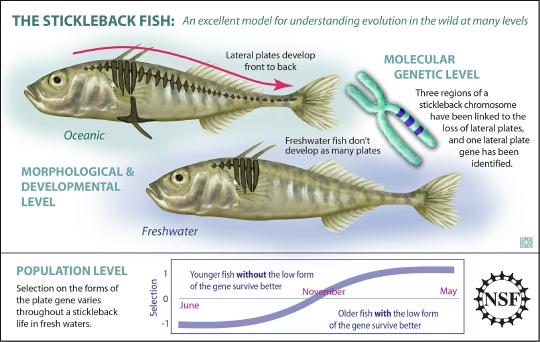
The stickleback fish, Gasterosteus aculeatus, is one of the most thoroughly studied organisms in the wild, and has been a particularly useful model for understanding variation in physiology, behavior, life history and morphology caused by different ecological situations in the wild.

On biological levels from molecular and genetic to developmental and morphological, and finally ending with the population level, it has proven far more complex than even imagined.

Studies of stickleback have provided us with a much better understanding of how organisms cope with new environmental conditions, first through acclimation over an individual's lifespan, and subsequently through adaptation of population via changes in gene form (allele) frequencies.

Given the rapidly changing global environment, this research not only provides insight into evolutionary processes, but is of practical importance in understanding how organisms will adapt to a changing world.

In a seminar co-organized by Stanford University and the American Institute of Mathematics, Kannam Soundararajan, Professor of Mathematics, announced that he and Roman Holowinsky have proven a significant version of the quantum unique ergodicity (QUE) conjecture.

The motivation behind the problem is to understand how waves are influenced by the geometry of their enclosure. Imagine sound waves in a concert hall. In a well-designed concert hall you can hear every note from every seat. The sound waves spread out uniformly and evenly. At the opposite extreme are "whispering galleries" where sound concentrates in a small area.

The mathematical world is populated by all kinds of shapes, some of which are easy to picture, like spheres and donuts, and others which are constructed from abstract mathematics. All of these shapes have waves associated with them. Soundararajan and Holowinsky showed that for certain shapes that come from number theory, the waves always spread out evenly. For these shapes there are no "whispering galleries."

This week, Astronomy & Astrophysics is publishing new observations with AMBER/VLTI of the gas component in the vicinity of young stars. An international team of astronomers led by E. Tatulli (Grenoble, France) and S. Kraus (Bonn, Germany) [1] used the VLT near-infrared interferometer, coupled with spectroscopy, to probe the gaseous environment of Herbig Ae/Be stars. These are young stars of intermediate mass (approximately 2 to 10 solar masses), which are still contracting and often show strong line emissions.