Banner
Pilot Study: Fibromyalgia Fatigue Improved By TENS Therapy

Fibromyalgia is the term for a poorly-understood condition where people experience pain and fatigue...

High Meat Consumption Linked To Lower Dementia Risk

Older people who eat large amounts of meat have a lower risk of dementia and cognitive decline...

Long Before The Inca Colonized Peru, Natives Had A Thriving Trade Network

A new DNA analysis reveals that long before the Incan Empire took over Peru, animals were...

Mesolithic People Had Meals With More Tradition Than You Thought

The common imagery of prehistoric people is either rooting through dirt for grubs and picking berries...

User picture.
News StaffRSS Feed of this column.

News Releases From All Over The World, Right To You... Read More »

Blogroll
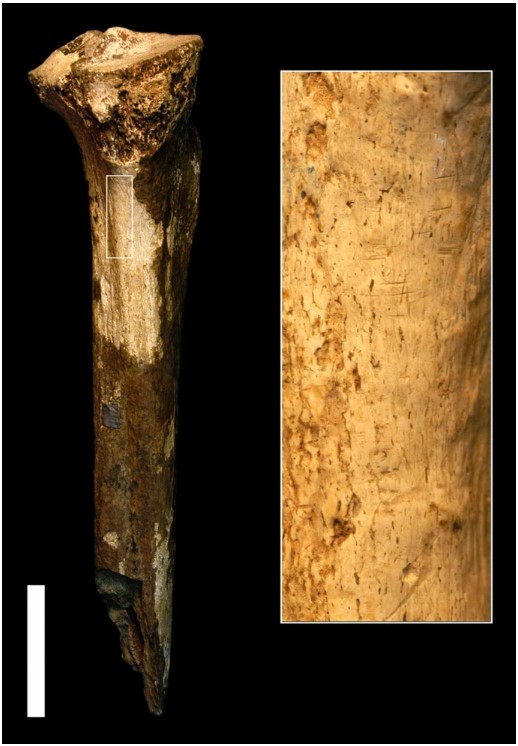
Nearly 3 million years ago, early human ancestors used some of the oldest stone tools ever found to butcher hippos and pound plant material, and for half that time they were butchering each other - a new paper says 1.45 million years of killing each other for food.
The brain and the digestive tract are in constant communication, relaying signals that help to control feeding, and the implication that this communication network may also influence our mental state - as if "hangry" is science any more than a child getting hyperactive if they eat a piece of candy is - means it has been linked to everything from autism to Parkinson's disease.

Because there is very little science, it is mostly suggestion used to sell supplements and yogurt that makes you poop. A new technology hopes to introduce data to brain-gut mysticism. 
Stars die in lots of ways. Most low-mass stars like our Sun shed their outer layers and eventually fade to white dwarf stars. Larger ones prefer to burn out rather than fade away so they go supernova and create ultradense objects like neutron stars and black holes. When two stellar remnants form a binary system, they also can collide. 

Yet a new paper shows there may be a fourth way - a collision where non-binary stars in dense regions can be forced together. The work used a long-duration gamma-ray burst with the Gemini South telescope in Chile.
If you have traveled, you have seen someone who is a frequent traveler be offered an upgrade but decline because they are with someone else and want to stay together. This is rare in other species. 

Yet not all experiences get equal treatment - if a parent is traveling with a child they may take the upgrade to give it to the child - and a new paper sought to understand how consumers make trade-offs between experience quality and togetherness. The authors write that consumers prioritize physical togetherness with relationship partners over opportunities that would improve an experience in real time.
Cooperative breeders, where we count on the help of others to raise offspring,is not unique to humans. It may only appear that way.

A new paper amassed data from 90 human populations comprising 80,223 individuals from many parts of the world — both historical and contemporary. They compared the records for men and women to lifetime data for 45 different nonhuman, free-ranging mammals. The argue that humans are a non-exceptional species of mammal. Says first author Cody Ross, PhD, anthropologist at the Max Planck Institute; “we can quite successfully model reproductive inequality in humans and nonhumans using the same predictors.”
A new demography paper argues that there is a reason more black women have voted for Democrats than men have since 1980 - more black men are in jail.