Banner
Pilot Study: Fibromyalgia Fatigue Improved By TENS Therapy

Fibromyalgia is the term for a poorly-understood condition where people experience pain and fatigue...

High Meat Consumption Linked To Lower Dementia Risk

Older people who eat large amounts of meat have a lower risk of dementia and cognitive decline...

Long Before The Inca Colonized Peru, Natives Had A Thriving Trade Network

A new DNA analysis reveals that long before the Incan Empire took over Peru, animals were...

Mesolithic People Had Meals With More Tradition Than You Thought

The common imagery of prehistoric people is either rooting through dirt for grubs and picking berries...

User picture.
News StaffRSS Feed of this column.

News Releases From All Over The World, Right To You... Read More »

Blogroll

CRISPR-Cas9 is the go-to technique for knocking out genes in human cell lines to discover what the genes do, but the efficiency with which it disables genes can vary immensely.

University of California, Berkeley researchers have now found a way to boost the efficiency with which CRISPR-Cas9 cuts and disables genes up to fivefold, in most types of human cells, making it easler to create and study knockout cell lines and, potentially, disable a mutant gene as a form of human therapy.

Scientists are constantly discovering new genes or the proteins they code for, but it's much harder to figure out their role in the body or in disease. Key to discovering this role is disabling the gene to see what happens when it's removed.

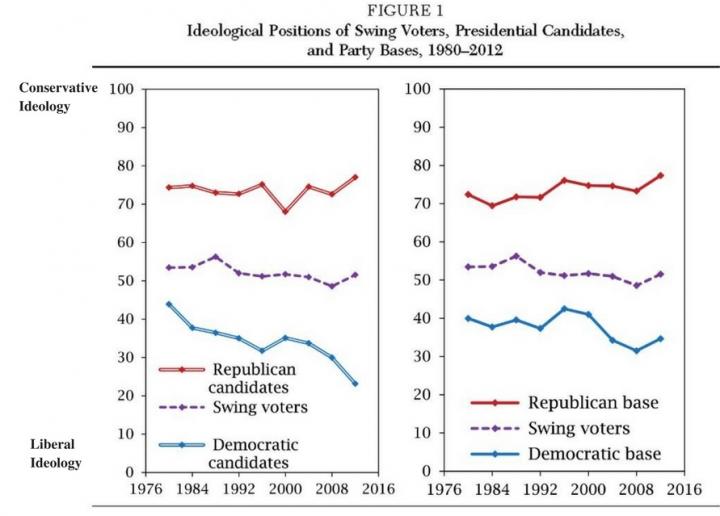
In 2012, Republican Presidential candidate Mitt Romney was criticized for speaking an uncomfortable truth; 47 percent of voters are voting for the same party regardless of the actual policies. In academic science, the turnout will be huge for Democratic nominee Hillary Clinton because her actual science policies are irrelevant. Her stance on science is irrelevant because she does not need to cater to academics, she knows they are never voting for a Republican. 

Pavlov's famous behavioral experiment involved a dog. Dogs want food. Maybe not so clear, according to a paper in Social, Cognitive and Affective Neuroscience.

Given the choice, many dogs prefer praise from their owners over food, suggests the work, which combines brain-imaging data with behavioral experiments to explore canine reward preferences.

In the United States, there used to be a belief that the next generation would always have it better. No more. A lingering economic malaise and non-stop apocalyptic jingo-ism about chemicals, food, medicine and the environment instead have young people suffering from pessimistic green fatigue.

Does free health care or terrific medical treatment make citizens unwilling to change their lifestyle? There is a valid argument it is true. HIV has plummeted among every demographic except gay men, who have been found to engage in risky behavior because treatment is now so good. And free health care may be causing Canadians to not engage in personal responsibility in their lifestyles. 

According to a new study in PLOS Medicine, poor diet, smoking, and unwillingness to exercise contribute to about 50 percent of deaths in Canada.

In December 2006, the USA regulated sodium permanganate, a chemical essential to the manufacture of cocaine. In March 2007, Mexico, the USA's primary source for methamphetamine, closed a chemical company accused of illicitly importing more than 60 tons of pseudoephedrine, a methamphetamine precursor chemical. A study published today by the scientific journal Addiction found that those two events were associated with large, extended reductions in cocaine users and methamphetamine users in the USA -- impacts that have lasted approximately eight years so far.