Banner
Pilot Study: Fibromyalgia Fatigue Improved By TENS Therapy

Fibromyalgia is the term for a poorly-understood condition where people experience pain and fatigue...

High Meat Consumption Linked To Lower Dementia Risk

Older people who eat large amounts of meat have a lower risk of dementia and cognitive decline...

Long Before The Inca Colonized Peru, Natives Had A Thriving Trade Network

A new DNA analysis reveals that long before the Incan Empire took over Peru, animals were...

Mesolithic People Had Meals With More Tradition Than You Thought

The common imagery of prehistoric people is either rooting through dirt for grubs and picking berries...

User picture.
News StaffRSS Feed of this column.

News Releases From All Over The World, Right To You... Read More »

Blogroll

CERN Director General Robert Aymar announced that the Large Hadron Collider (LHC) will start up in May 2008 despite the fact that a low-energy run originally scheduled for this year has been dropped due to delays, coupled with the failure in March of a pressure test in one of the machine’s components.

In that instance, a magnet assembly known as the inner triplet, provided to CERN as part of the contribution of the US to the LHC project, failed a pressure test. A repair has been identified and is currently being implemented.

The LHC is a scientific instrument of unprecedented complexity, and at 27 kilometers in circumference, is the world’s largest superconducting installation.

Researchers at the University of Pennsylvania School of Medicine have identified proteins in the rod and cones of the eye that could lead to the discovery of the genetic causes of a host of inherited eye diseases. The investigators hope to gain a clearer understanding of what goes wrong at the most basic level in these diseases that cause blindness and other disorders.

Specifically, they have identified and measured the types and amounts of proteins in the light-sensing parts of the eye’s retina. These light-sensitive structures, called photoreceptor sensory cilia, enable the rod and cone cells of the retina to detect light.

Our brain consists of billions of nerve cells enabling to learn, remember and reason. Every time we think and experience, touch, smell or fear, millions of neurons in our brain becomes active.

These nerve cells communicate with each other by chemical and electrical impulses to compute incoming sensory information and integrate it via distinct brain regions.

A bee’s favorite color can help it to find more food from the flowers in their environment, according to new research from Queen Mary, University of London.

Dr Nigel Raine and Professor Lars Chittka from Queen Mary’s School of Biological and Chemical Sciences studied nine bumblebee (Bombus terrestris) colonies from southern Germany, and found that the colonies which favored purple blooms were more successful foragers.

Dr Raine explains: “In the area we studied, violet flowers produced the most nectar - far more than the next most rewarding flower color (blue).

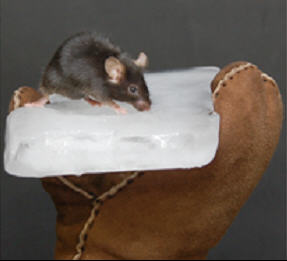
Freeing knotted shoelaces with fingers that are frozen stiff is extremely difficult and can even be painful. The reason that sensitivity and dexterity are poor is that both nerves and muscles perform their tasks reluctantly when they are cold.

Nevertheless ice-cold fingers ache and do so all the more in response to the lightest of knocks or squeezing. As unpleasant as this is, it serves as protection against frost lesion. The question of how pain can still be registered despite the otherwise hampered function during cooling has recently been explained.

They have demonstrated that the endings of nerves normally involved in signaling pain are equipped with a frost tolerant igniter of nerve impulses.

LaCie has announced it has boosted the capacity of its d2 SAFE Hard Drive to 1TB in a compact 2 x 6 x 7in casing.

The d2 SAFE hard drive is designed to keep intruders away from private data, and comes equipped with a biometric sensor, 128-bit AES hardware encryption technology, and chain lock port for maximum protection against unauthorized use.

Up to 10 fingerprints (five users with minimum two prints each) can be registered with personal and customized access privileges such as full access to the disk (read/write) or read-only. Once registered, a simple finger swipe locks and unlocks the disk.

According to LaCie, 1TB capacity allows users to store millions of documents and presentations, 333,000 high-resolution photos, 250,000 MP3s, or 358 movies.