Banner
Pilot Study: Fibromyalgia Fatigue Improved By TENS Therapy

Fibromyalgia is the term for a poorly-understood condition where people experience pain and fatigue...

High Meat Consumption Linked To Lower Dementia Risk

Older people who eat large amounts of meat have a lower risk of dementia and cognitive decline...

Long Before The Inca Colonized Peru, Natives Had A Thriving Trade Network

A new DNA analysis reveals that long before the Incan Empire took over Peru, animals were...

Mesolithic People Had Meals With More Tradition Than You Thought

The common imagery of prehistoric people is either rooting through dirt for grubs and picking berries...

User picture.
News StaffRSS Feed of this column.

News Releases From All Over The World, Right To You... Read More »

Blogroll

Size matters. At least, it does to an alpine ibex.

According to a team of international researchers, mature, male alpine ibex demonstrate a correlation between horn growth and genetic diversity. Past research studies have shown that greater genetic diversity correlates with a greater chance of survival.

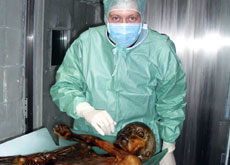
An Italian-Swiss research team, including Dr. Frank Rühli of the Institute of Anatomy at the University of Zurich in Switzerland proved the cause of death of the Iceman (“Ötzi,” 3300 BC) by modern X-ray-based technology. A lesion of a close-to-the-shoulder artery has been found thanks to a CT scan or multislice computed tomography, finally clarifying the world-famous glacier mummy’s cause of death.


The cause of death was ascertained without an autopsy (Zurich University)

The global warming debate has focused on carbon dioxide emissions, but scientists at UC Irvine have determined that a lesser-known mechanism -- dirty snow -- can explain one-third or more of the Arctic warming primarily attributed to greenhouse gases.

Snow becomes dirty when soot from tailpipes, smoke stacks and forest fires enters the atmosphere and falls to the ground. Soot-infused snow is darker than natural snow. Dark surfaces absorb sunlight and cause warming, while bright surfaces reflect heat back into space and cause cooling.


Annual mean temperature change due to dirty snow in degrees Celsius

Researchers at the Abramson Family Cancer Research Institute of the University of Pennsylvania have found that deleting a gene important in embryo development leads to premature aging and loss of stem cell reservoirs in adult mice. This gene, ATR, is essential for the body’s response to damaged DNA, and mutations in proteins in the DNA damage response underlie certain types of cancer and other disorders in humans.


ATR deletion leads to trabecular (left; the spongy inner cavity of long bones) and cortical (right; dense surface areas) bone loss. Credit: Ruzankina et al., University of Pennsylvania School of Medicine; Cell Stem Cell

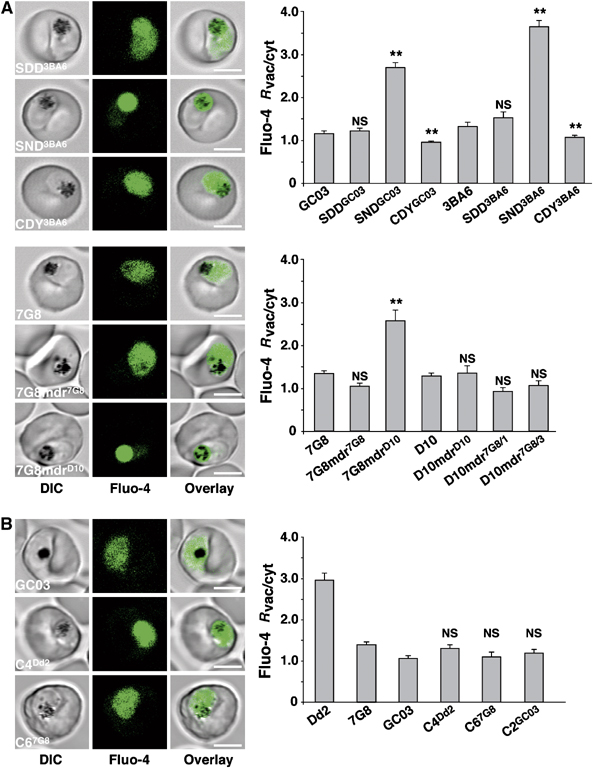
Researchers at Georgetown University Medical Center say they are moving closer to understanding why the most lethal form of human malaria has become resistant to drug treatment in the past three decades. They have been able to artificially construct, and then express in yeast, a protozoan gene that contributes to such resistance. And it was no small feat.

The gene they laboriously constructed over a two-year period is believed to be the largest synthetic one ever built, and it successfully produces large quantities of the encoded protein, whose function can now be easily studied.


European Molecular Biology Organization

A study comparing more genetic markers in the DNA of people with and without Alzheimer’s disease than ever before has enabled researchers to identify a common gene that appears to increase a person’s risk for developing Alzheimer’s disease.

The finding suggests that the gene — called GAB2 — modifies an individual’s risk when associated with other genes, including APOE4. The study results appear in the June 7 issue of the prestigious peer-reviewed journal, Neuron.