Banner
Pilot Study: Fibromyalgia Fatigue Improved By TENS Therapy

Fibromyalgia is the term for a poorly-understood condition where people experience pain and fatigue...

High Meat Consumption Linked To Lower Dementia Risk

Older people who eat large amounts of meat have a lower risk of dementia and cognitive decline...

Long Before The Inca Colonized Peru, Natives Had A Thriving Trade Network

A new DNA analysis reveals that long before the Incan Empire took over Peru, animals were...

Mesolithic People Had Meals With More Tradition Than You Thought

The common imagery of prehistoric people is either rooting through dirt for grubs and picking berries...

User picture.
News StaffRSS Feed of this column.

News Releases From All Over The World, Right To You... Read More »

Blogroll

A plateau on Mars known as Home Plate shows evidence of long-past explosive volcanic activity, say scientists on NASA's Mars Exploration Rover mission. And data collected during the rover Spirit's initial pass across the 90-meter (295 feet) wide plateau also supports earlier findings indicating that water once existed at or beneath the planet's surface.

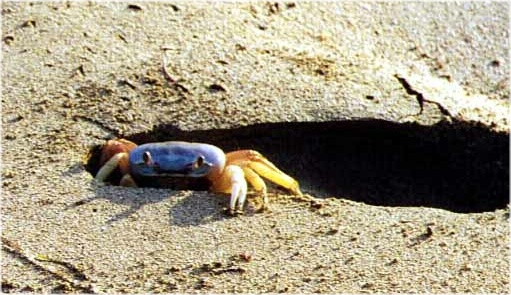
In suspicious environments, like bars and math study groups, females are at greater risk. Scientists from Seoul National University, in Korea, and the Smithsonian Tropical Research Institute in Panama have recently done a study to determine how females avoid the bad males while assessing the good ones.

The males peacock’s showy plumage, for example, is thought to attract females with the promise of better offspring. Showy male peacocks also escape from predators despite their annoyingly conspicuous ornaments and behavior — proof of their superiority.


Need a place to hide? I have a big claw

Call it sperm competition.

According to a study appearing in Current Directions in Psychological Science, sexual characteristics exhibited by human males indicate that men have evolved to deliver their sperm more effectively to females who have multiple partners to choose from.

Temple University School of Medicine researchers have developed a new biosensor that sniffs out explosives and could one day be used to detect landmines and deadly agents, such as sarin gas.

To create the biosensor, Danny Dhanasekaran and colleagues genetically engineered a yeast strain with mammalian (rat) olfactory signaling machinery and genetically linked it to the expression of green fluorescent protein. Into these yeast cells, they cloned individual rat olfactory receptors. When the olfactory receptor "smells" the odor of DNT, an ingredient in the explosive TNT, the biosensor turns fluorescent green. The research team is the first to identify, clone and sequence this novel olfactory receptor.

In the past, the newborns' umbilical cord was not clamped right after birth, thus allowing the blood flow to stop naturally. This practice, known as "late clamping", was replaced by "early clamping", that is, cutting the cord immediately after the infant is expelled.

However, this new practice lacks studies corroborating its benefits. In fact, recent studies on the importance of when clamping should be done have shown contradictory results.

The long search for Herod the Great's tomb has ended with the exposure of the remains of his grave, sarcophagus and mausoleum on Mount Herodium's northeastern slope, Prof. Ehud Netzer of the Hebrew University of Jerusalem Institute of Archaeology announced today.

Herod was the Roman-appointed king of Judea from 37 to 4 BCE, who was renowned for his many monumental building projects, including the reconstruction of the Temple in Jerusalem, the palace at Masada, as well as the complex at Herodium, 15 kilometers south of Jerusalem.


A general view of the slope of Herodium in which Herod's tomb was found.Credit: Hebrew University of Jerusalem photos