Banner
Pilot Study: Fibromyalgia Fatigue Improved By TENS Therapy

Fibromyalgia is the term for a poorly-understood condition where people experience pain and fatigue...

High Meat Consumption Linked To Lower Dementia Risk

Older people who eat large amounts of meat have a lower risk of dementia and cognitive decline...

Long Before The Inca Colonized Peru, Natives Had A Thriving Trade Network

A new DNA analysis reveals that long before the Incan Empire took over Peru, animals were...

Mesolithic People Had Meals With More Tradition Than You Thought

The common imagery of prehistoric people is either rooting through dirt for grubs and picking berries...

User picture.
News StaffRSS Feed of this column.

News Releases From All Over The World, Right To You... Read More »

Blogroll

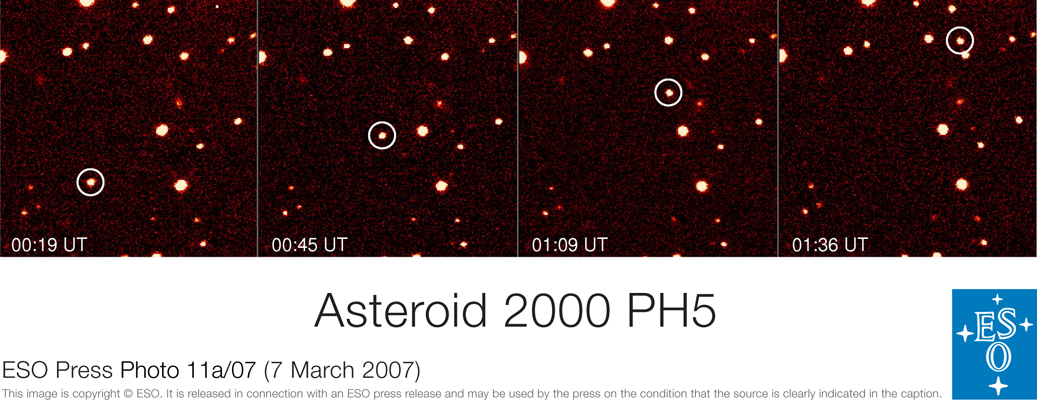
For the very first time, astronomers have witnessed the speeding up of an asteroid's rotation, and have shown that it is due to a theoretical effect predicted but never seen before. The international team of scientists used an armada of telescopes to discover that the asteroid's rotation period currently decreases by 1 millisecond every year, as a consequence of the heating of the asteroid's surface by the Sun.

Imagine two stars with winds so powerful that they eject an Earth's worth of material roughly once every month. Next, imagine those two winds colliding head-on. Such titanic collisions produce multimillion-degree gas, which radiates brilliantly in X-rays. Astronomers have conclusively identified the X-rays from about two-dozen of these systems in our Milky Way. But they have never seen one outside our galaxy — until now.

Thanks to the European Space Agency's XMM-Newton X-ray observatory, with help from NASA's Chandra X-ray Observatory, an international team led by Dr Yaël Nazé of the Université de Liège in Belgium has found such a system in a nearby galaxy. This galaxy, the Small Magellanic Cloud, orbits the Milky Way and is located about 170 000 light-years from Earth.

Having a twin sister could put male saiga antelopes at a reproductive disadvantage, says new research published today. The study shows that male twins with a sister are born lighter than those with a brother, making them smaller than the optimal size for males. The research also shows that saigas are the supermums of the hoofed animal world with no other similar species investing more in their offspring during pregnancy.

The study's results call into question current understanding of the development of male and female foetuses of this species, and give scientists a new insight into the importance of sibling sex and what implications this may have for the animals as they mature.

David Houle touched on this in his Berkeley and Nanotechnology article and now lots of other people are wondering the same thing. Will it be regarded as hazardous materials or tools of big corporate evildoers or as benevolent forces for change in society?

"The U.S. public's perception of nanotechnology is up for grabs. It could divide along the lines of nuclear power, global warming and other contentious environmental issues absent a major public education and engagement effort by industry, government, civic groups and scientists.

Several hundred images taken with NASA's Hubble Space Telescope have been woven together into a rich tapestry of at least 50,000 galaxies. The Hubble view is yielding new clues about the universe's youth, from its "pre-teen" years to young adulthood.

The snowstorm of galaxies in the Hubble panorama does not appear evenly spread out. Some galaxies seem to be grouped together. Others are scattered through space. This uneven distribution of galaxies traces the concentration of dark matter, an invisible web-like structure stretching throughout space.

Solar energy has the power to reduce greenhouse gases and provide increased energy efficiency, says a scientist at the U.S. Department of Energy's Argonne National Laboratory, in a report (view it online) published in the March issue of Physics Today.

 Last month, The Intergovernmental Panel on Climate Change (IPCC) of the United Nations released a report confirming global warming is upon us and attributing the growing threat to the man-made burning of fossil fuels.