Banner
Pilot Study: Fibromyalgia Fatigue Improved By TENS Therapy

Fibromyalgia is the term for a poorly-understood condition where people experience pain and fatigue...

High Meat Consumption Linked To Lower Dementia Risk

Older people who eat large amounts of meat have a lower risk of dementia and cognitive decline...

Long Before The Inca Colonized Peru, Natives Had A Thriving Trade Network

A new DNA analysis reveals that long before the Incan Empire took over Peru, animals were...

Mesolithic People Had Meals With More Tradition Than You Thought

The common imagery of prehistoric people is either rooting through dirt for grubs and picking berries...

User picture.
News StaffRSS Feed of this column.

News Releases From All Over The World, Right To You... Read More »

Blogroll

The genomes of the largest collection of families with multiple cases of autism ever assembled have been scanned and the preliminary results published in Nature Genetics (February 18, 2007). They provide new insights into the genetic basis of autism.

The research was performed by more than 120 scientists from more than 50 institutions representing 19 countries. In the UK, work was carried out at The University of Manchester, the Institute of Psychiatry at King’s College, London and the University of Oxford.

The international collaboration started in 2002 when researchers from around the world decided to come together and share their samples, data, and expertise to facilitate the identification of autism susceptibility genes. They formed the Autism Genome Project.

A Johns Hopkins-led study has found evidence that a genetic tendency toward suicide has been linked to a particular area of the genome on chromosome 2 that has been implicated in two additional recent studies of attempted suicide.

“We’re hoping our findings will eventually lead to tests that can identify those at high risk for attempting suicide,” says Virginia Willour, Ph.D., an assistant professor in the Department of Psychiatry at the Johns Hopkins University School of Medicine and lead author of the study.

By first probing the way primitive yeast make cholesterol, a team of scientists has discovered a long-sought protein whose human counterpart controls cholesterol production and potentially drug metabolism.

The collaborative study by investigators at Johns Hopkins University School of Medicine, Vanderbilt University, Indiana University and Eli Lilly Co., was published in the February issue of Cell Metabolism.

“Dap1 controls the activity of a clinically important class of enzymes required for cholesterol synthesis and drug metabolism,” says Peter Espenshade, Ph.D., assistant professor of cell biology at Johns Hopkins.

The current battle between the makers of anti-wrinkle products – widely compared with the Coke and Pepsi struggle for superiority – is receiving an injection of scientific understanding with the release of a new study from the University of Michigan Health System.

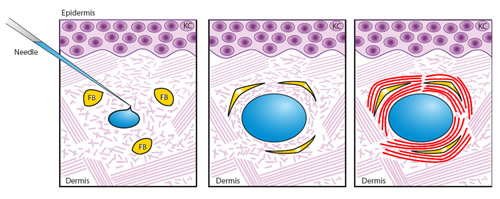
The study is the first to discover that one of the fillers – known by the brand-name Restylane – works by stretching fibroblasts, the cells in the skin that make collagen, in a way that causes the skin to create new collagen. This new, natural collagen then would contribute to the reduction of the appearance of creases and wrinkles.

A  report of the American Psychological Association (APA) released today found evidence that the proliferation of sexualized images of girls and young women in advertising, merchandising, and media is harmful to girls' self-image and healthy development.

Stefan Heller's dream is to someday find a cure for deafness.

As a leader in stem cell-based research on the inner ear at the Stanford University School of Medicine, he's got a step-by-step plan for making this dream a reality.

It may take another decade or so, but if anyone can do it, he's the guy to place your bets on.

"Everyone asks, 'How long before we do this?'" said Heller, PhD, associate professor of otolaryngology, whose accent still bears the trace of his native Germany. "I tell them the devil is in the details."

But even at the national level, those in the research community remain hopeful that Heller's work will reap successes sooner rather than later. Heller will discuss his stem cell research during a panel discussion Feb.