Banner
Pilot Study: Fibromyalgia Fatigue Improved By TENS Therapy

Fibromyalgia is the term for a poorly-understood condition where people experience pain and fatigue...

High Meat Consumption Linked To Lower Dementia Risk

Older people who eat large amounts of meat have a lower risk of dementia and cognitive decline...

Long Before The Inca Colonized Peru, Natives Had A Thriving Trade Network

A new DNA analysis reveals that long before the Incan Empire took over Peru, animals were...

Mesolithic People Had Meals With More Tradition Than You Thought

The common imagery of prehistoric people is either rooting through dirt for grubs and picking berries...

User picture.
News StaffRSS Feed of this column.

News Releases From All Over The World, Right To You... Read More »

Blogroll

How do you get information from a preparation that is transparent? How can you still see a three-dimensional image through a microscope? Dutch researcher Rajesh S. Pillai investigated a new way of illuminating preparations under the microscope. For example, he could investigate the microstructure of food, which is important for the taste and shelf-life. Furthermore, this technique is highly promising for research into how fat is stored in the human body.

A blow with the hammer

Images can only be made under the microscope if the preparation is illuminated. Sometimes using a single lamp is not enough, for example when a three-dimensional image of a transparent sample is needed. In this project Pillai used a laser that emitted extremely short pulses of infrared light.

The rise of multicellular animals about 540 million years ago was a turning point in the history of life. A group of Finnish scientists suggests a new climate-biosphere interaction mechanism for the underlying processes in a new study, which will be published on February 14, 2007 in PLoS ONE, the international, peer-reviewed, open-access, online publication from the Public Library of Science (PLoS).

The theory invokes cold, ice-containing climates as a key precursor for multicellular life. If the model turns out to be correct, one can assume that complex life might exist also around stars which are more massive and short-lived than the Sun.

New research findings now appearing online in the Journal of Experimental Social Psychology began with a professor's desire to understand why her husband often seemed to ignore her requests for help around the house.

"My husband, while very charming in many ways, has an annoying tendency of doing exactly the opposite of what I would like him to do in many situations," said Tanya L. Chartrand, an associate professor of marketing and psychology at Duke University's Fuqua School of Business.

When Chartrand envisioned a formal academic study of people's resistance to the wishes of their partners, parents or bosses, her husband, Gavan Fitzsimons, became not only her inspiration, but also her collaborator.

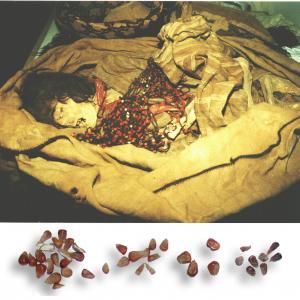
The far-reaching influence of Spanish and Portuguese colonisers appears not to have extended to South American agriculture, scientists studying a 1,400-year-old Andean mummy have found.

The University of Manchester researchers compared the DNA of ancient maize found in the funerary offerings of the mummy and at other sites in northwest Argentina with that grown in the same region today.

Surprisingly, they found both ancient and modern samples of the crop were genetically almost identical indicating that modern European influence has not been as great as previously thought.


Photograph of the mummy and a close-up of the maize. (Credit: Dr Verónica Lia, Universidad de Buenos Aires)

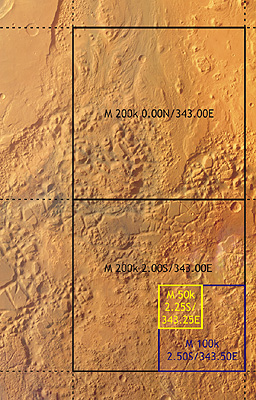
Scientists using data from the HRSC experiment onboard ESA's Mars Express spacecraft have produced the first 'hiker's maps' of Mars. Giving detailed height contours and names of geological features in the Iani Chaos region, the maps could become a standard reference for future Martian research. The maps are known as topographic maps because they use contour lines to show the heights of the landscape.


This image of Mars taken by the High Resolution Stereo Camera on board ESA's Mars Express outlines the scales (1:200 000, 1:100 000 and 1:50 000) of the series of topographic maps of the planet's surface that can be realized thanks to HRSC data.

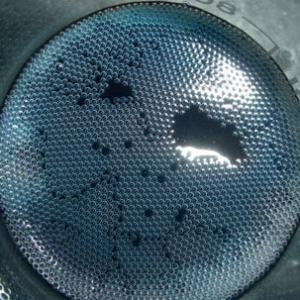
In work that could dramatically boost the capabilities of "lab on a chip" devices, MIT researchers have created a way to use tiny bubbles to mimic the capabilities of a computer.

The team, based at MIT's Center for Bits and Atoms, reports that the bubbles in their microfluidic device can carry on-chip process control information, just like the electronic circuits of a traditional microprocessor, while also performing chemical reactions. The work will appear in the Feb. 9 issue of Science.


MIT researchers have developed a computer chip that runs on microbubbles like these. (Photo courtesy of Manu Prakash)