Banner
Pilot Study: Fibromyalgia Fatigue Improved By TENS Therapy

Fibromyalgia is the term for a poorly-understood condition where people experience pain and fatigue...

High Meat Consumption Linked To Lower Dementia Risk

Older people who eat large amounts of meat have a lower risk of dementia and cognitive decline...

Long Before The Inca Colonized Peru, Natives Had A Thriving Trade Network

A new DNA analysis reveals that long before the Incan Empire took over Peru, animals were...

Mesolithic People Had Meals With More Tradition Than You Thought

The common imagery of prehistoric people is either rooting through dirt for grubs and picking berries...

User picture.
News StaffRSS Feed of this column.

News Releases From All Over The World, Right To You... Read More »

Blogroll

A new study reports the first detection of chiral molecules in space, paving the way to understanding why chirality is "biased" on Earth. Our planet is home to a puzzle involving chiral molecules, those that, despite being mirror images of each other, don't exactly match; imagine a left-handed and right-handled glove, for example. They aren't interchangeable. Life on Earth is made of groups of such molecules that overwhelmingly share just one type of handedness, a phenomenon known as homochirality. The amino acids that make up the proteins in our bodies, for example, are all left-handed.

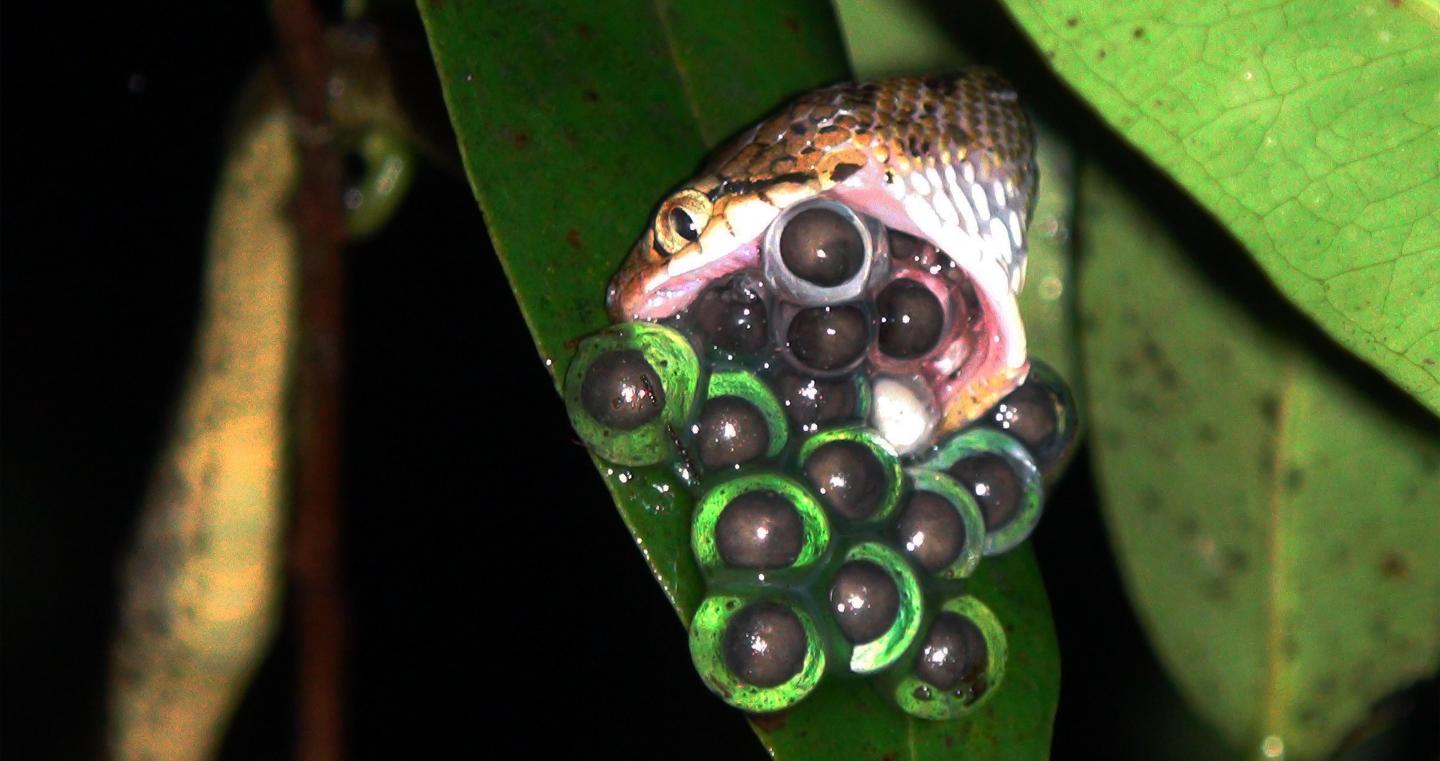
Six mating positions (amplexus modes) are known among the almost 7,000 species of frogs and toads found worldwide. However, the Bombay night frog (Nyctibatrachus humayuni), which is endemic to the Western Ghats Biodiversity hotspot of India, mates differently. In a new study, scientists have described a new (seventh) mode of amplexus -- now named as dorsal straddle.

(Boston) -- To date, there are no methods that can quickly and accurately detect pathogens in blood to allow the diagnosis of systemic bloodstream infections that can lead to life-threatening sepsis. The standard of care for detecting such blood-borne infections is blood culture, but this takes days to complete, only identifies pathogens in less than 30% of patients with fulminant infections, and it is not able to detect toxic fragments of dead pathogens that also drive the exaggerated inflammatory reactions leading to sepsis.

A virus that infects major freshwater bacteria appears to use stolen bits of immune system DNA to highjack their hosts' immune response.

Microbiologists have discovered that the virus, Cyanophage N1, carries a DNA sequence--a CRISPR--that is generally used by bacteria to fight off viral infection.

"This is the first evidence we've seen that a virus can donate an immunity system via CRISPR," says University of British Columbia virologist Curtis Suttle. "This is like a hacker compromising a computer system, and then immediately patching it to ensure other hackers can't break in."

Sophia Antipolis - June 14, 2016: Fifteen minutes of daily exercise is associated with a 22% lower risk of death and may be a reasonable target for older adults, reveals research presented today at the EuroPRevent 2016 meeting by Dr David Hupin, a physician in the Department of Clinical and Exercise Physiology, University Hospital of Saint-Etienne in Saint-Etienne, France.1

"Age is not an excuse to do no exercise," said Dr Hupin. "It is well established that regular physical activity has a better overall effect on health than any medical treatment. But less than half of older adults achieve the recommended minimum of 150 minutes moderate intensity or 75 minutes vigorous intensity exercise each week."

In a study appearing in the June 14 issue of JAMA, Angela Sauaia, M.D., Ph.D., of the University of Colorado Anschutz Medical Campus, Aurora, and colleagues examined patterns of gunshot wound-associated severity and mortality at a Colorado urban trauma center.