Banner
Pilot Study: Fibromyalgia Fatigue Improved By TENS Therapy

Fibromyalgia is the term for a poorly-understood condition where people experience pain and fatigue...

High Meat Consumption Linked To Lower Dementia Risk

Older people who eat large amounts of meat have a lower risk of dementia and cognitive decline...

Long Before The Inca Colonized Peru, Natives Had A Thriving Trade Network

A new DNA analysis reveals that long before the Incan Empire took over Peru, animals were...

Mesolithic People Had Meals With More Tradition Than You Thought

The common imagery of prehistoric people is either rooting through dirt for grubs and picking berries...

User picture.
News StaffRSS Feed of this column.

News Releases From All Over The World, Right To You... Read More »

Blogroll
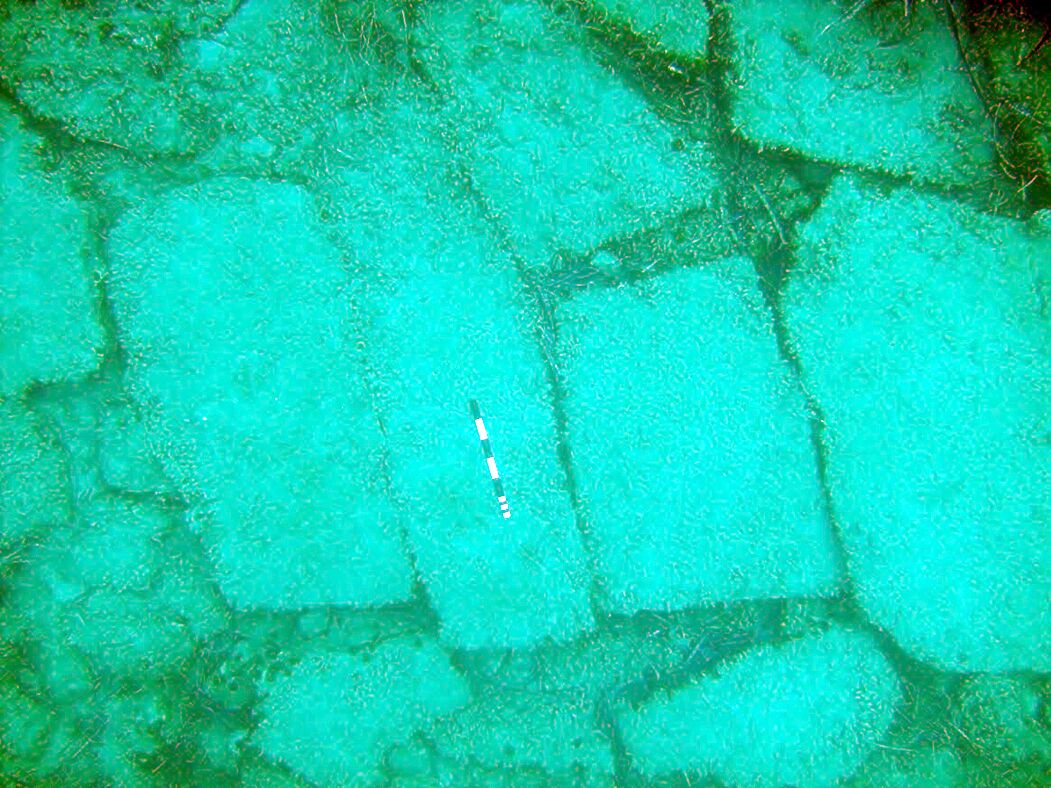
Underwater divers recently discovered paved floors, courtyards and colonnades, evidence of a long-forgotten civilization that must have perished when tidal waves hit the shores of the Greek holiday island Zakynthos.

The bizarre discovery, found close to Alikanas Bay, was carefully examined in situ by the Ephorate of Underwater Antiquities of Greece. After the preliminary mineralogical and chemical analyses, a research team was mobilized to study the ancient underwater remains - only to declare them a naturally occurring phenomenon created by a natural geological phenomenon that took place in the Pliocene era, up to five million years ago.


Credit: UEA

Normal rules of economic behavior would dictate that free upgrades to a particular product would move it out the door in record numbers. Somewhat counterintuitively, new research from Professor Wen Mao reveals that a token upgrade fee, even no more than a penny, is often more attractive to consumers than a freebie.

Using a reverse paint-by-numbers approach, scientists have located another gene that controls the brilliant patterning of Heliconius butterfly wings. Led by former Smithsonian Tropical Research Institute (STRI) fellow Nicole Nadeau, the researchers identified variations in the gene that correspond to wing color and pattern variation in three different Heliconius species. Published in Nature, June 2016, the discovery puts scientists a step closer to unlocking the code responsible for diversity and evolution in butterflies and moths.

Researchers use accelerators to coax the electron into performing a wide range of tricks to enable medical tests and treatments, improve product manufacturing, and power breakthrough scientific research. Now, they're learning how to coax the same tricks out of the electron's antimatter twin - the positron - to open up a whole new vista of research and applications.

A Johns Hopkins study on data from more than 7,000 older Americans has found that those who show signs of probable dementia but are not yet formally diagnosed are nearly twice as likely as those with such a diagnosis to engage in potentially unsafe activities, such as driving, cooking, and managing finances and medications.

The findings, reported in the June issue of Journal of the American Geriatrics Society, highlight the need, investigators say, to make patients and their families explicitly aware of the memory disorder so that physicians and loved ones can take protective steps.

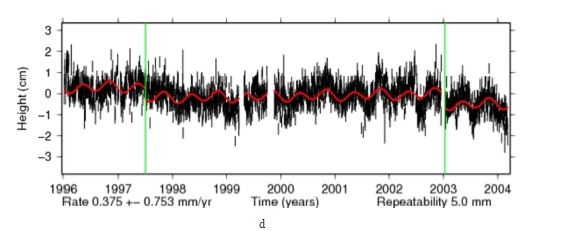
A new paper in American Journal of Geophysics, Geochemistry and Geosystems criticizes alarming projections of up to 2 meters in sea level rise due to increasing anthropogenic CO2 emissions - and implicitly media that acts as cheerleaders by foregoing critical thinking - because those claims are not based on data. 

Instead of noting that tide gauges with enough information to infer a trend don't show increased relative rate of rise, but instead show small positive negative and positive fluctuations, papers with claims of up to 2 meters in sea level rise are heavily promoted, including by groups who insist policy makers need to include those claims in flood maps.