Banner
Pilot Study: Fibromyalgia Fatigue Improved By TENS Therapy

Fibromyalgia is the term for a poorly-understood condition where people experience pain and fatigue...

High Meat Consumption Linked To Lower Dementia Risk

Older people who eat large amounts of meat have a lower risk of dementia and cognitive decline...

Long Before The Inca Colonized Peru, Natives Had A Thriving Trade Network

A new DNA analysis reveals that long before the Incan Empire took over Peru, animals were...

Mesolithic People Had Meals With More Tradition Than You Thought

The common imagery of prehistoric people is either rooting through dirt for grubs and picking berries...

User picture.
News StaffRSS Feed of this column.

News Releases From All Over The World, Right To You... Read More »

Blogroll

Scientists working in the Gulf of Mexico have found that contaminants from the massive 2010 Deepwater Horizon oil spill lingered in the subsurface water for months after oil on the surface had been swept up or dispersed. In a new study, they also detailed how remnants of the oil, black carbon from burning oil slicks and contaminants from drilling mud combined with microscopic algae and other marine debris to descend in a "dirty blizzard" to the seafloor.

We've seen increasingly bizarre claims from social psychologists and advocates with confirmation bias: American liberals are evolving into a different species, they have prettier children, conservatives are motivated by fear, and more. 

One thing is truth, people are more likely to mate by education level now, there are very few scenarios where smart people simply don't go to college in a culture where government spends money convincing young people they need a college degree.  That would have to change the genetic makeup of subsequent generations, right?

A new study published in Diabetologia finds that children with a strong family history of cardiovascular disease (CVD) and/or type 2 diabetes were found to have cholesterol levels significantly higher than children with no family history of those conditions.

The research found that one third of the 12-year-olds studied had a strong family history of one or both diseases. This group also had unfavourable levels of cardiometabolic markers in the form of higher total cholesterol, and a higher ratio of total cholesterol to HDL cholesterol than the groups with moderate or no family history of disease.

Children with elevated levels of these markers may also have a higher risk of heart attacks and strokes in adulthood.

Though wind energy is not viable everywhere, there are places it can work. The Galapagos Islands, a fragile ecosystem, is touted as one example, because it otherwise has to import diesel fuel. 

A performance summary and recommendations for the expansion are contained in a new report by the Global Sustainable Electricity Partnership (GSEP), which led and financed the $10 million project. The project's three 51-meter-tall wind turbines and two sets of solar panels have supplied, on average, 30% of the electricity consumed on San Cristóbal, the archipelago's second-largest island in size and population, since it went into operation in October 2007.

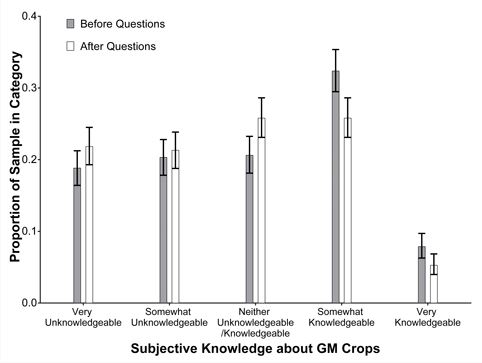
Consumers are aware of genetically modified crops but their knowledge level is limited and often at odds with the facts, according to a new paper in the FASEB journal.

Last year, Brandon McFadden, an assistant professor of food and resource economics at the UF Institute of Food and Agricultural ‌Sciences, published a study that showed scientific facts scarcely change consumers’ impressions of genetically modified food and other organisms.

Washington, DC -- Obese teenagers already show signs of hormonal differences from normal-weight peers that may make them prone to weight gain, according to a new study published in the Endocrine Society's Journal of Clinical Endocrinology & Metabolism.

The study found obese teenagers have lower levels of a hormone potentially tied to weight management than normal-weight teens. Studies of adults have found that the hormone, called spexin, is likely involved in regulating the body's fat mass and energy balance.