Banner
Pilot Study: Fibromyalgia Fatigue Improved By TENS Therapy

Fibromyalgia is the term for a poorly-understood condition where people experience pain and fatigue...

High Meat Consumption Linked To Lower Dementia Risk

Older people who eat large amounts of meat have a lower risk of dementia and cognitive decline...

Long Before The Inca Colonized Peru, Natives Had A Thriving Trade Network

A new DNA analysis reveals that long before the Incan Empire took over Peru, animals were...

Mesolithic People Had Meals With More Tradition Than You Thought

The common imagery of prehistoric people is either rooting through dirt for grubs and picking berries...

User picture.
News StaffRSS Feed of this column.

News Releases From All Over The World, Right To You... Read More »

Blogroll

A new meta-analysis showing the effectiveness of ketamine for dealing with persistent post-surgical pain (PPSP) is to be presented at Euroanaesthesia 2016 (London, May 27-30 ). Ketamine, a cheap and safe drug, may have the potential to save health systems billions of dollars globally by being used in place of other drugs to prevent PPSP.

Mammals have an exquisitely tuned sensory system that tells them whether they are smelling an orange or a rose. Like keys on a piano keyboard, each component of an odor blend strikes only one chord of olfactory neuron activation. These chords are combined to form a melody that is "heard" in the brain as distinctly citrusy or sweet and flowery.

Smell in mammals turns out to be more complex than we thought. Rather than one receptor family exclusively dedicated to detecting odors, a study in mice reports that a group of neurons surrounding the olfactory bulb use an alternative mechanism for catching scents. These "necklace" neurons, as they're called, use this newly discovered olfactory detection system to respond to odors that elicit instinctive responses, such as pheromones and the smell of seeds and nuts. Harvard researchers report the finding May 26 in Cell.

Malnourished children are most likely to die from common infections, not starvation. New experimental evidence, reviewed May 26 in Trends in Immunology, indicates that even with a healthy diet, defects in immune system function from birth could contribute to a malnourished state throughout life. Researchers speculate that targeting immune pathways could be a new approach to reduce the poor health and mortality caused by under- and overnutrition.

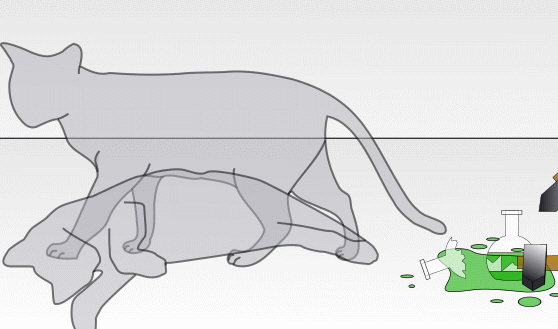
Through new experiments involving the famous Schrödinger cat state paradox, researchers have shown that a "quantum cat" can be both alive and dead, and in two places at once.

The results, which involve inducing a large number of photons to have matching states (or to become entangled), show the ability to manipulate complex quantum states, with applications for computation and long-distance communication. They also represent perhaps the first time scientists have been able to achieve such quantum coherence at a macroscopic scale. 

A research team co-led by a scientist at New Zealand's University of Otago has sequenced the first complete mitochondrial genome of a 2500-year-old Phoenician dubbed the "Young Man of Byrsa" or "Ariche".

This is the first ancient DNA to be obtained from Phoenician remains and the team's analysis shows that the man belonged to a rare European haplogroup -- a genetic group with a common ancestor -- that likely links his maternal ancestry to locations somewhere on the North Mediterranean coast, most probably on the Iberian Peninsula.

The findings are newly published in the prestigious international journal PLOS ONE.