Banner
Pilot Study: Fibromyalgia Fatigue Improved By TENS Therapy

Fibromyalgia is the term for a poorly-understood condition where people experience pain and fatigue...

High Meat Consumption Linked To Lower Dementia Risk

Older people who eat large amounts of meat have a lower risk of dementia and cognitive decline...

Long Before The Inca Colonized Peru, Natives Had A Thriving Trade Network

A new DNA analysis reveals that long before the Incan Empire took over Peru, animals were...

Mesolithic People Had Meals With More Tradition Than You Thought

The common imagery of prehistoric people is either rooting through dirt for grubs and picking berries...

User picture.
News StaffRSS Feed of this column.

News Releases From All Over The World, Right To You... Read More »

Blogroll

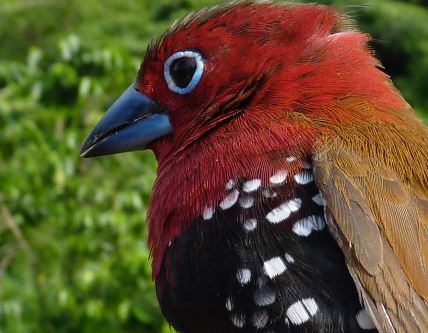
In the bird world, the color red has special significance. Many species use red signals to attract mates or deter rivals, adding the color to their beaks, feathers, or bare skin. Generally speaking, as far as many birds are concerned, redder is better. Now, two teams of researchers have independently identified an enzyme-encoding gene that allows some bird species to convert yellow pigments from their diets into that remarkable red. Their findings are reported on May 19 in Current Biology.

Mitochondrial replacement therapy, where a nucleus from a mother's egg cell is transferred into a donor egg containing healthy mitochondria, shows promise for preventing the inheritance of mitochondrial DNA diseases. However, small amounts of mitochondrial DNA can sometimes hitch a ride with the transferred nucleus, and a study publishing May 19 in Cell Stem Cell shows that this DNA can override the mitochondria in the donor cell. The findings may call into question the beneficial effect of nuclear transfer for mitochondrial replacement therapy.

Flaviviruses--such as Zika, dengue, and yellow fever--have emerged as human (and other primate) pathogens because of their ability to specifically overcome our anti-viral defenses. In the case of Zika, researchers at the Icahn School of Medicine at Mount Sinai report May 19 in Cell Host & Microbe that one of the virus's seven non-structural proteins (NS5) is singularly responsible for blocking the action of interferons (proteins that stop viral replication) in human cells, while mouse cells are unaffected.

A storm does not have to be especially powerful in terms of its winds to be deadly. Such is the case with Tropical Cyclone 01B (TC 01B) in the Bay of Bengal. Despite only reaching minimal tropical storm intensity just this morning at 06 UTC 18 May 2016, the system has been responsible for dumping heavy rains in and around Sri Lanka and southern Indian over the past few days as it tried to organize itself in the southwestern Bay of Bengal. This set the stage for two massive landslides, which buried 3 villages in south central Sri Lanka. So far, although several hundred people have been rescued, it is feared from 150 to as many as 400 others may have been buried by the mudslides.

Bacteriophages are viruses that infect bacteria. Using state-of-the-art tools, EPFL scientists have described a million-atom "tail" that bacteriophages use to breach bacterial surfaces. The breakthrough has major implications for science and medicine, as bacteriophages are widely used in research.

Big isn't always better when it comes to the size of male genitals.

Researchers at The Australian National University (ANU) have been looking at the breeding habits of fish, to test the theory that bigger genitals make males more attractive or successful in fathering offspring.

They found when it comes to fish, females don't find males with big genitals any more attractive than those with normal or smaller genitals.

pic

Gambusia. Credit: Stuart Hay, ANU