Banner
Pilot Study: Fibromyalgia Fatigue Improved By TENS Therapy

Fibromyalgia is the term for a poorly-understood condition where people experience pain and fatigue...

High Meat Consumption Linked To Lower Dementia Risk

Older people who eat large amounts of meat have a lower risk of dementia and cognitive decline...

Long Before The Inca Colonized Peru, Natives Had A Thriving Trade Network

A new DNA analysis reveals that long before the Incan Empire took over Peru, animals were...

Mesolithic People Had Meals With More Tradition Than You Thought

The common imagery of prehistoric people is either rooting through dirt for grubs and picking berries...

User picture.
News StaffRSS Feed of this column.

News Releases From All Over The World, Right To You... Read More »

Blogroll

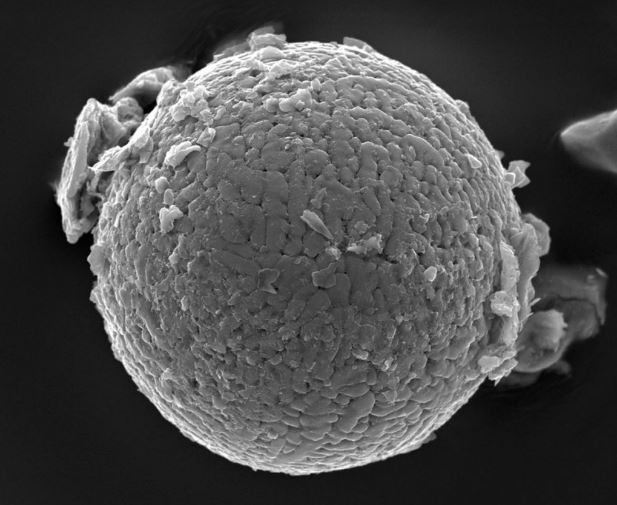
Using the oldest fossil micrometeorites - space dust - ever found, Monash University-led research has made a surprising discovery about the chemistry of Earth's atmosphere 2.7 billion years ago.

The findings of a new study published today in the journal Nature - led by Dr Andrew Tomkins and a team from the School of Earth, Atmosphere and Environment at Monash, along with scientists from the Australian Synchrotron and Imperial College, London - challenge the accepted view that Earth's ancient atmosphere was oxygen-poor. The findings indicate instead that the ancient Earth's upper atmosphere contained about the same amount of oxygen as today, and that a methane haze layer separated this oxygen-rich upper layer from the oxygen-starved lower atmosphere.

A Japanese research group has identified the enzymes that change the grassy odor of plants into a sweeter "green" fragrance. This discovery can potentially be used to grow sweet tomatoes with less of a grassy odor. These findings were published on April 29 in The Journal of Biological Chemistry.

This research was carried out by a team from the Kobe University Graduate School of Agricultural Science: Kunishima Mikiko (PhD student), Assistant Professor Yamauchi Yasuo, Associate Professor Mizutani Masaharu, Professor Sugimoto Yukihiro, Associate Professor Kuse Masaki, and Professor Takikawa Hirosato.

Longer, hotter, more regular heat waves could impact crop production in Africa, warn climate scientists in a study published in the journal Environmental Research Letters.

Located between the Tropic of Cancer and the Tropic of Capricorn, Africa experiences high levels of solar radiation all year round and heat waves can occur in any season, not just during summer months. Running climate models through to 2075, the scientists found that heat waves could occur as frequently as four times per year towards the end of the century. In other words, one dangerously hot spell for every season of the year. 

From minor acts of rebellion such as bunking off school, to the more serious experimentation with illicit substances, the teenage years can be a stressful time for parents. But what if your child goes beyond the odd cigarette behind the bike shed or sneaking sherry from the drinks cabinet? Some teenagers develop riskier behavior, such as binge drinking or drug taking, which can follow them into adulthood with all the health concerns that go with them.

New research conducted at the University of Sussex has identified a specific gene that links impulsive behavior to binge-drinking in teens.

As the world grows more social and connects more online, privacy management is becoming more collaborative, according to Penn State researchers.

"This is a paradigm shift, in a lot of ways, because most people think of privacy as being individualistic, but privacy is no longer just about the individual, it's also a collaborative and coordinated process," said Haiyan Jia, a postdoctoral scholar in information sciences and technology.

Mysterious spectacular mounds found in the earth in tropical wetlands in South America are created by earthworms, researchers have found.

The densely packed, regularly spaced mounds cover large areas of the Orinoco Llanos in Columbia and Venezuela. Until now it was not known how they were formed.

A new study shows these mounds, called surales, are largely made up of earthworm casts, heaps of muddy soil ejected by their guts. This is the first research to describe their formation.