Banner
Pilot Study: Fibromyalgia Fatigue Improved By TENS Therapy

Fibromyalgia is the term for a poorly-understood condition where people experience pain and fatigue...

High Meat Consumption Linked To Lower Dementia Risk

Older people who eat large amounts of meat have a lower risk of dementia and cognitive decline...

Long Before The Inca Colonized Peru, Natives Had A Thriving Trade Network

A new DNA analysis reveals that long before the Incan Empire took over Peru, animals were...

Mesolithic People Had Meals With More Tradition Than You Thought

The common imagery of prehistoric people is either rooting through dirt for grubs and picking berries...

User picture.
News StaffRSS Feed of this column.

News Releases From All Over The World, Right To You... Read More »

Blogroll

BETHESDA, Md., Jan. 8, 2016 -- Thyroid disease affects about 12 percent of the U.S. population. While many people with thyroid disease don't even know they have it, an overactive or underactive thyroid can cause a slew of problems, including weight gain or loss, mood changes and infertility. In children, an underactive thyroid can be fatal, which is why they are tested for a deficiency at birth.

Extreme rain events fueled by the current strong El Nino have started to affect California. NASA estimated rainfall over a period of 7 days while NASA/NOAA's GOES Project created a satellite animation showing the storms affecting the region over the past three days.

An animation NOAA's GOES-West satellite imagery from Jan. 5 through Jan 7 shows the progression of storm systems in the Eastern Pacific Ocean that hit southern California and generated flooding and mudslides. The animation was created at NASA's Goddard Space Flight Center in Greenbelt, Maryland.

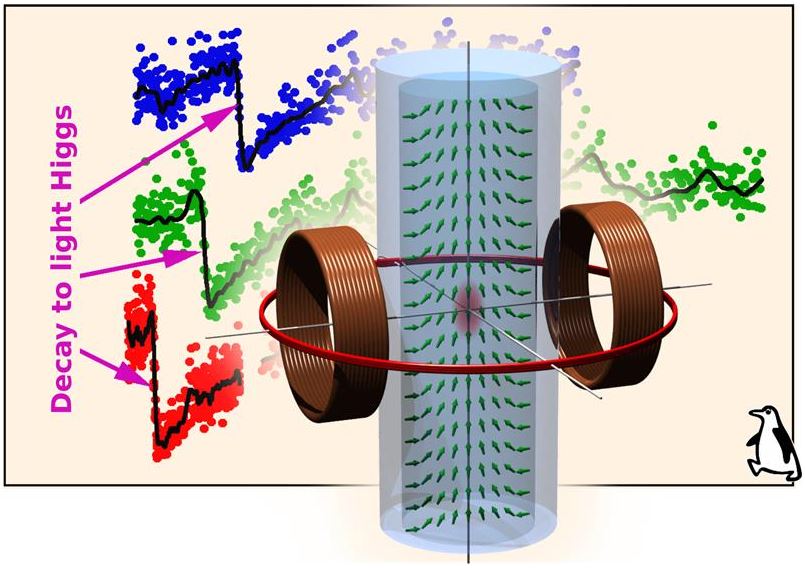
The mass of the Higgs boson reported at the Large Hadron Collider in 2012, 125 GeV, looked lighter than the expected energy scale, about 1 TeV, say researchers at Aalto University in Finland, who now propose that there is more than one Higgs boson, and they are much heavier than the consensus.

New CERN experiments at 0.75 TeV suggested evidence of a second Higgs in that region and some scrambled to embrace it. Dr. Tommaso Dorigo of Science 2.0 dismissed it as a spurious 750 GeV signal observed by ATLAS and CMS in their mass spectra of photon pairs, no different than other spurious signals that ATLAS and CMS have seen in the past.

There are certain universal patterns in nature that hold true, regardless of objects' size, species, or surroundings. Take, for instance, the branching fractals seen in both tree limbs and blood vessels, or the surprisingly similar spirals in mollusks and cabbage.

Now scientists at MIT and Cambridge University have identified an unexpected shared pattern in the collective movement of bacteria and electrons: As billions of bacteria stream through a microfluidic lattice, they synchronize and swim in patterns similar to those of electrons orbiting around atomic nuclei in a magnetic material.

While there is general consensus that the ability to imagine a never-before-seen object or concept is a unique and distinctive human trait, there is little that we know about the neurological mechanism behind it. Neuroscientist Dr. Andrey Vyshedskiy proposes a straightforward experiment that could test whether the ability to imagine a novel object involves the synchronization of groups of neurons, known as neuronal ensembles. Since the process involves mentally combining familiar images, scenes or concepts, Dr. Vyshedskiy proposes calling this process 'mental synthesis.' His research idea is published in the open-access Research Idea and Outcomes (RIO) Journal.

A new study reveals that drug shortages affecting emergency care have skyrocketed in the United States in recent years. While the prevalence of such shortages fell from 2002 to 2007; the number of shortages sharply increased by 373% (from 26 to 123) from 2008 to 2014.

These medications are approved, but for various reasons manufacturers cannot meet demands or have stopped making the drugs.

"Many of those medications are for life-threatening conditions, and for some drugs no substitute is available," said Dr. Jess Pines, senior author of the Academic Emergency Medicine study. "This means that in some cases, emergency department physicians may not have the medications they need to help people who are in serious need of them."