Banner
Pilot Study: Fibromyalgia Fatigue Improved By TENS Therapy

Fibromyalgia is the term for a poorly-understood condition where people experience pain and fatigue...

High Meat Consumption Linked To Lower Dementia Risk

Older people who eat large amounts of meat have a lower risk of dementia and cognitive decline...

Long Before The Inca Colonized Peru, Natives Had A Thriving Trade Network

A new DNA analysis reveals that long before the Incan Empire took over Peru, animals were...

Mesolithic People Had Meals With More Tradition Than You Thought

The common imagery of prehistoric people is either rooting through dirt for grubs and picking berries...

User picture.
News StaffRSS Feed of this column.

News Releases From All Over The World, Right To You... Read More »

Blogroll
An examination of undergraduate textbooks commonly used for linguistics courses and another of over 1,000 articles published in linguistics journals finds persistent gender bias.

Gender bias is subjective, which makes it both ironic and ideal for a linguistics paper. The authors rely on the scourge of evidence-based thinking, implicit bias, which controversially contends everyone is biased, it is just how biased that needs to be determined. Even when you are conscious of implicit bias you are still doing it, the belief goes.
Oymyakon, Russia is the coldest town on earth - but that doesn't stop fires.

According to Accuweather, the temperature in Delyankir, Russia, about 300 miles (483 km) to the north of the Sea of Oshkosh, fell to 75 degrees below zero Fahrenheit (59.2 degrees below zero Celsius), the lowest temperature there since January 2014.

The entire region is known for its extreme cold but Oymyakon, located about 90 miles (145 km) to the southwest of Delyankir, is the coldest permanently inhabited place on Earth. In 1933, it claimed a record low of 90 below zero F - 67.8 below zero C.
Do you know people who just can't help themselves when it comes to buying things or engaging in behavior you and they know they will regret later?

Deemed “negative urgency,” a clinical form of impulsivity, it is linked to depression, obsessive compulsive disorder, eating disorders, self-harm, bipolar disorder and ADHD. A new test believes such pathological impulsivity can be predicted based on how fast you react to stimulating visuals, especially disturbing ones.

Negative urgency is traditionally measured with a self-report questionnaire, but to provide a more reliable measure, researchers developed what they call an “emotional stop-signal task.”
The ancient relative to modern humans Australopithecus sediba walked like a human, but climbed like an ape, filling in a gap in the fossil record long posited by biologists, finds a new analysis.

The recovery of new lumbar vertebrae from the lower back of a single individual of the human relative, Australopithecus sediba, and portions of other vertebrae of the same female from Malapa, South Africa, together with previously discovered vertebrae, form one of the most complete lower backs ever discovered in the early hominid record and give insight into how this ancient human relative walked and climbed.
In a new epidemiology paper, men taking cholesterol-lowering statin drugs had different  prostate cancer screening results than non-users - in statin users, screening did not increase the incidence of prostate cancer as it did in other men.

The data came from the Finnish Prostate Cancer Screening Trial which started in 1996–1999. A total of about 80,000 men were included in the study, of whom just under 32,000 were screened with the PSA test every four years. 
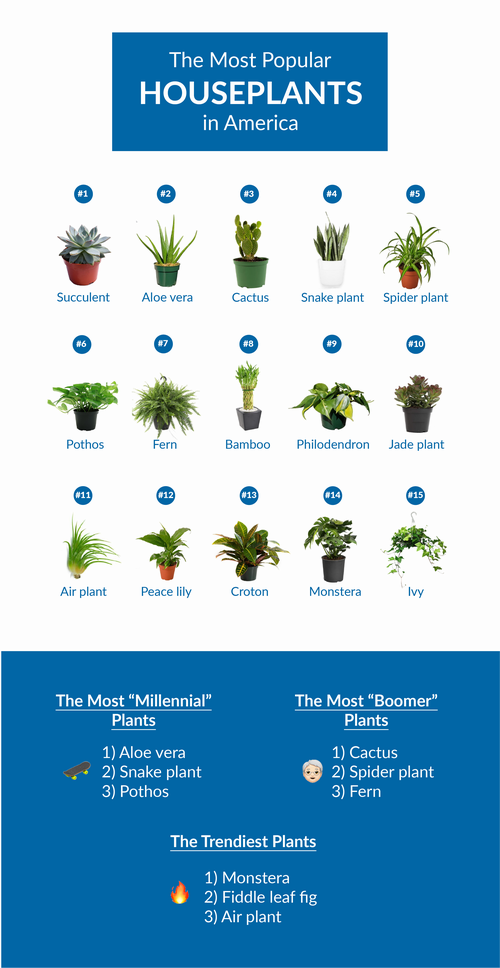
A survey of 1,111 Americans who own houseplants wanted to find out which varieties are most popular and how much people spend on the hobby, but they also found out how much they anthropomorphize their leafy little friends.

During the pandemic, 68 percent of Millennials took up a new hobby and nearly as many grew their houseplant collection.

Perhaps that's become part of the new cultural dynamic. 57 said having a houseplant supported their mental health while 81 percent say houseplants are a reasonable substitute if they are far from nature.