Banner
Pilot Study: Fibromyalgia Fatigue Improved By TENS Therapy

Fibromyalgia is the term for a poorly-understood condition where people experience pain and fatigue...

High Meat Consumption Linked To Lower Dementia Risk

Older people who eat large amounts of meat have a lower risk of dementia and cognitive decline...

Long Before The Inca Colonized Peru, Natives Had A Thriving Trade Network

A new DNA analysis reveals that long before the Incan Empire took over Peru, animals were...

Mesolithic People Had Meals With More Tradition Than You Thought

The common imagery of prehistoric people is either rooting through dirt for grubs and picking berries...

User picture.
News StaffRSS Feed of this column.

News Releases From All Over The World, Right To You... Read More »

Blogroll

Delivering the hormone leptin directly to the brain through gene therapy can aid weight loss without the significant side effect of bone loss, according to new research.

Rapid or significant weight loss through dieting can trigger bone loss. Loss of bone density, in turn, can lead to increased susceptibility to bone fractures in older adults, which can have a debilitating effect on quality of life.

The bone loss is most concerning in people whose weight fluctuates due to "yo-yo" dieting, or repeated cycles of weight gain and loss, because bone lost during weight loss is not typically regained when the person gains weight again, said Urszula Iwaniec, an associate professor in the College of Public Health and Human Sciences at Oregon State University.

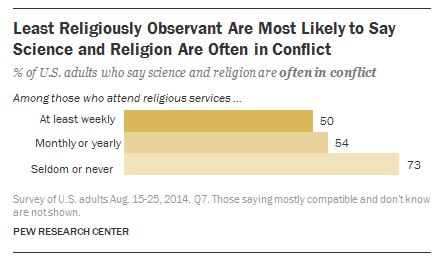
A representative survey of more than 2,000 U.S. adults finds that 30 percent of Americans say their personal religious beliefs conflict with science, while 68 percent say there is no conflict. A majority(59 percent) say science and religion often conflict, while 38 percent say science and religion are mostly compatible. 

Belief of a conflict between science and religion does break along lines of religious belief - but not how most people think. The most religious people do not see a conflict with science, it is instead people on the other side who think the most religious people must be against science - that science and religion are in opposition - that increase belief in a conflict between them.

A study published today shows that a newly studied class of water contaminants that is known to be toxic and hormone disrupting to marine animals is present likely due in part to indirect effects of human activity. The contaminants are more prevalent in populated areas in the San Francisco Bay, suggesting that human impacts on nutrient input or other changes in water quality may enhance natural production.

A paper in PLOS ONE says humans may have an indirect effect on water quality.

Computers have scanned aerial photographs and conducted the first automated mass-crowd count in the world, thanks to the work of researchers at the University of Central Florida.

Counting large-scale crowds has been a long, tedious process involving people examining aerial photographs one at a time - and it has been termed accurate, with organizers often claiming results 1000% greater than police and journalists. They are able to make claims and stick to them because the traditional method involves dividing photographs into sections and counting the number of heads per inch. 

Bee colonies had a decline in 2006, and a decade earlier, and lots of times going back as far as people kept count of bees, but activists most recently blamed a group of pesticides called neonicotinoids, and ignored climate and parasites, the thing that scientists said made the difference in periodic blips.

Regardless of the consensus, a team of scholars in Environmental Science&Technology blame these "neonics" and claim past studies may have underestimated the bees' exposure to the compounds.

Heart valve replacements made from tissue (bioprosthetic valves) have long been thought to be spared the complication of blood clot formation. Researchers have now found that about 15 percent of all bioprosthetic aortic heart valve patients develop blood clots on the leaflets affecting valve opening, regardless of whether the patient received the new valve via open-heart surgery or a minimally-invasive catheter procedure, a new study from the Cedars-Sinai Heart Institute shows.

The study, published online today by the New England Journal of Medicine and scheduled for the Nov. 26 print edition, also shows that anti-coagulant medications such as Warfarin quickly resolve the clotting issue for all patients, regardless of the type of valve or procedure.