Banner
Pilot Study: Fibromyalgia Fatigue Improved By TENS Therapy

Fibromyalgia is the term for a poorly-understood condition where people experience pain and fatigue...

High Meat Consumption Linked To Lower Dementia Risk

Older people who eat large amounts of meat have a lower risk of dementia and cognitive decline...

Long Before The Inca Colonized Peru, Natives Had A Thriving Trade Network

A new DNA analysis reveals that long before the Incan Empire took over Peru, animals were...

Mesolithic People Had Meals With More Tradition Than You Thought

The common imagery of prehistoric people is either rooting through dirt for grubs and picking berries...

User picture.
News StaffRSS Feed of this column.

News Releases From All Over The World, Right To You... Read More »

Blogroll

Imagine being able to tone down appetite and promote weight loss, while improving the body’s ability to handle blood sugar levels.

That’s just what Tony Means, PhD, and his team at the Duke University Medical Center were able to do when they blocked a brain enzyme, CaMKK2, in mice.

“We believe we have identified an important drug development target that could potentially turn into a metabolic triple play: appetite control, weight loss and blood sugar management,“ said Means, who is the Nanaline H. Duke Professor and Chairman of Pharmacology and Cancer Biology.

What causes us to lose muscle strength as we age and how exercise can prevent it from happening has never been thoroughly understood, but McMaster University researchers have discovered a key protein required to maintain muscle mass and muscle strength during aging.

This important finding means new and existing drugs targeting the protein may potentially be used to preserve muscle function during aging.

"We found that the body's fuel gauge, AMP-activated protein kinase (AMPK), is vital to slow muscle wasting with aging," said Gregory Steinberg, the study's senior author and professor of medicine at the Michael G. DeGroote School of Medicine. He is also co-director of MAC-Obesity, the Metabolism and Childhood Obesity Research Program at McMaster.

A large international analysis of 174,000 patients has shown conclusively that statin treatment reduces the risk of cardiovascular disease in women.

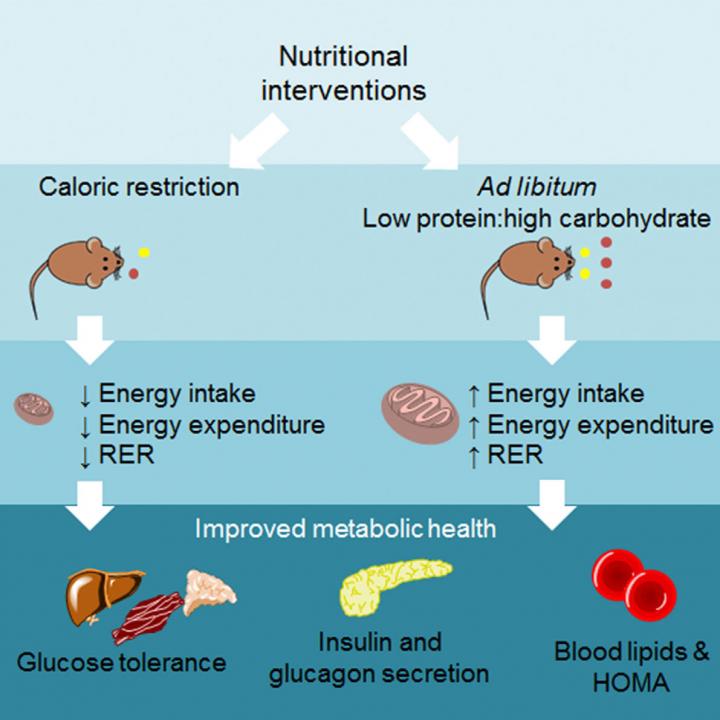
Caloric restriction in mice has been touted for accomplishing everything from increasing longevity to lowering cholesterol, but those animals are weaned on that from birth, and humans will go to jail trying it with their children.

It may be unnecessary - and the diet advice we have gotten for the last 30 years may be also. A new study found that a diet of high carbohydrates and low protein - the opposite of what has been recommended - improves insulin sensitivity and can provide benefits similar to those obtained with calorie restriction.

Should doctors recommend homeopathy? Sometimes placebos work, that is why placebo has an Effect named after it and, because they are inert, they can't do any harm. But when patients or taxpayers are coughing up money for it, the issue is more murky.

Peter Fisher, Director of Research at the Royal London Hospital for Integrated Medicine, says that of all the major forms of complementary medicine, homeopathy is the most misunderstood. He says how regular medicine reviews homeopathy is. For example, in a recent report by the Australian National Health and Medical Research Council which stated that "there are no health conditions for which there is reliable evidence that homeopathy is effective." 

The incidence of serious strep infections has risen dramatically in the last three decades, and this increase is largely attributed to the spread around the globe of a single strain of strep known as the invasive M1T1 clone.

Researchers at the University of California, San Diego (UCSD) School of Medicine and the University of Wollongong in Australia have discovered that, 30 years ago, a virus infected the strep bacteria – creating a deadly strain of “flesh-eating” bacteria that has evolved to produce serious human infections worldwide.