Banner
Pilot Study: Fibromyalgia Fatigue Improved By TENS Therapy

Fibromyalgia is the term for a poorly-understood condition where people experience pain and fatigue...

High Meat Consumption Linked To Lower Dementia Risk

Older people who eat large amounts of meat have a lower risk of dementia and cognitive decline...

Long Before The Inca Colonized Peru, Natives Had A Thriving Trade Network

A new DNA analysis reveals that long before the Incan Empire took over Peru, animals were...

Mesolithic People Had Meals With More Tradition Than You Thought

The common imagery of prehistoric people is either rooting through dirt for grubs and picking berries...

User picture.
News StaffRSS Feed of this column.

News Releases From All Over The World, Right To You... Read More »

Blogroll

They may be viewed by some as an invasive species or a commonplace pest of public parks, but a new study from the University of Exeter has shown that grey squirrels are actually quick learners capable of adapting tactics to improve efficiency and reap the best rewards.

To test the animals' intelligence and mental flexibility researchers invented a task involving a box with 12 sunken wells, four of which were hollow. Of the four, two contained hidden hazelnuts.

The five squirrels observed in the study (named Simon, Arnold, Sarah, Leonard and Suzy) were all given training prior to the task so they were proficient at using their paws or teeth to peel back the layer of paper hiding a nut inside the wells.

There may be far fewer galaxies further out in the Universe then might be expected, suggests a new study based on simulations and published this week in the Astrophysical Journal Letters.

The simulations show the first results from the Renaissance Simulations, a suite of extremely high-resolution adaptive mesh refinement (AMR) calculations of high redshift galaxy formation and hundreds of well-resolved galaxies. 

"Most critically, we show that the ultraviolet luminosity function of our simulated galaxies is consistent with observations of redshift galaxy populations at the bright end of the luminosity function, but at lower luminosities is essentially flat rather than rising steeply," wrote researchers in their paper. 

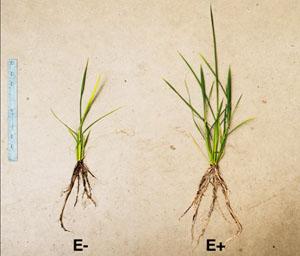
Television commercials assure us that probiotic products are good for our health, with claims ranging from improved digestion to managing allergies and colds,

If so, why wouldn't plants also benefit from certain microbes?

Quarks and antiquarks are the teeny, tiny building blocks with which all matter is built, binding together to form protons and neutrons in a process explained by quantum chromodynamics (QCD).

According to QCD, quarks possess one of three charges that allow them to pair in various combinations, such as mesons--elementary particles composed of one quark and its corresponding antiquark. Force carrier particles, known as gluons, hold the quarks together by exchanging and mediating the strong forc e, one of the four fundamental forces.

This structure is the foundation of all matter in the universe, but much is still unknown about why QCD works the way it does.

A research group has made a breakthrough discovery which could help thousands of young girls worldwide who are suffering from a rare yet debilitating form of epilepsy. The United States pharmaceutical company Marinus Pharmaceuticals is now recruiting affected girls as part of the world's first clinical trial to test the therapy. 

Professor Jozef Gecz, from the University of Adelaide's Robinson Research Institute, was a key player in identifying the responsible gene and mutations in this female-only epileptic syndrome, in 2008 and has now found a treatment for this disorder.

One of the questions raised by the prospect of climate change is whether it could cause more species of animals to interbreed. Two species of flying squirrel have already produced mixed offspring and those have somehow been blamed on climate change, along with a hybrid polar bear and grizzly bear cub (known as a grolar bear, or a pizzly). 

A paper in Nature Climate Change tallies the potential number of such pairings and across North and South America it estimates that only about 6 percent of closely related species whose ranges do not currently overlap are likely to come into contact by the end of this century.