Banner
Pilot Study: Fibromyalgia Fatigue Improved By TENS Therapy

Fibromyalgia is the term for a poorly-understood condition where people experience pain and fatigue...

High Meat Consumption Linked To Lower Dementia Risk

Older people who eat large amounts of meat have a lower risk of dementia and cognitive decline...

Long Before The Inca Colonized Peru, Natives Had A Thriving Trade Network

A new DNA analysis reveals that long before the Incan Empire took over Peru, animals were...

Mesolithic People Had Meals With More Tradition Than You Thought

The common imagery of prehistoric people is either rooting through dirt for grubs and picking berries...

User picture.
News StaffRSS Feed of this column.

News Releases From All Over The World, Right To You... Read More »

Blogroll
A vegan diet remains controversial because it is in defiance of our evolutionary mandate - it is unnatural in humans to only eat meat the same way it is in cats.

But diets are popular for lots of reasons that defy scientific explanation and regardless of the evidence basis, they work. People who eat all meat, for example, lose weight, and people who eat only animal products lose weight. In most cases, it is because people who go on any diet tend to live healthier in multiple ways but a new review of 12 studies determined that people on a vegan diet lose around two kilograms more in the short term than dieters on a normal plan.

Sleep seems simple enough to define, it is a state of rest and restoration that almost every vertebrate creature must enter regularly in order to survive.

Yet the brain responds differently to stimuli when asleep than when awake, and it is not clear what brain changes happen during sleep.

A key question is why - it is the same brain, same neurons and similar requirements for oxygen so what is the difference between these two states?

In a recent paper, Rodolfo Llinás, a professor of neuroscience at New York University School of Medicine , and colleagues announced that a specific calcium channel plays a crucial role in healthy sleep, a key step toward understanding both normal and abnormal waking brain functions.

Males and females process pain using different cells, a new study with mice suggests.
The findings could help researchers develop the next generation of medications for chronic pain—the most prevalent health condition humans face.

“Research has demonstrated that men and women have different sensitivity to pain and that more women suffer from chronic pain than men, but the assumption has always been that the wiring of how pain is processed is the same in both sexes,” says co-senior author Jeffrey Mogil, professor of pain studies at McGill University and director of the Alan Edwards Centre for Research on Pain.
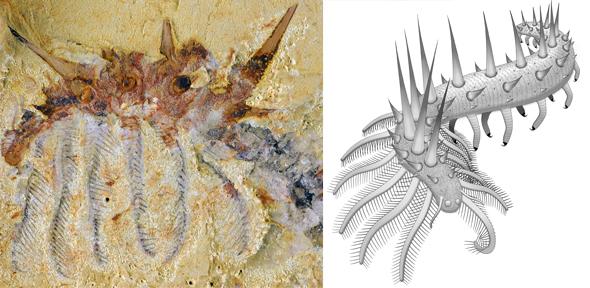
A new species of ‘super-armored’ worm, named Collinsium ciliosum, or Hairy Collins’ Monster after the palaeontologist Desmond Collins, who discovered and first illustrated a similar Canadian fossil in the 1980s, was a bizarre, spike-covered creature which ate by filtering nutrients out of seawater with its feather-like front legs, has been identified by palaeontologists.

The creature, which lived about half a billion years ago, was one of the first animals on Earth to develop armor to protect itself from predators and to use such a specialised mode of feeding.

Mosquitoes have been called the deadliest animal on the planet due to the diseases they spread.

Why feed them?

By using science, giving them an artificial buffet may lead to fewer of them, says Stephen Dobson, a University of Kentucky professor of medical and veterinary entomology. His work on developing artificial blood for mosquitoes has made him a Grand Challenges Explorations winner, in an initiative funded by the Bill&Melinda Gates Foundation.

The artificial blood he developed will allow people in remote areas around the world to sustain colonies of mosquitoes, even in those areas with limited resources and difficult logistics.

Wearing a computer on your sleeve may be a lot cooler than a plastic watch with an Apple logo on it - researchers at the University of Pittsburgh have designed a responsive hybrid material fueled by an oscillatory chemical reactions.

They can even perform computations based on changes in the environment or movement, and respond to human vital signs. The material system is sufficiently small and flexible enough to be integrated into fabric or introduced as an inset into a shoe.