Banner
Wavelengths Of Light Are Why CO2 Cools The Upper Atmosphere But Warms Earth

There are concerns about projected warming on the Earth’s surface and in the lower atmosphere...

Here's Where Your Backyard Was 300 Million Years Ago

We may use terms like "grounded" and terra firma to mean stability and consistency but geology...

Convergent Evolution Cheat Sheet Now 120 Million Years Old

One tenet of natural selection is a random walk of genes but nature may be more predictable than...

Synchrotron Could Shed Light On Exotic Dark Photons

There are many hypothetical particles proposed to explain dark matter and one idea to explore how...

User picture.
News StaffRSS Feed of this column.

News Releases From All Over The World, Right To You... Read More »

Blogroll

It is commonly believed that one key issue in brain again is that it becomes less flexible - plastic - and that learning may therefore become more difficult.

A new study contradicts that and shows that plasticity did occur in seniors who learned a task well, it just occurred in a different part of the brain than in younger people.

When many older subjects learned a new visual task, the researchers found, they unexpectedly showed a significantly associated change in the white matter of the brain. White matter is the the brain's "wiring," or axons, sheathed in a material called myelin that can make transmission of signals more efficient. Younger learners, meanwhile, showed plasticity in the cortex, where neuroscientists expected to see it.

Scientists have found that seed dormancy, a property that prevents germination when conditions are not right, was present in the first seeds 360 million years ago.

Seed dormancy is a phenomenon that has intrigued naturalists for decades, since it conditions the dynamics of natural vegetation and agricultural cycles. There are several types of dormancy, and some of them are modulated by environmental conditions in more subtle ways than others.

In an article published in the New Phytologist journal, the scientists studied the evolution of dormancy in seeds using more than 14.000 species. 

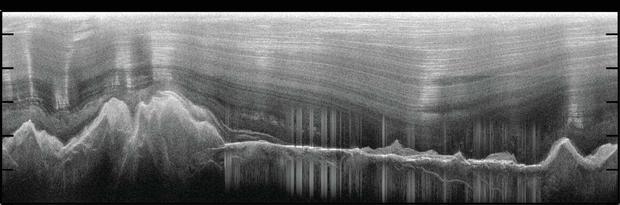
Time is relative. What is a long time to humans is nothing to a mountain. Like humans, mountains usually burst on the scene, then they stand tall and finally age wears them down and their sharp features soften and they become grow shorter and rounder.

Not all mountains, though. The Gamburtsev Mountains in the middle of Antarctica look quite young for their age. Though the Gamburtsevs were discovered in the 1950s, they remained unexplored until government budget increases and few things left above ground to explore led scientists to fly ice-penetrating instruments over the mountains 60 years later.

On a quest to design an alternative to the complex approaches currently used to produce electrons within microwave electron guns, a team of researchers have demonstrated a plug-and-play solution capable of operating in a high-electric-field environment with a high-quality electron beam.

Unfamiliar with microwave electron guns? They provide a higher current and much higher quality electron beams than conventional DC guns for X-ray sources . Beams of this sort are also used in free-electron lasers, synchrotrons, linear colliders and wakefield accelerator schemes. But the electron emission mechanisms involved -- laser irradiation of materials (photocathodes) and heating of materials (thermionic cathodes) -- tend to be complex, bulky or extremely expensive.

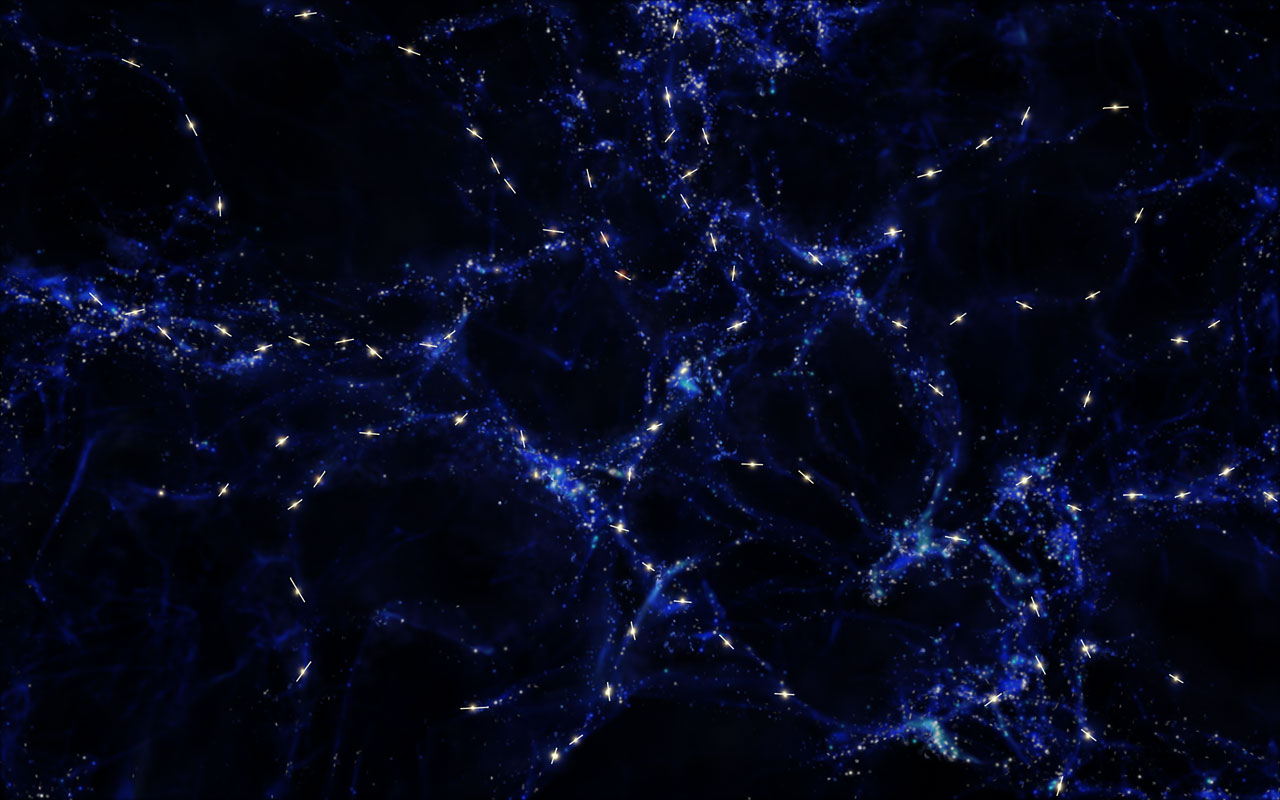
There are cosmic alignments over the largest structures ever discovered in the Universe - the rotation axes of the central supermassive black holes in quasars billions of light years apart are parallel to each other. 

Quasars are galaxies with very active supermassive black holes at their centers. These black holes are surrounded by spinning discs of extremely hot material that is often spewed out in long jets along their axes of rotation. Quasars can shine more brightly than all the stars in the rest of their host galaxies put together.

New artificial intelligence software uses photos to locate documents on the Internet with far greater accuracy than ever before, showing for the first time that a machine learning algorithm for image recognition and retrieval is accurate and efficient enough to improve large-scale document searches online.

The system uses pixel data in images and potentially video - rather than just text -- to locate documents. It learns to recognize the pixels associated with a search phrase by studying the results from text-based image search engines. The knowledge gleaned from those results can then be applied to other photos without tags or captions, making for more accurate document search results.