Banner
Wavelengths Of Light Are Why CO2 Cools The Upper Atmosphere But Warms Earth

There are concerns about projected warming on the Earth’s surface and in the lower atmosphere...

Here's Where Your Backyard Was 300 Million Years Ago

We may use terms like "grounded" and terra firma to mean stability and consistency but geology...

Convergent Evolution Cheat Sheet Now 120 Million Years Old

One tenet of natural selection is a random walk of genes but nature may be more predictable than...

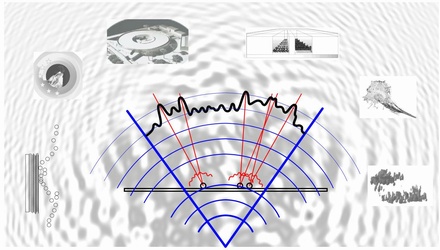
Synchrotron Could Shed Light On Exotic Dark Photons

There are many hypothetical particles proposed to explain dark matter and one idea to explore how...

User picture.
News StaffRSS Feed of this column.

News Releases From All Over The World, Right To You... Read More »

Blogroll

An analysis of two African tribes has led anthropologists to suggest that men evolved better navigation ability than women because men with better spatial skills - the ability to mentally manipulate objects - can roam farther and have children with more mates.

Driving to work is routine, you might even forget you are doing it, but how aware would you be if you had to doit in reverse?

We're used to seeing objects pass behind us as we go forward. Moving backwards feels unnatural and a new study finds why that is: Moving forward actually trains the brain to perceive the world normally. The relationship between neurons in the eye and the brain is more complicated than previously thought--in fact, the order in which we see things could help the brain calibrate how we perceive time, as well as the objects around us.

Reversing the Map

Supplement marketers have been aggressively claiming that vitamin B12 and folic acid reduce the risk of memory loss, but a large study on long-term use of supplements found no benefits.   

The study involved people with high blood levels of homocysteine, an amino acid. High levels of homocysteine have been linked to memory loss and Alzheimer's disease. Early observational studies claimed there may be some benefit to thinking and memory skills in taking folic acid and vitamin B12, but the results were not duplicated in later randomized, controlled trials. 

The yellow fever mosquito sustains its taste for human blood thanks to a genetic tweak that makes it more sensitive to human odor, according to a paper in Nature. They have a version of an odor-detecting gene in its antennae that is highly attuned to sulcatone, a compound prevalent in human odor.

The gene, AaegOr4, is more abundant and more sensitive in the human-preferring "domestic" form of the yellow fever mosquito than in its ancestral "forest" form that prefers the blood of non-human animals. 

In the fight against HIV, microbicides, which are chemical compounds applied topically to the female genital tract to protect against sexually transmitted infections, are touted as an alternative to condoms.

There's just one problem. They don't work outside a petri dish. Clinical trials using microbicides have failed and a new study from the Gladstone Institutes and the University of Ulm finds that this may be due to the primary mode of transportation of the virus during sexual transmission, semen.

17 genomes of supercentenarians, people living beyond 110 years of age, haven't led us any closer to discovering protein-altering variants significantly associated with extreme longevity, according to a study in PLOS ONE by Hinco Gierman from Stanford University and colleagues.

There are 74 supercentenarians alive worldwide, with 22 in the United States. The authors of this study performed whole-genome sequencing on 17 of them to explore the genetic basis underlying extreme human longevity.