Banner
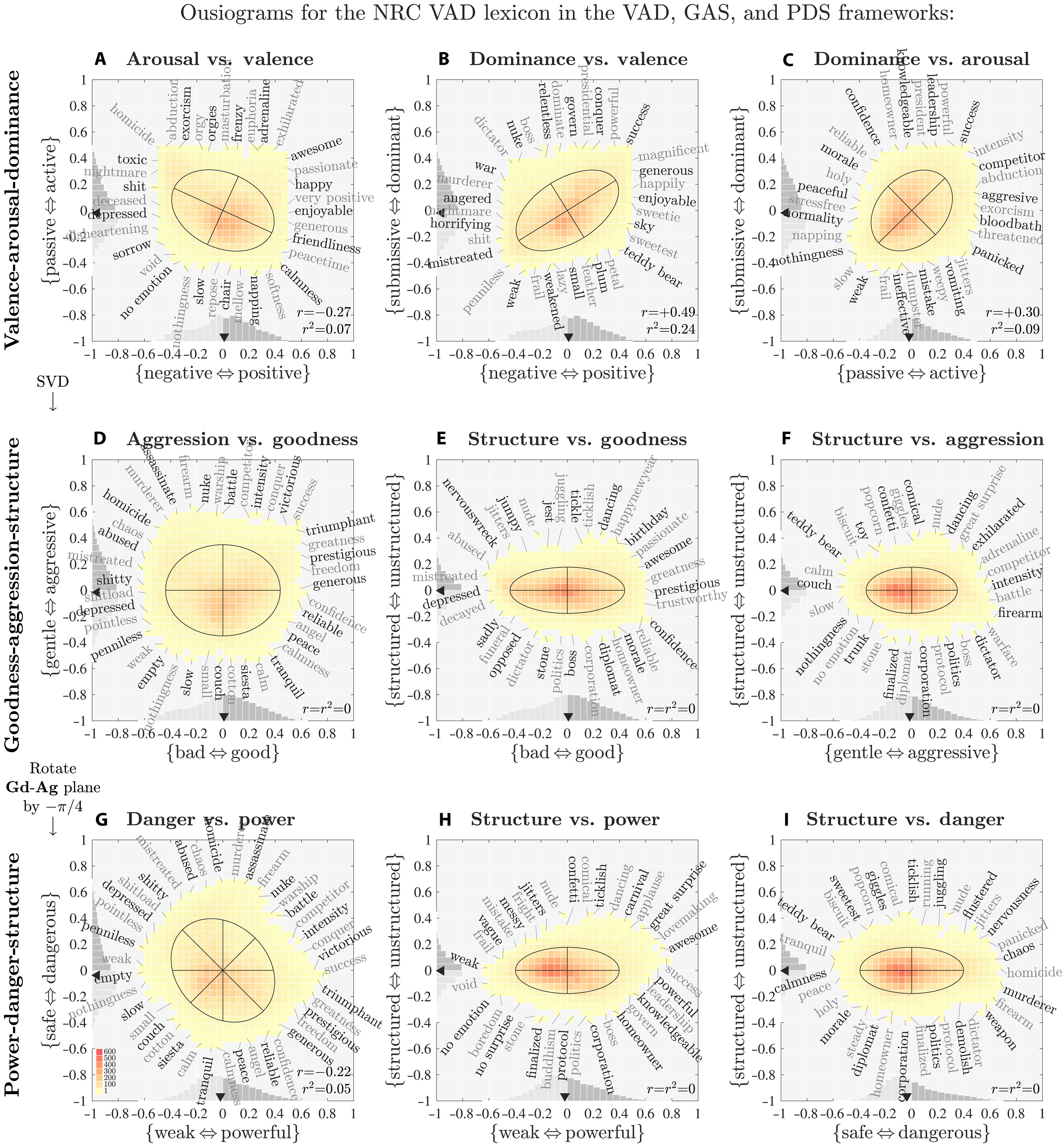
Ousiometrics Analysis Says All Human Language Is Biased

A new tool drawing on billions of uses of more than 20,000 words and diverse real-world texts claims...
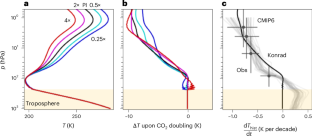
Wavelengths Of Light Are Why CO2 Cools The Upper Atmosphere But Warms Earth

There are concerns about projected warming on the Earth’s surface and in the lower atmosphere...

Here's Where Your Backyard Was 300 Million Years Ago

We may use terms like "grounded" and terra firma to mean stability and consistency but geology...

Convergent Evolution Cheat Sheet Now 120 Million Years Old

One tenet of natural selection is a random walk of genes but nature may be more predictable than...

User picture.
News StaffRSS Feed of this column.

News Releases From All Over The World, Right To You... Read More »

Blogroll

Our fat contains a variety of cells with the potential to become bone, cartilage, or more fat if properly prompted. This makes adipose tissue a key potential resource for regenerative therapies such as bone healing if doctors can get enough of those cells and compel them to produce bone.

In a new study, scientists at Brown University demonstrate a new method for extracting a wide variety of potential bone-producing cells from human fat. They developed a fluorescent tag that could find and identify cells expressing a gene called ALPL. Expression of the gene is an indicator of bone-making potential.

By studying identical twins, researchers from Lund University in Sweden have identified mechanisms that could be behind the development of type 2 diabetes. This may explain cases where one identical twin develops type 2 diabetes while the other remains healthy.

The study involved 14 pairs of identical twins in Sweden and Denmark. One twin had type 2 diabetes and the other was healthy. Fat tissue can release hormones and regulate metabolism in different organs in the body. The question the researchers posed was whether epigenetic changes in the DNA lead to changes in the fat tissue that in turn can lead to the development of type 2 diabetes. 

The way neurons are interconnected in the brain is very complicated. This holds especially true for the cells of the hippocampus. It is one of the oldest brain regions and its form resembles a see horse (hippocampus in Latin).

The hippocampus enables us to navigate space securely and to form personal memories. So far, the anatomic knowledge of the networks inside the hippocampus and its connection to the rest of the brain has left scientists guessing which information arrived where and when.

Signals spread through the brain

The director of the National Institutes of Health, Dr. Francis Collins, is worried about the lack of reproducibility and 'secret sauce' in a large number of studies funded by their $30 billion government agency. 

Fraud happens everywhere, as does cherry-picking of results, but the more scientific the field, the less it happens. It's hard to get 2,000 people to be fraudulent about an experimental physics result while a lone psychologist writing about surveys of college students is difficult to catch.

Carnegie-Mellon and Stanford scholars say they have a solution for Dr. Collins, at least - use 

Sexting may be a new "normal" part of adolescent sexual development and not strictly limited to at-risk teens, according to a paper in Pediatrics, which the authors say is the first survey to address the relationship between teenage sexting, or sending sexually explicit images to another electronically, and future sexual activity. 

The  results indicate that sexting may precede sexual intercourse in some cases and further cements the idea that sexting behavior is a credible sign of teenage sexual activity. Further, the researchers did not find a link between sexting and risky sexual behavior over time, which may suggest that sexting is becoming a part of growing up. 

A snaking, extended filament of solar material currently lies on the front of the sun-- some 1 million miles across from end to end. Filaments are clouds of solar material suspended above the sun by powerful magnetic forces. Though notoriously unstable, filaments can last for days or even weeks.

NASA's Solar Dynamics Observatory, or SDO, which watches the sun 24 hours a day, has observed this gigantic filament for several days as it rotated around with the sun. If straightened out, the filament would reach almost across the whole sun, about 1 million miles or 100 times the size of Earth.