Banner
Ousiometrics Analysis Says All Human Language Is Biased

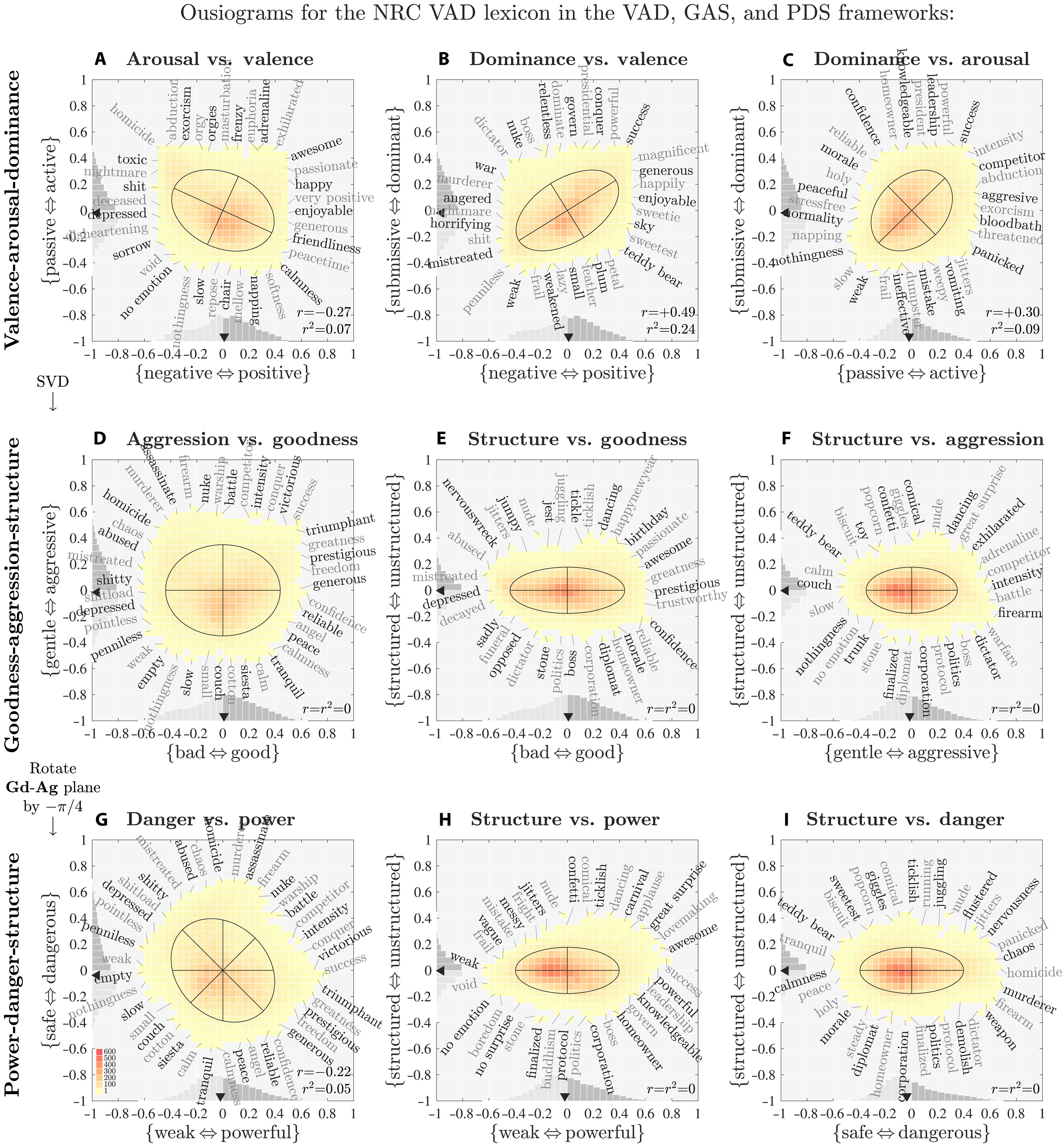
A new tool drawing on billions of uses of more than 20,000 words and diverse real-world texts claims...

Wavelengths Of Light Are Why CO2 Cools The Upper Atmosphere But Warms Earth

There are concerns about projected warming on the Earth’s surface and in the lower atmosphere...

Here's Where Your Backyard Was 300 Million Years Ago

We may use terms like "grounded" and terra firma to mean stability and consistency but geology...

Convergent Evolution Cheat Sheet Now 120 Million Years Old

One tenet of natural selection is a random walk of genes but nature may be more predictable than...

User picture.
News StaffRSS Feed of this column.

News Releases From All Over The World, Right To You... Read More »

Blogroll

California's water supply depends on a clean snow pack and healthy mountain lakes.  Because of geography, California cities are conducive to air pollution and a similar effect can be found in lakes. The lakes in the Sierra Nevada are the most sensitive lakes in the U.S. to acid rain, according to the Environmental Protection Agency.

The lakes receive a large amount of runoff in the spring from the melting snowpack. If the snowpack is polluted, the lakes will be polluted.

The most compelling argument for genetic modification is not accepting science or progressive ideals, it is that it has caused food production to dematerialize in dramatic fashion. Scientific optimization of plants, superior to all genetic modification schemes of the last 12,000 years, have allowed American farmers to raise more food on less land than was dreamed possible. 

There is a cultural tug of war happening in the developing world. Experts and policy makers want to embrace science but environmental groups promoting fear and doubt manage to scare the public. Yet there is a practical metric every farmer in India can see - ozone pollution in India damages enough food to feed 94 million people. 

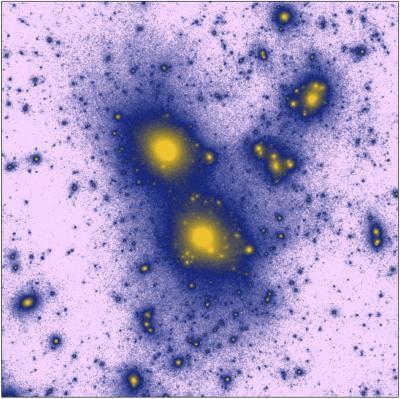
Because detectable mass only makes up about 5 percent of the universe - and the universe is expanding faster now than in the past - a rethink of mass and gravity has been required. The umbrella term for this mass that must exist, but can't be detected, is "dark matter." Don't worry if that definition is vague, no one knows any more than that.

Dark matter can be inferred by gravitational effects - and things like antimatter and baryonic clouds can be excluded - and so hundreds of explanations have been created for it. A new one by Mikhail Medvedev, professor of physics and astronomy at the University of Kansas is called "flavor-mixed multicomponent dark matter." 

Should scientists handle retractions differently?

Peer review cannot catch everything. In many papers, there is no peer review at all, it is editorial review that checks off a few boxes and relies on post-publication peer review to find flaws. That makes retractions more common.

Greenhouse gases, originating from natural sources, industrial processes and the burning of fossil fuels, are the culprits behind current global warming fears. The most abundant among them is carbon dioxide, which made up 84% of the United State's greenhouse gases in 2012, and can linger in Earth's atmosphere for up to a thousand ears.

Countries all over the world are looking to reduce their carbon dioxide footprint but carbon dioxide is essentially a waste product with little immediate commercial value and large treatment costs. New low-cost technologies will be needed to incentivize greenhouse gas capture by industry.

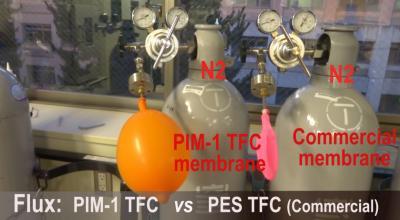
Researchers from Japan have engineered a membrane with advanced features capable of removing harmful greenhouse gases from the atmosphere.  

Mathematical techniques that not only identify whether two data sets correlate, but also whether one drives the other, have allowed researchers to look at a lot of old data in new ways. Methods have been developed to try to identify and correct for bias in the fossil record but the new research suggests many of these correction methods may actually be misleading. 

The new results show that out of all the geological factors, only the area of preserved rock drives biodiversity. Therefore, the other geological factors – counts of fossil collections and geological formations – are not independent measures of bias in the fossil record.