Banner
Ousiometrics Analysis Says All Human Language Is Biased

A new tool drawing on billions of uses of more than 20,000 words and diverse real-world texts claims...

Wavelengths Of Light Are Why CO2 Cools The Upper Atmosphere But Warms Earth

There are concerns about projected warming on the Earth’s surface and in the lower atmosphere...

Here's Where Your Backyard Was 300 Million Years Ago

We may use terms like "grounded" and terra firma to mean stability and consistency but geology...

Convergent Evolution Cheat Sheet Now 120 Million Years Old

One tenet of natural selection is a random walk of genes but nature may be more predictable than...

User picture.
News StaffRSS Feed of this column.

News Releases From All Over The World, Right To You... Read More »

Blogroll

Modern humans began the first steps to what we might call culture some 50,000 years ago, 150,000 years after appearing in the fossil record. What changed?

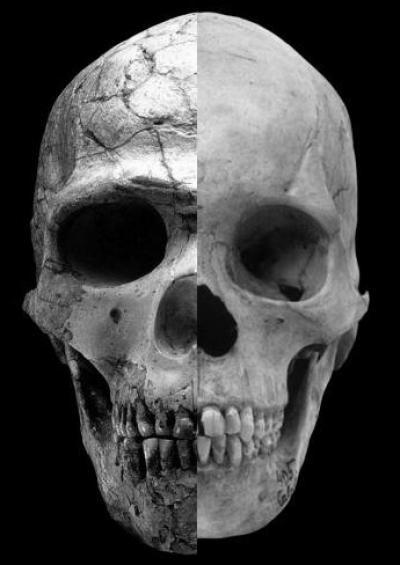
A new paper in Current Anthropology argues that more feminine faces and gentler personalities were the result of less testosterone. People got nicer. The evidence is in the shape of more than 1,400 ancient and modern skulls and the conclusion is that human society advanced when people started being nicer to each other, which entails having a little less testosterone in action. 

Heavy brows were so 100,000 B.C., rounder heads were in, and those changes could be linked to testosterone levels acting on the skeleton, according to Duke University anthropologist Steven Churchill.

Women who recently used birth control pills containing high-dose estrogen and a few other formulations had an increased risk for breast cancer compared to women using some other formulations did not, according to new data published in Cancer Research.

Security researchers at the Georgia Tech Information Security Center (GTISC) have discovered a way to jailbreak current generation Apple iOS devices (e.g., iPhones and iPads) running the latest iOS software. The jailbreak, which enables circumvention of Apple's closed platform, was discovered by analyzing previously patched vulnerabilities with incomplete fixes.

It shows that quick workarounds mitigating only a subset of a multi-step attack leave these devices vulnerable to exploitation. Patching all vulnerabilities for a modern, complex software system (i.e., Windows and iOS) is often difficult due to the volume of bugs and response-time requirements.

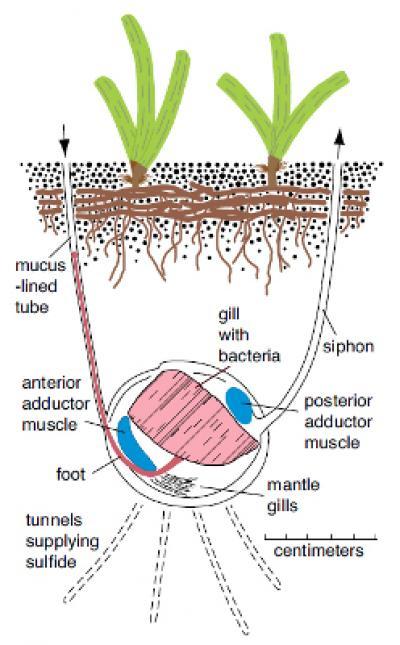
One of the most diverse families in the ocean today, marine bivalve mollusks - called Lucinidae or lucinids - originated more than 400 million years ago in the Silurian period, with adaptations and life habits like those of its modern members. 

About 500 lucinid species exist today, with by far the highest diversity in shallow-sea seagrass meadows. They did it all with a little help from symbiotic friends.

At its origin, the Lucinidae family remained at very low diversity until the rise of mangroves and seagrasses near the end of the Cretaceous. Mangroves and seagrasses created protective habitats in which the bivalve mollusks could thrive, in turn providing benefit through a sort of tri-level symbiosis. 

An algorithm works for diagnosing pediatric patients with suspected appendicitis and that reduces the utilization of computed tomography (CT) scans, without affecting diagnostic accuracy.

Acute appendicitis is the most common cause of acute abdominal pain in children. Appendicitis occurs when the appendix becomes inflamed and filled with pus. CT scans are often used to diagnose acute appendicitis because they are accurate, widely available and have the ability to provide clinicians with advanced information in appendicitis cases suspected of complications.

During the winter of 1944, the Nazis blocked food supplies to the western Netherlands, creating a period of widespread famine and devastation. The impact of starvation on expectant mothers were also an epigenetic experiment — a way to monitor changes resulting from external rather than genetic influences.

The results in those families have suggested that the body's physiological responses to hardship could be inherited. If so, the underlying mechanism remained a mystery.

In a recent Cell paper, researchers explore a genetic mechanism that passes on the body's response to starvation to subsequent generations of worms, with potential implications for humans also exposed to starvation and other physiological challenges, such as anorexia nervosa.