Banner
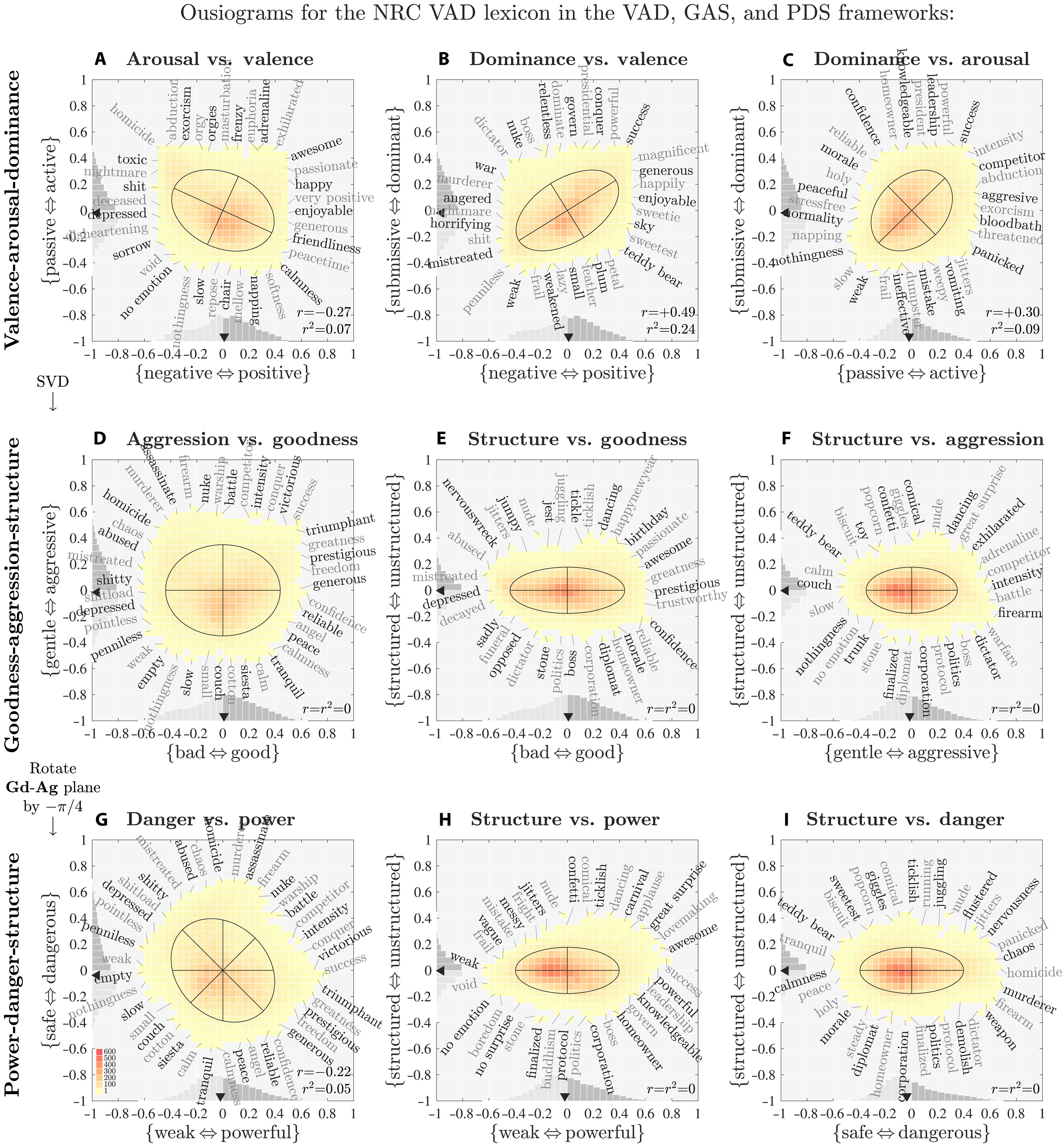
Ousiometrics Analysis Says All Human Language Is Biased

A new tool drawing on billions of uses of more than 20,000 words and diverse real-world texts claims...
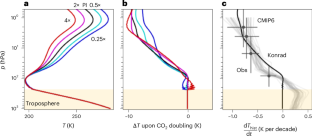
Wavelengths Of Light Are Why CO2 Cools The Upper Atmosphere But Warms Earth

There are concerns about projected warming on the Earth’s surface and in the lower atmosphere...

Here's Where Your Backyard Was 300 Million Years Ago

We may use terms like "grounded" and terra firma to mean stability and consistency but geology...

Convergent Evolution Cheat Sheet Now 120 Million Years Old

One tenet of natural selection is a random walk of genes but nature may be more predictable than...

User picture.
News StaffRSS Feed of this column.

News Releases From All Over The World, Right To You... Read More »

Blogroll

A new study suggests that Saharan dust played a major role in the formation of the Bahamas islands. Researchers from the University of Miami (UM) Rosenstiel School of Marine and Atmospheric Science showed that iron-rich Saharan dust provides the nutrients necessary for specialized bacteria to produce the island chain's carbonate-based foundation.

A newly discovered gut virus, crAssphage, probably isn't new at all, it was just discovered. But it's in half the world's population, according to estimates. 

A new paper in Nature Communications says crAssphage infects one of the most common types of gut bacteria, Bacteroidetes. This phylum of bacteria is thought to be connected with obesity, diabetes and other gut-related diseases. 

Robert A. Edwards, a bioinformatics professor at San Diego State University, and colleagues stumbled upon the discovery while using results from previous studies on gut-inhabiting viruses to screen for new viruses.

In Aesop's fable about the crow and the pitcher, a thirsty bird happens upon a vessel of water, but when he tries to drink from it, he finds the water level out of his reach. Not strong enough to knock over the pitcher, the bird drops pebbles into it — one at a time — until the water level rises enough for him to drink his fill.

Highlighting the value of ingenuity, the fable demonstrates that cognitive ability can often be more effective than brute force. It also characterizes crows as pretty resourceful problem solvers. New research conducted by UC Santa Barbara's Corina Logan, with her collaborators at the University of Auckland in New Zealand, proves the birds' intellectual prowess may be more fact than fiction. 

It is seldom sufficient to read the declaration of contents if you need to know precisely what substances a product contains. In fact, to do this you need to be a highly skilled chemist or to have genuine X-ray vision so that you can look directly into the molecular structure of the various substances. Christian Grundahl Frankær, a Postdoc at DTU Chemical Engineering, is almost both, as he has developed a method that allows him to use X-rays to look deep into biological samples.

The 'Fingerprints' of a Substance

New research from the University of Sydney Voice Research Laboratory has discovered unique vocal cord vibration patterns might be the secret behind a good radio voice.

The world-first study filmed the vocal folds of 16 male radio performers, including announcers, broadcasters, newsreaders and voice-over artists and found their vocal folds move and close faster than non-broadcasters.

Speech pathologists, Dr Cate Madill and Dr Samantha Warhurst from the Faculty of Health Sciences, said the research reveals radio performers close their vocal folds with greater speed and force than non-broadcasters. This may be because they have better control of the tension in their vocal folds while speaking.

Why did the supersonic trans-Atlantic Concorde aircraft end up being a huge flop? It is commonly believed that European subsidies don't make for efficient airlines and the cost made it impossible to keep the aircraft maintained - but a new paper by a mechanical engineer says it was...evolution. 

Adrian Bejan, professor at Duke University, says that a physics paper he penned more than two decades ago helps explain the change in passenger airplanes from the small, propeller-driven DC-3s of yore to today's behemoth Boeing 787s.