Banner
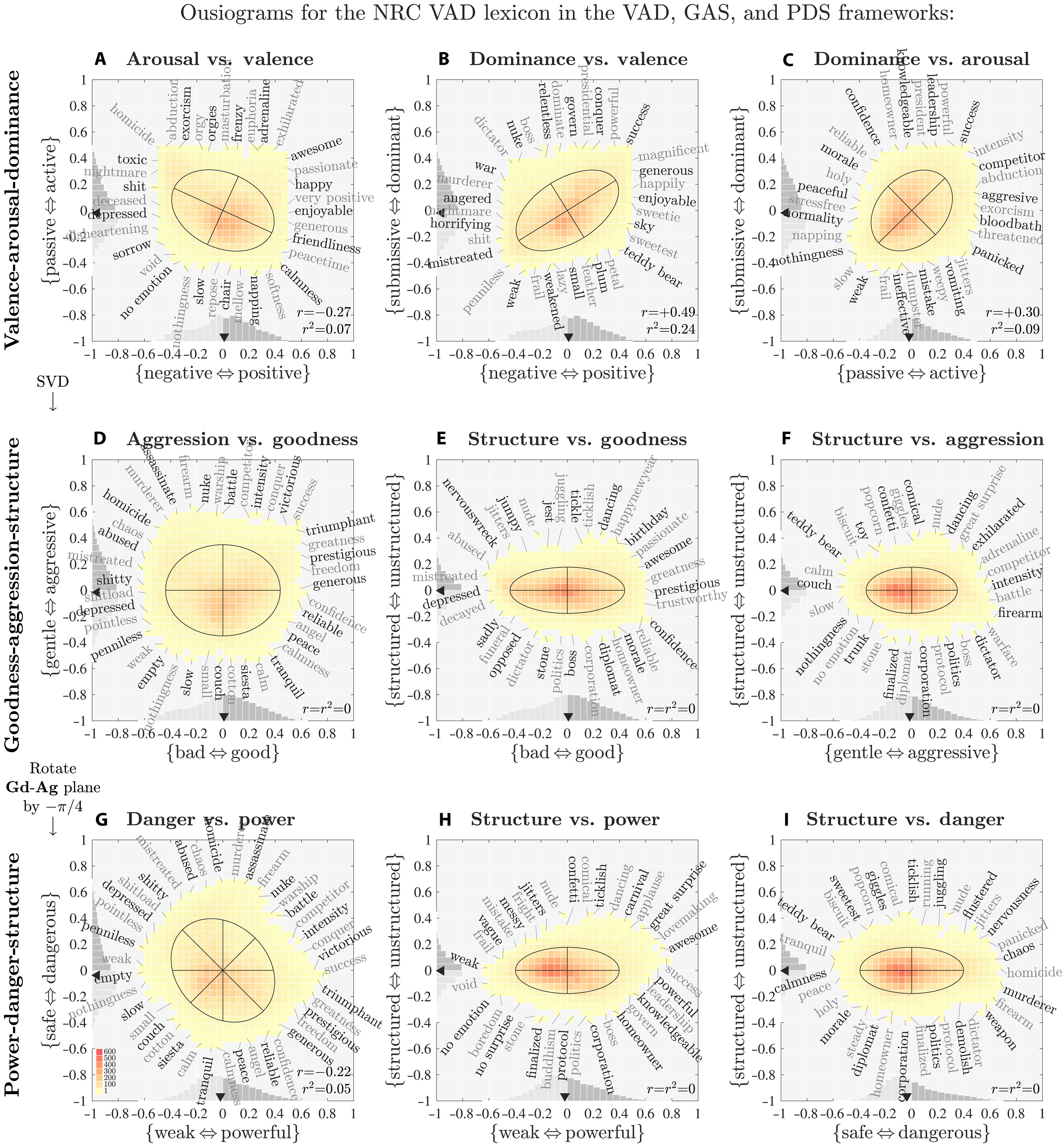
Ousiometrics Analysis Says All Human Language Is Biased

A new tool drawing on billions of uses of more than 20,000 words and diverse real-world texts claims...

Wavelengths Of Light Are Why CO2 Cools The Upper Atmosphere But Warms Earth

There are concerns about projected warming on the Earth’s surface and in the lower atmosphere...

Here's Where Your Backyard Was 300 Million Years Ago

We may use terms like "grounded" and terra firma to mean stability and consistency but geology...

Convergent Evolution Cheat Sheet Now 120 Million Years Old

One tenet of natural selection is a random walk of genes but nature may be more predictable than...

User picture.
News StaffRSS Feed of this column.

News Releases From All Over The World, Right To You... Read More »

Blogroll

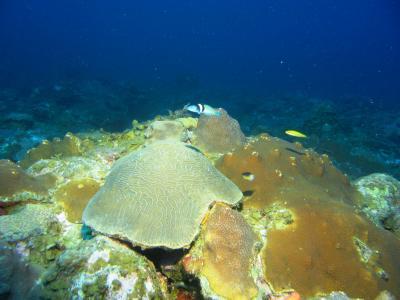
A new study on biological erosion of mesophotic tropical coral reefs - low energy reef environments between 30-150 meters deep - provides new insights into processes that affect the overall structure of these important ecosystems.

The purpose of the study was to better understand how bioerosion rates and distribution of bioeroding organisms, such as fish, mollusks and sponges, differ between mesophotic reefs and their shallow-water counterparts and the implications of those variations on the sustainability of the reef structure.

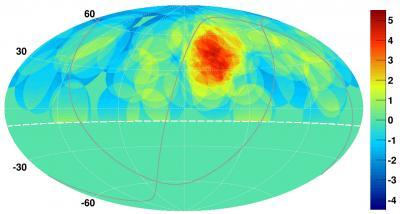
Astronomers have found a "hotspot" beneath the Big Dipper emitting a disproportionate number of the highest-energy cosmic rays, a discovery which may move physics toward identifying the mysterious sources of the most energetic particles in the universe.

Many astrophysicists suspect ultrahigh-energy cosmic rays are generated by active galactic nuclei, or AGNs, in which material is sucked into a supermassive black hole at the center of galaxy, while other material is spewed away in a beam-like jet known as a blazar. Another popular possibility is that the highest-energy cosmic rays come from some supernovas (exploding stars) that emit gamma rays bursts.

There are 10 proteins in the blood which can predict the onset of Alzheimer's and that means there may be a blood test for the disease on the horizon.

Proteomics company Proteome Sciences plc and King's College London examined over individuals from three international studies. Blood samples from a total of 1,148 individuals (476 with Alzheimer's disease; 220 with 'Mild Cognitive Impairment' (MCI) and 452 elderly controls without dementia) were analyzed for 26 proteins previously shown to be associated with Alzheimer's disease. A sub-group of 476 individuals across all three groups also had an MRI brain scan. 

In modern times, an otherwise healthy pre-term baby has a very strong chance of survival. And that survival chance goes way up in high-volume neonatal units; a counter-intuitive finding for people who think that slower dedicated health care is the way to go. Doctors and nurses in high-volume neonatal units have likely seen it all and have far more experience.

An analysis based on 14 marathons that occurred in the U.S. in 2011, which included almost 92,000 competitors, led scholars to conclude that, when it comes to running marathons, men are more likely than women to slow their pace.

The United States leads the world in science output, with 5 percent of the population producing 30 percent of the world's research. And yet compared to scientists in other countries, U.S.-based scientists are underrepresented as authors of articles on the potential role of innate variation in athletic performance. 

Grand Valley State University researchers searched journals and NIH and NSF databases for grant proposals solicited or funded from 2000-2012 to determine if the proportion of authors that listed U.S. addresses was associated with funding patterns. NIH did not solicit grant proposals designed to examine these factors in the context of athletic performance and neither NIH nor NSF funded grants designed to study these topics.