Banner
Ousiometrics Analysis Says All Human Language Is Biased

A new tool drawing on billions of uses of more than 20,000 words and diverse real-world texts claims...

Wavelengths Of Light Are Why CO2 Cools The Upper Atmosphere But Warms Earth

There are concerns about projected warming on the Earth’s surface and in the lower atmosphere...

Here's Where Your Backyard Was 300 Million Years Ago

We may use terms like "grounded" and terra firma to mean stability and consistency but geology...

Convergent Evolution Cheat Sheet Now 120 Million Years Old

One tenet of natural selection is a random walk of genes but nature may be more predictable than...

User picture.
News StaffRSS Feed of this column.

News Releases From All Over The World, Right To You... Read More »

Blogroll

All across the world, there is one thing babies share in common; their size, if they are born to healthy, well-educated, well-nourished mothers.

The dose makes the poison, it is often said, and it is true. Lots of medicines and chemicals are harmless or beneficial in reasonable quantities but dangerous in high quantities. What about CO2 in plants? Plants need it for food but they also recognize too much is a bad thing. 

Biologists have been studying a long-standing mystery concerning the way plants reduce the numbers of their breathing pores in response to rising carbon dioxide levels in the atmosphere.

The authors report the discovery of a new genetic pathway in plants, made up of four genes from three different gene families that control the density of breathing pores—or "stomata"—in plant leaves in response to elevated CO2 levels.

There are numerous ways to address carbon emissions but are we choosing the right approaches? America and Europe have invested heavily in subsidizing solar and wind generation and solar panels - but critics contend that the same money spent modernizing older buildings would have done far more than funding Chinese corporations or wealthy homeowners has.

Low-carbon energy won't cost  more than what is currently spent on today's fossil-dominated energy system, according to new research from the International Institute for Applied Systems Analysis (IIASA) and partners.

Evolutionary adaptations have allowed Tibetans to have no trouble living at 13,000 feet, but how they became able to conquer the harsh environment of hypoxia has long been a mystery.

Medicine is advancing rapidly and it always has risks, but in early going the risks are going to be greater. A paper found that the risk of patient harm increased two-fold in 2006, the year when teaching hospitals nationwide embraced the pursuit of minimally invasive robotic surgery for prostate cancer.

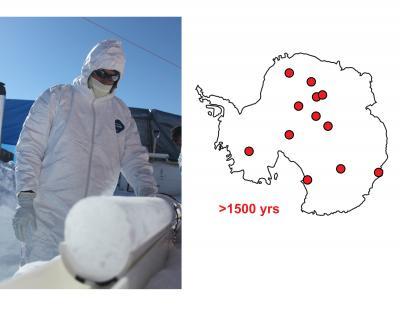
What is the impact of volcanic sulfate emissions on climate? Researchers have completed the most accurate and precise reconstruction to date of historic volcanic sulfate emissions in the Southern Hemisphere, derived from a large number of individual ice cores collected at various locations across Antarctica and is the first annually resolved record extending through the Common Era - the last 2,000 years of human history.

Reconstructions of the past are critical to creating accurate model simulations used to assess natural versus anthropogenic climate forcing. Such model simulations underpin environmental policy decisions including those aimed at regulating greenhouse gas and aerosol emissions to mitigate projected global warming.