Banner
Ousiometrics Analysis Says All Human Language Is Biased

A new tool drawing on billions of uses of more than 20,000 words and diverse real-world texts claims...

Wavelengths Of Light Are Why CO2 Cools The Upper Atmosphere But Warms Earth

There are concerns about projected warming on the Earth’s surface and in the lower atmosphere...

Here's Where Your Backyard Was 300 Million Years Ago

We may use terms like "grounded" and terra firma to mean stability and consistency but geology...

Convergent Evolution Cheat Sheet Now 120 Million Years Old

One tenet of natural selection is a random walk of genes but nature may be more predictable than...

User picture.
News StaffRSS Feed of this column.

News Releases From All Over The World, Right To You... Read More »

Blogroll

Chimpanzees are copycats but sometimes it is more than copying, it becomes new traditions particular to only one specific group of these primates, according to a paper in Animal Cognition

In 2010,
Edwin van Leeuwen of the Max Planck Institute for Psycholinguistics in The Netherlands
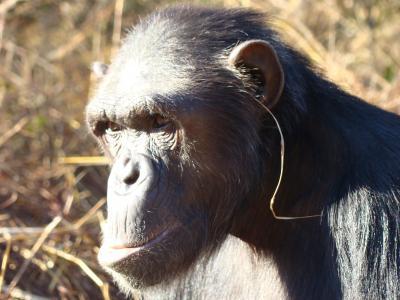
 noticed how a female chimp named Julie repeatedly put a stiff, strawlike blade of grass for no apparent reason in one or both of her ears. She left it there even when she was grooming, playing or resting in Zambia's Chimfunshi Wildlife Orphanage Trust sanctuary. On subsequent visits, van Leeuwen saw that other chimpanzees in her group had started to do the same.

Researchers from 13 institutions would worldwide believe they have made a breakthrough in understanding what causes autism -  a clear cut case of an autism specific gene. 

An analysis of 6,176 children with autism spectrum disorder, researchers found 15 had a CHD8 mutation and all these cases had similar characteristics in appearance and issues with sleep disturbance and gastrointestinal problems. How is 15 out of 6,176 a clear cut case? To find out, they went to zebra fish.

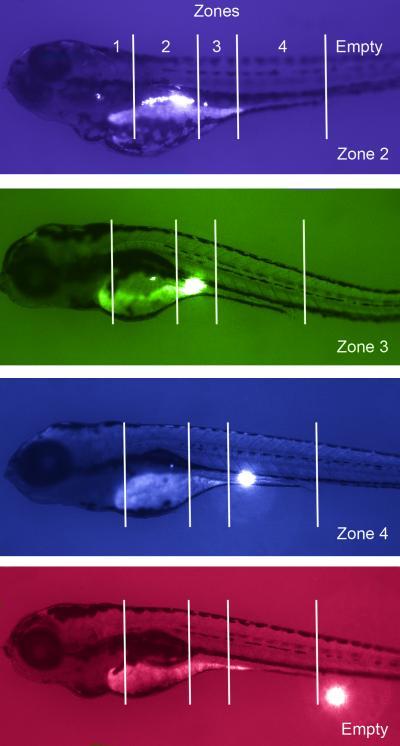
They disrupted the CHD8 gene in the fish and the fish developed large heads and wide set eyes. They then fed the fish fluorescent pellets and found that the fish had problems discarding food waste and were constipated.

In business, the saying goes there are good decisions, bad decisions and no decisions, and they are in that order of being problematic. This lacks common sense to some; how can doing the wrong thing be better than doing no thing? Companies who don't try and fail are not trying enough, that's why.

Most people would rather do something than nothing. Disney theme parks know this. You may may be in line for an hour but you are always moving. And then psychologists say we're just not comfortable in our own heads. Most people will do something, even the wrong thing, they write in Science.

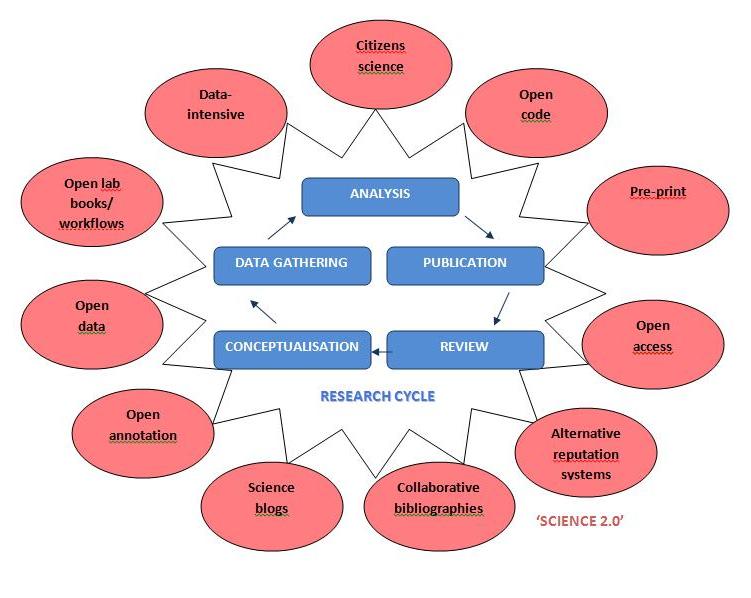
The European Commission has launched a public consultation on Science 2.0 in order to gauge the trend towards a more open, data-driven and people-focused way of doing research and innovation. 
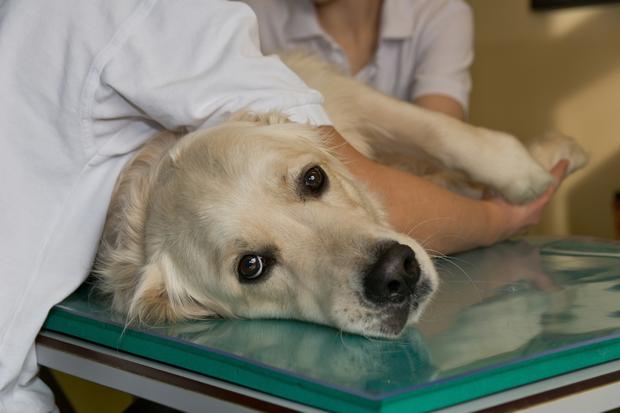
After the age of 10, a dog develops cancer almost every second of the day - about 5 percent of the elderly dog population per year. If you have the financial means, a few therapies derived from human medicine are available for dogs but a truly successful form of therapy by which antibodies inhibit tumor growth has not been available for animals so far. 

Scientists at the inter-university Messerli Research Institute of the Vetmeduni Vienna, the Medical University of Vienna, and the University of Vienna have developed, for the first time, antibodies to treat cancer in dogs. As in humans, cancers in dogs have complex causes. The interaction of the environment, food, and genetic disposition are the most well known factors.
Other than being lauded for its spectacular catering, he 2009 Climate Convention Conference in Copenhagen didn't accomplish much.

One big reason was because developed nations wanted to curb emissions while developing nations wanted to make wealthier countries pay for their historic emissions - their carbon debt.