Banner
Ousiometrics Analysis Says All Human Language Is Biased

A new tool drawing on billions of uses of more than 20,000 words and diverse real-world texts claims...

Wavelengths Of Light Are Why CO2 Cools The Upper Atmosphere But Warms Earth

There are concerns about projected warming on the Earth’s surface and in the lower atmosphere...

Here's Where Your Backyard Was 300 Million Years Ago

We may use terms like "grounded" and terra firma to mean stability and consistency but geology...

Convergent Evolution Cheat Sheet Now 120 Million Years Old

One tenet of natural selection is a random walk of genes but nature may be more predictable than...

User picture.
News StaffRSS Feed of this column.

News Releases From All Over The World, Right To You... Read More »

Blogroll

Can addiction be predicted? That's always been the goal and conjecture has focused on everything from family to environment. But there are just as many fails as wins. A child who grew up in a house with smokers is only correlated to smoking if they felt like their parents were positive role models, for example, so inheritance claims are spotty.

We all know how fire works, the same way we know how gravity works. But, like gravity, there is a lot we don't know about combustion. 

There are many reasons to delve into its secrets. For modern culture, combustion insight could lead to more efficient fuel use and that means less pollution. Today, gasoline has amazing energy density and that makes it difficult to replace so while we research something better, more efficient combustion would mean less waste.

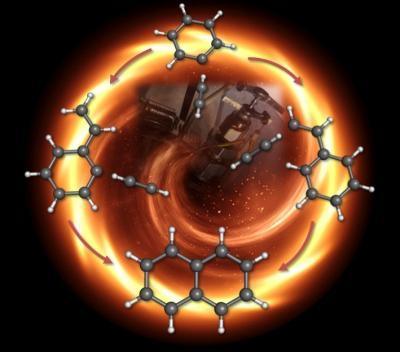
Researchers at the Department of Energy's Lawrence Berkeley National Lab (LBNL) and the University of Hawaii have uncovered the first step in the process that transforms gas-phase molecules into solid particles like soot and other carbon-based compounds.

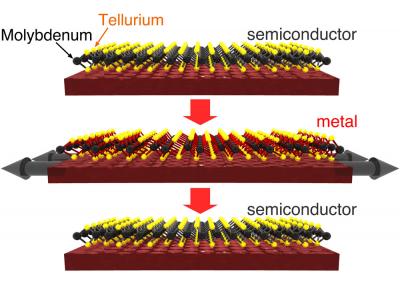
Stanford researchers envision a crystal that can form a monolayer three atoms thick. Their computer simulations show that this crystal, molybdenum ditelluride, can act like a switch: its crystal lattice can be mechanically pulled and pushed, back and forth, between two different atomic structures -- one that conducts electricity well, the other that does not. 

The switchable material is formed when one atomic layer of molybdenum atoms gets sandwiched between two atomic layers of tellurium atoms. Molybdenum and tellurium are elements that are currently used as additives for making alloys, such as steel. Tellurium is also a component of many modern solar cells.

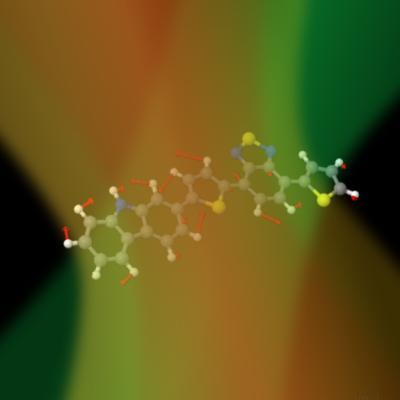
We all have some idea how solar panels work by now; a photovoltaic cell gets bombarded by photons from the sun, which knocks loose electrons that flow as electricity, hopefully while wasting as little energy in the form of heat as possible.

Beyond that, it's a topic of research in order to try and create panels that are less damaging to the environment while hoping to protect the environment.

Oddly, that might mean plastic. 

The dominant hypothesis for the reason that northern Europeans developed light skin is that they needed to absorb more ultraviolet (UV) light to make more vitamin D, which is vital for healthy bones and immune function.

Not so, says a U.C. San Francisco dermatologist.  Peter Elias, MD, and colleagues write in Evolutionary Biology that changes in the skin's function as a barrier to the elements made a greater contribution than alterations in skin pigment in the ability of northern Europeans to make vitamin D. They write that genetic mutations compromising the skin's ability to serve as a barrier allowed fair-skinned Northern Europeans to populate latitudes where too little ultraviolet B (UVB) light for vitamin D production penetrates the atmosphere.

Though the central coast of California is some of the best farmland in the world, organic farmers who don't want to use modern science have a difficult time producing crops for their $35 billion and growing in corporate customers.

Yet science can help there also. Cover crops can provide weed and erosion control so scientifically determining the best method for establishing a uniform and dense cover crop stand as soon as possible after planting is a critical first step.