Banner
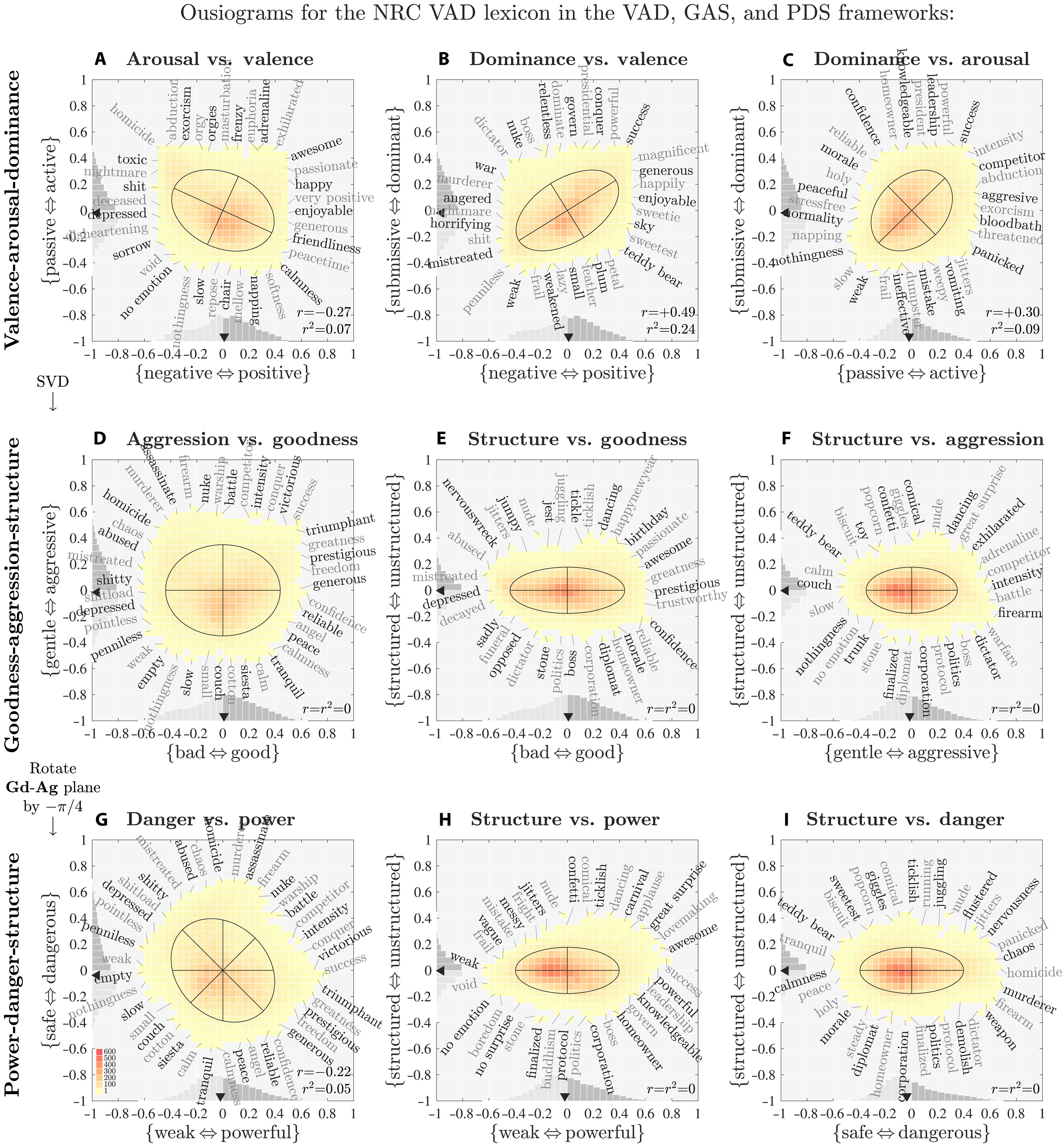
Ousiometrics Analysis Says All Human Language Is Biased

A new tool drawing on billions of uses of more than 20,000 words and diverse real-world texts claims...

Wavelengths Of Light Are Why CO2 Cools The Upper Atmosphere But Warms Earth

There are concerns about projected warming on the Earth’s surface and in the lower atmosphere...

Here's Where Your Backyard Was 300 Million Years Ago

We may use terms like "grounded" and terra firma to mean stability and consistency but geology...

Convergent Evolution Cheat Sheet Now 120 Million Years Old

One tenet of natural selection is a random walk of genes but nature may be more predictable than...

User picture.
News StaffRSS Feed of this column.

News Releases From All Over The World, Right To You... Read More »

Blogroll
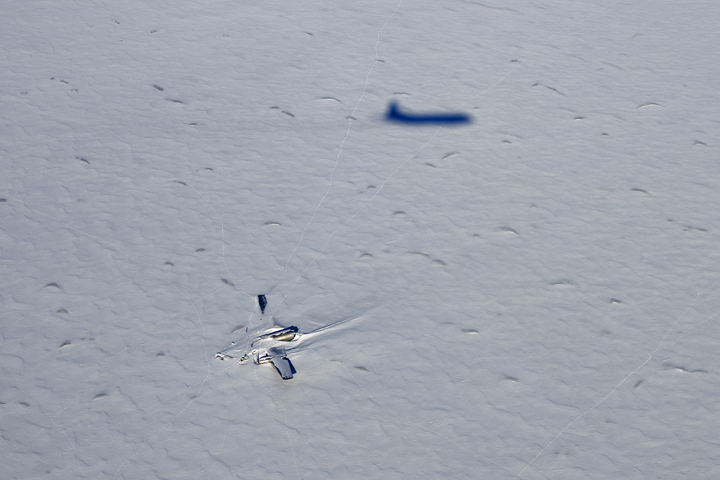
The Digital Mapping System (DMS) instrument attached to NASA’s P-3 Orion airplane for the Operation IceBridge campaign has captured an interesting image during its latest annual Operation IceBridge campaign to the Arctic and Antarctic to monitor glaciers, ice sheets, and sea ice.

The 2014 northern spring campaign ended on May 23 after eleven weeks of flights, but not before taking photos of the Kee Bird, a wrecked B-29 Superfortress that made an emergency landing on a northwest Greenland ice sheet in 1947. 

Conventional touchscreens often use coatings made of indium tin oxide (ITO) which are  brittle, may shatter and increasingly costly to manufacture but polymer scientists have developed a transparent electrode that could make displays shatterproof.

In a recent paper, they demonstrated how a transparent layer of electrodes on a polymer surface could be extraordinarily tough and flexible, withstanding repeated scotch tape peeling and bending tests.  

If you ask any journalist who writes a science article, or a PR person pitching one, if they would rather have a blurb about their work or get mentioned on Twitter, every single one will go for the link from Science 2.0.

The mitochondrial DNA of the first Near Eastern farmers has been sequenced for the first time. In the research, experts analysed samples from three sites located in the birthplace of Neolithic agricultural practices: the Middle Euphrates basin and the oasis of Damascus, located in today's Syria and date at about 8,000 BC.

The study is focused on the analysis of mitochondrial DNA --a type of non-Mendelian maternally inherited DNA-- from the first Neolithic farmers, by means of samples obtained by the Universitat Autònoma de Barcelona (UAB) research group which were first processed by the University of Barcelona (UB) research group.

For decades, physicists have searched for exotic bound states comprising more than three quarks.

In 2011, over 120 scientists from eight countries discovered strong indications for the existence of an exotic dibaryon made up of six quarks. Now, experiments performed at Jülich's accelerator COSY have shown that uch complex particles do exist in nature. This discovery by the WASA-at-COSY collaboration goes beyond what had been done before. Physicists were only able to reliably verify two different classes of hadrons: volatile mesons comprising one quark and one antiquark and baryons consisting of three quarks.

A new study finds that seminal fluid - semen - contains biomarkers for prostate cancer, the most common cancer in men. 

University of Adelaide research fellow and lead author Dr Luke Selth says the commonly used PSA (prostate specific antigen) test is by itself not ideal to test for the cancer.
But the results in Endocrine-Related Cancer show that their new test finds presence of certain molecules in seminal fluid and indicates not only whether a man has prostate cancer, but also the severity of the cancer.