Banner
Ousiometrics Analysis Says All Human Language Is Biased

A new tool drawing on billions of uses of more than 20,000 words and diverse real-world texts claims...

Wavelengths Of Light Are Why CO2 Cools The Upper Atmosphere But Warms Earth

There are concerns about projected warming on the Earth’s surface and in the lower atmosphere...

Here's Where Your Backyard Was 300 Million Years Ago

We may use terms like "grounded" and terra firma to mean stability and consistency but geology...

Convergent Evolution Cheat Sheet Now 120 Million Years Old

One tenet of natural selection is a random walk of genes but nature may be more predictable than...

User picture.
News StaffRSS Feed of this column.

News Releases From All Over The World, Right To You... Read More »

Blogroll
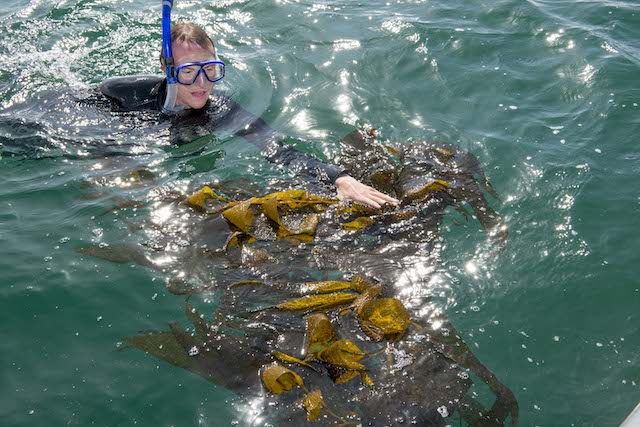
The Kelp Watch 2014 collaboration has some good news - the West Coast shoreline shows no signs of ocean-borne radiation from Japan’s Fukushima nuclear power plant disaster.

Kelp Watch 2014 uses coastal kelp beds as detectors of radioactive seawater arriving from Fukushima via the North Pacific Current. The new results are from samples primarily collected from Feb. 24 through March 14. During the first phase of the project, samples were taken from 38 of the 44 sites originally identified, and the data being presented comes from an analysis of 28 of the 38 sample sites represented.

Gang culture gets you one way or the other according to a new paper. Gang members are twice as likely to become both a victim and an offender of a crime than non-gang members.

Why? Single acts of violence often lead to retribution between gangs as a whole, according to David Pyrooz, an assistant professor in criminal justice at Sam Houston State University, principal author of the study. 

"In other words, gang members are not distinctly offenders or victims; instead, gang membership is a common source of both forms of violence," said Pyrooz. "Today's criminal offender is tomorrow's victim, and today's victim is quite likely to be tomorrow's criminal offender."

Scientists have discovered a new species of long-snouted tyrannosaur, nicknamed Pinocchio rex, which stalked the Earth more than 66 million years ago.

The dinosaur, officially named Qianzhousaurus sinensis, was unearthed in southern China and confirms the existence of long-snouted tyrannosaurs. Researchers say the anima was a fearsome carnivore that lived in Asia during the late Cretaceous period. 

The newly found ancient predator looked very different from most other tyrannosaurs. It had an elongated skull and long, narrow teeth compared with the deeper, more powerful jaws and thick teeth of a conventional T. rex.

Emotions like fear, anger, sadness, and joy are how we know people to adjust to their environment and react flexibly to stress and strain.

They are the vital signs of cognitive processes, physiological reactions, and social behavior. How emotions are processed is linked to structures in the brain, i.e. to what is known as the limbic system. Within this system, researchers believe the amygdala plays a central role – above all it processes negative emotions like anxiety and fear.

If the activity of the amygdala becomes unbalanced, depression and anxiety disorders may develop.

The modern world of Big Data increasingly requires knowledge of statistics and biologists are scrambling to master that along with all of the expertise needed to solve mysteries of nature.

A new statistical framework could help, according to a new paper, because it can substantially increase the power of genome-wide association studies (GWAS) to detect genetic influences on human disease.

Despite the proliferation of
genome-wide association studies
, the associations found so far have largely failed to account for the known effects of genes on complex disease — the problem of "missing heritability." Standard approaches also struggle to find combinations of multiple genes that affect disease risk in complex ways, known as genetic interactions.

The climate hockey stick, a popular visual metaphor for climate change, has received considerable attention. It depicts a slightly cooling trend in the Northern Hemisphere from 1000 A.D. until 1900 A.D. and then swings sharply upward in the last 80 years. It was created using tree ring data for the older timeframes but not recently - after 1960, tree ring data showed a cooling trend so it was replaced.

Clearly that was not correct but if tree rings don't detect the modern warming trend, they might also have 'missed' warming episodes in the past - we know that the climate is not cooler now, that is not the issue, but if tree ring proxies are unreliable, it casts doubt on the whole onus of media and IPCC accounts since 2001.