Banner
Ousiometrics Analysis Says All Human Language Is Biased

A new tool drawing on billions of uses of more than 20,000 words and diverse real-world texts claims...

Wavelengths Of Light Are Why CO2 Cools The Upper Atmosphere But Warms Earth

There are concerns about projected warming on the Earth’s surface and in the lower atmosphere...

Here's Where Your Backyard Was 300 Million Years Ago

We may use terms like "grounded" and terra firma to mean stability and consistency but geology...

Convergent Evolution Cheat Sheet Now 120 Million Years Old

One tenet of natural selection is a random walk of genes but nature may be more predictable than...

User picture.
News StaffRSS Feed of this column.

News Releases From All Over The World, Right To You... Read More »

Blogroll

 A new paper suggests that dopamine release is increased in obsessive-compulsive disorder (OCD) and may be normalized by the therapeutic application of deep brain stimulation (DBS). The authors of the paper in Biological Psychiatry
 characterize dopamine as the 'elixir of pleasure' because so many rewarding stimuli – food, drugs, sex, exercise – are correlated to its release in the brain.

Yet research also indicates that when drug use becomes compulsive, the related dopamine release becomes deficient in the striatum, a brain region that is involved in reward and behavioral control.

The genomics revolution has been going on for decades, but half of known eukaryote lineages remain unstudied at the genomic level.

A new survey, with results published in
of Trends in Ecology and Evolution, concludes that this is simply a popularity contest and the field is displaying research bias against 'less popular', but potentially genetically rich, single-cell organisms. The lack of microbial representation leaves a world of untapped genetic potential undiscovered.

UPTON, NY—Scientists at the U.S. Department of Energy's Brookhaven National Laboratory are seeking ways to synchronize the magnetic spins in nanoscale devices to build tiny yet more powerful signal-generating or receiving antennas and other electronics. Their latest work, published in Nature Communications, shows that stacked nanoscale magnetic vortices separated by an extremely thin layer of copper can be driven to operate in unison, potentially producing a powerful signal that could be put to work in a new generation of cell phones, computers, and other applications.

The aim of this "spintronic" technology revolution is to harness the power of an electron's "spin," the property responsible for magnetism, rather than its negative charge.

It's community pool season and while urban moms think that a chlorinated municipal pool is cleaner than a rural pond, microbiologists know that isn't really true.

Bacteria and parasites can lurk in all kinds of water and put a real damper on summertime fun.

At biggest risk are the youngest kids, for a variety of reasons.
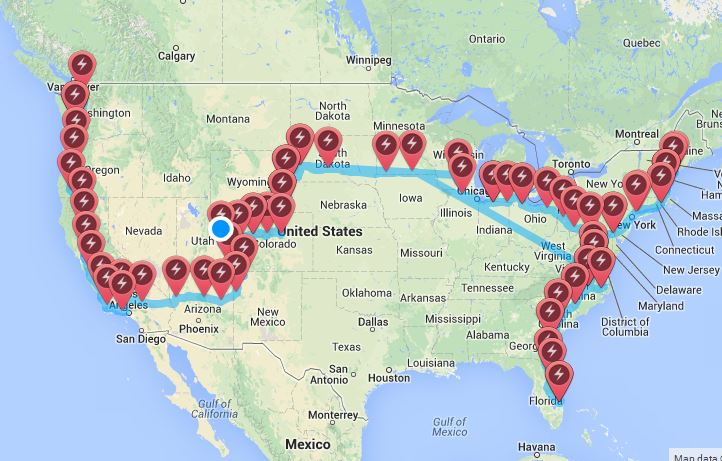
Earlier this month, the Epic Electric American Road Trip, a 24-day, 12,183-mile battery-powered journey sponsored by electric vehicle (EV) software and information services company Recargo Inc., was completed.

They expect to be awarded Guinness World Record verification for the longest vehicle journey ever taken using 100% electric power. The goal was to emphasize the possibilities of the nation's current electric vehicle charging infrastructure.
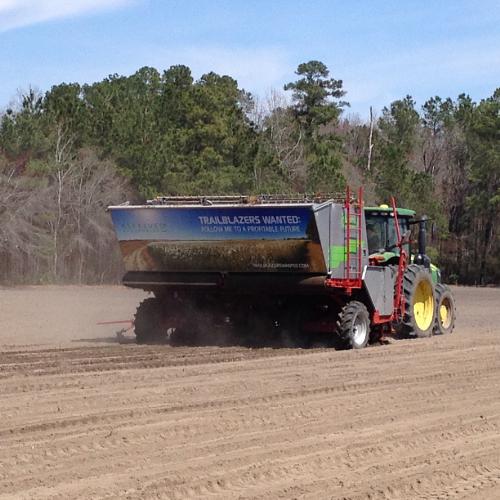
North Carolina farmers and landowners are participating in program to grow giant miscanthus grass for renewable products using underutilized and marginal land.

Giant miscanthus grass is a rapidly renewable biomass crop that provides a viable economic alternative for many farmers and landowners with underutilized and marginal land that might otherwise lay dormant or fail to provide annual profits.

Perennial giant miscanthus grows well under a range of soil and environmental conditions. It requires little to grow and maintain. It's a simple, convenient and profitable crop to raise.

Planting biomass at commercial scale includes solving the significant challenge of establishing rhizome-propagated crops.