Banner
Ousiometrics Analysis Says All Human Language Is Biased

A new tool drawing on billions of uses of more than 20,000 words and diverse real-world texts claims...

Wavelengths Of Light Are Why CO2 Cools The Upper Atmosphere But Warms Earth

There are concerns about projected warming on the Earth’s surface and in the lower atmosphere...

Here's Where Your Backyard Was 300 Million Years Ago

We may use terms like "grounded" and terra firma to mean stability and consistency but geology...

Convergent Evolution Cheat Sheet Now 120 Million Years Old

One tenet of natural selection is a random walk of genes but nature may be more predictable than...

User picture.
News StaffRSS Feed of this column.

News Releases From All Over The World, Right To You... Read More »

Blogroll

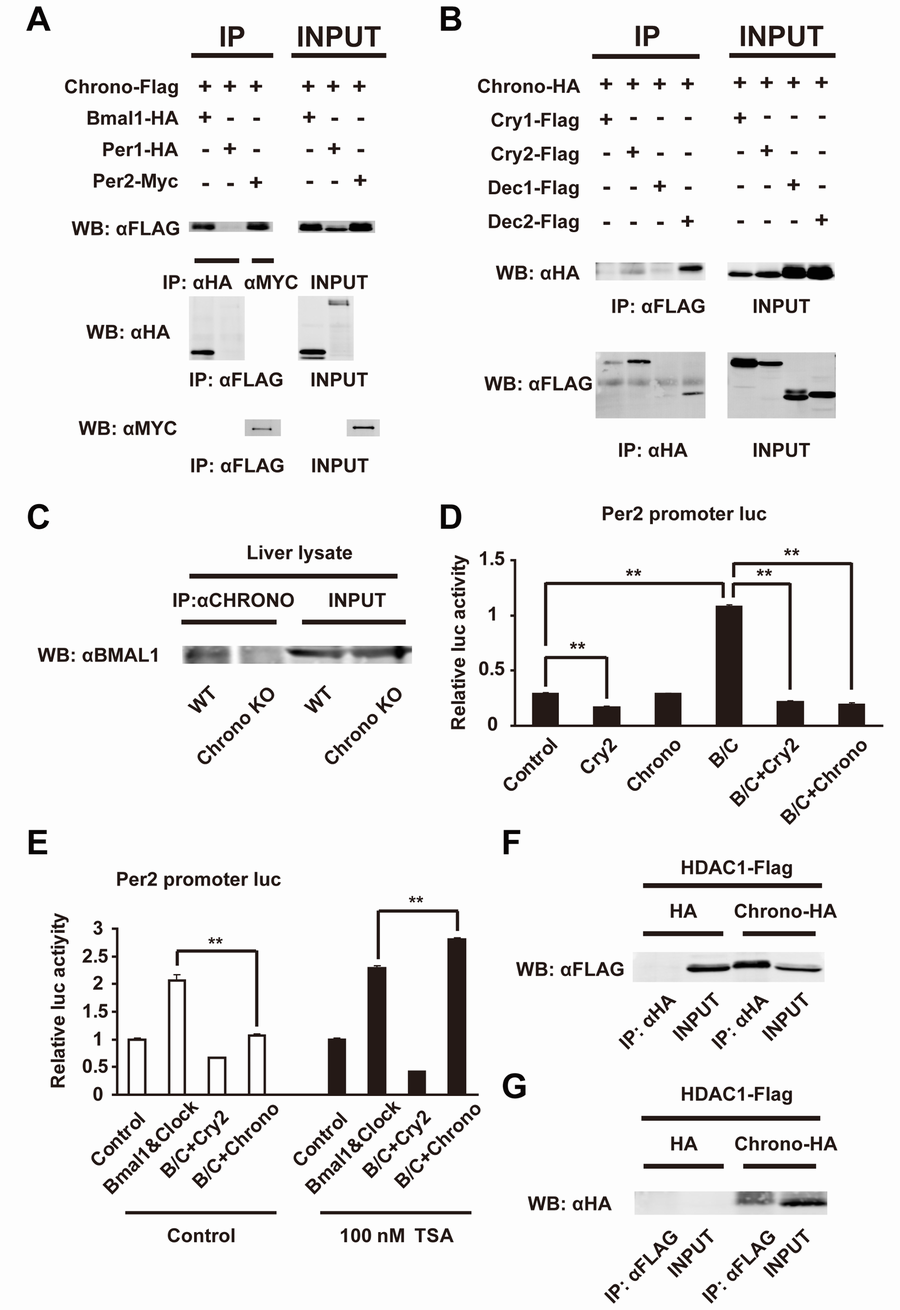
All organisms, from mammals to fungi, have daily cycles controlled by a tightly regulated internal clock called the circadian clock.

The circadian clock is influenced by exposure to light and dictates the wake-sleep cycle. At the cellular level, the clock is controlled by a complex network of genes and proteins that switch each other on and off based on cues from their environment and most genes involved in the regulation of the circadian clock have been characterized, but a key component was missing in mammals. 

In a new study, a team performed a genome-wide chromatin immunoprecipitation analysis for genes that were the target of BMAL1, a core clock component that binds to many other clock genes, regulating their transcription. 

Young adults who used marijuana recreationally show significant abnormalities in two key brain regions that are important in emotion and motivation, according to a study in the Journal of Neuroscience.

The authors document how casual use of marijuana is related to major brain changes and showed the degree of brain abnormalities in these regions is directly related to the number of joints a person smoked per week. The more joints a person smoked, the more abnormal the shape, volume and density of the brain regions.

Home can sometimes literally be in the kitchen.

A Puerto Rican community - in Connecticut of all places - creates cuisine authentic it has caught the attention of scientists.

Like immigrants throughout history who ventured forth with their favorite plants in tow, the Puerto Ricans of Hartford maintain cuisine as an important component of their identity. But this strong relationship to food has had a profound impact on human health by reshaping environmental biodiversity, influencing the diets of neighbors, and preserving elements of culture, according to botanists David W. Taylor and Gregory J. Anderson.

Without knowing it, organisms search for the next “winning” strategy in evolution. Mutation plays a key role in the evolution of new, and sometimes successful, traits. It's a lot like rock-paper-scissors - roshambo.(1)
A study by has determined that, on average nationally, minorities are exposed to 38 percent higher levels of nitrogen dioxide (NO2) outdoor air pollution compared to white people.

Nitrogen dioxide comes from sources like vehicle exhaust and power plants. Breathing NO2 is linked to asthma symptoms and heart disease. The Environmental Protection Agency has listed it as one of the seven key air pollutants it monitors. The researchers studied NO2 levels in urban areas across the country and compared specific areas within the cities based on populations defined in the U.S. Census as “nonwhite” or “white.”
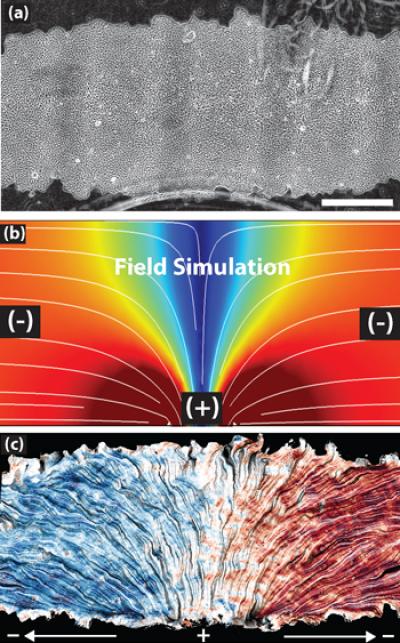
Researchers have used an electrical current to orchestrate the flow of a group of cells, an achievement that could establish the basis for more controlled forms of tissue engineering and for potential applications such as "smart bandages" that use electrical stimulation to help heal wounds.

In the experiments, the researchers used single layers of epithelial cells, the type of cells that bind together to form robust sheathes in skin, kidneys, cornea and other organs. They found that by applying an electric current of about five volts per centimeter, they could encourage cells to migrate along the direct current field.