Banner
Ousiometrics Analysis Says All Human Language Is Biased

A new tool drawing on billions of uses of more than 20,000 words and diverse real-world texts claims...

Wavelengths Of Light Are Why CO2 Cools The Upper Atmosphere But Warms Earth

There are concerns about projected warming on the Earth’s surface and in the lower atmosphere...

Here's Where Your Backyard Was 300 Million Years Ago

We may use terms like "grounded" and terra firma to mean stability and consistency but geology...

Convergent Evolution Cheat Sheet Now 120 Million Years Old

One tenet of natural selection is a random walk of genes but nature may be more predictable than...

User picture.
News StaffRSS Feed of this column.

News Releases From All Over The World, Right To You... Read More »

Blogroll
Kids know it is wrong to steal stuff - they also seem to know it's wrong to steal an idea. They just discover it a little later.

University of Washington psychologist Kristina Olson and colleagues discovered that preschoolers often don't view a copycat negatively but by the age of 5 or 6, they do. It holds true even across cultures that typically view intellectual property rights in different ways, like in Germany where they violate international trademarks and hold a Science 2.0 conference and, worse, charge people to attend.

Researchers at the University of California, San Diego School of Medicine have identified a mechanism that explains why people with the hepatitis C virus get liver disease and why the virus is able to persist in the body for so long.

The hard-to-kill pathogen, which infects an estimated 200 million people worldwide, attacks the liver cells' energy centers – the mitochondria – dismantling the cell's innate ability to fight infection. It does this by altering cells mitochondrial dynamics.

The study, published in today's issue of the Proceedings of the National Academy of Sciences, suggests that mitochondrial operations could be a therapeutic target against hepatitis C, the leading cause of liver transplants and a major cause of liver cancer in the U.S.

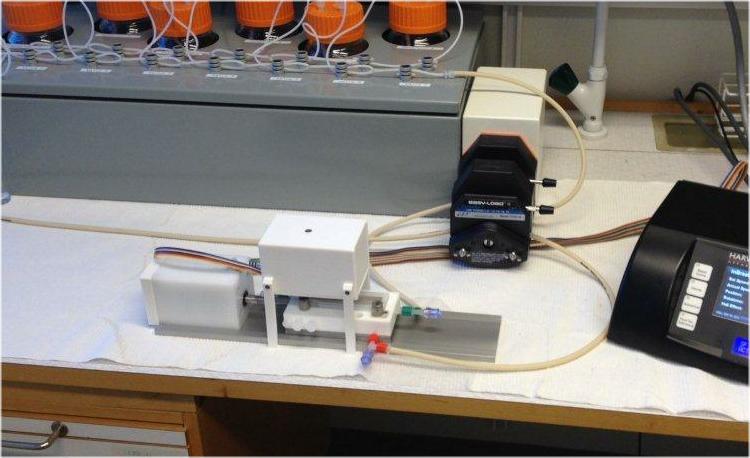
A research team led by Paolo Macchiarini, MD, PhD at Karolinska Institutet in Sweden has successfully transplanted a regenerated esophagus into a rat using a bioreactor developed by Harvard Apparatus Regenerative Technology (HART), a spin-off of Harvard Bioscience. Macchiarini has previously done several successful regenerated trachea transplants in human patients using a HART bioreactor.

The 15% fall in dietary salt intake, which is implicated in increased blood pressure, over the past decade in England is likely to have had a key role in the 40% drop in deaths from heart disease and stroke over the same period, according to a paper in BMJ Open.

Average salt intake across the nation is still far too high, the authors warn, and much greater effort is needed to curb the salt content of the foods we eat. 

The authors base their findings on an analysis of data from more than 31,500 people taking part in the Health Survey for England for the years 2003—when initiatives to curb population salt intake began across the UK—2006, 2008, and 2011.

 A meta-analysis that included 14 randomized controlled trials with a total of 626 adult participants found that  whey protein, either as a supplement combined with resistance exercise or as part of a weight-loss or weight-maintenance diet, may provide men and women benefits related to body composition.

A small icy object within the rings of Saturn may be a new moon, according to interpretation of images taken with Cassini's narrow angle camera on April 15, 2013 which show disturbances at the very edge of Saturn's A ring -- the outermost of the planet's large, bright rings.

One of these disturbances is an arc about 20 percent brighter than its surroundings, 750 miles (1,200 kilometers) long and 6 miles (10 kilometers) wide. Scientists also found unusual protuberances in the usually smooth profile at the ring's edge. Scientists believe the arc and protuberances are caused by the gravitational effects of a nearby object.