
Banner
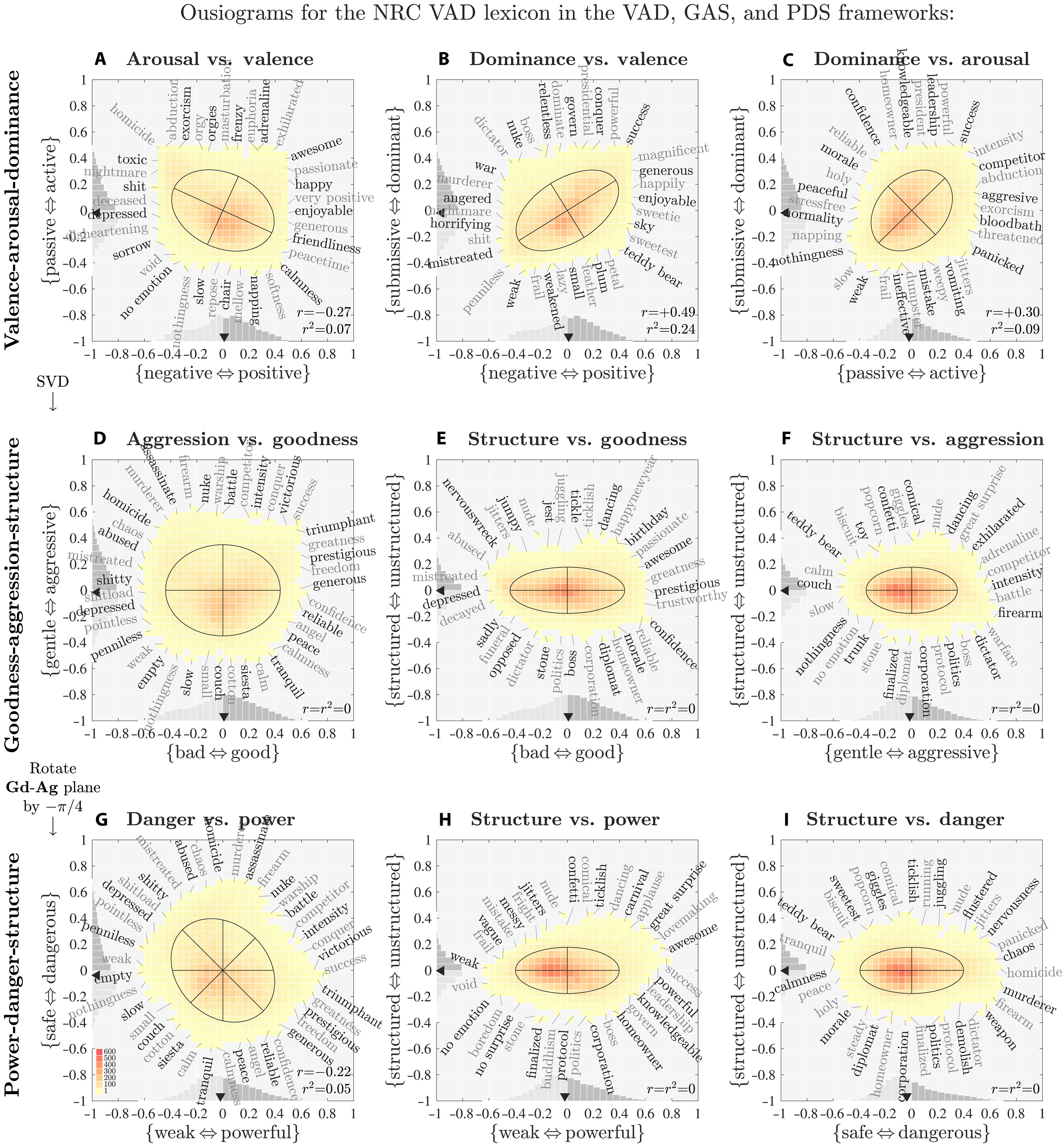
Ousiometrics Analysis Says All Human Language Is Biased

A new tool drawing on billions of uses of more than 20,000 words and diverse real-world texts claims...
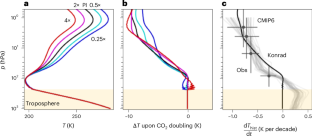
Wavelengths Of Light Are Why CO2 Cools The Upper Atmosphere But Warms Earth

There are concerns about projected warming on the Earth’s surface and in the lower atmosphere...

Here's Where Your Backyard Was 300 Million Years Ago

We may use terms like "grounded" and terra firma to mean stability and consistency but geology...

Convergent Evolution Cheat Sheet Now 120 Million Years Old

One tenet of natural selection is a random walk of genes but nature may be more predictable than...

User picture.
News StaffRSS Feed of this column.

News Releases From All Over The World, Right To You... Read More »

Blogroll

SAN DIEGO — Given omega 6 fatty acid's reputation for promoting cancer — at least in animal studies — researchers are examining the role that antioxidants play in blocking the harmful effects of this culprit, found in many cooking oils. After all, antioxidants are supposed to prevent DNA damage. But employing antioxidants could backfire, say researchers at Georgetown Lombardi Comprehensive Cancer Center.

In their study, being reported at the AACR Annual Meeting 2015, researchers found that vitamin E actually increased specific damage linked to omega 6 fatty acids. The vitamin promoted the formation of an "adduct," a structure that links a chemical to DNA, and which may cause mutations.

Right now a doomed gas cloud is edging ever closer to the supermassive black hole at the center of our Milky Way galaxy. These black holes feed on gas and dust all the time, but astronomers rarely get to see mealtime in action.

Northwestern University's Daryl Haggard has been closely watching the little cloud, called G2, and the black hole, called Sgr A*, as part of a study that should eventually help solve one of the outstanding questions surrounding black holes: How exactly do they achieve such supermassive proportions?

Las Vegas - A study published recently in PLOS ONE authored by Dr. Henry Sun and his postdoctoral student Dr. Gaosen Zhang of Nevada based research institute DRI provides new evidence that Earth bacteria can do something that is quite unusual. Despite the fact that these bacteria are made of left-handed (L) amino acids, they are able to grow on right-handed (D) amino acids. This DRI study, funded by the NASA Astrobiology Institute and the NASA Exobiology Program, takes a closer look at what these implications mean for studying organisms on Earth and beyond.

In a new paper, researchers writing in Current Biology show how lactase persistence variants tell the story about the ancestry of the Khoe people in southern Africa and that their pastoralist practices were probably brought to southern Africa by a small group of migrants from eastern Africa.

In 2005, NASA's Cassini spacecraft sent pictures back to Earth depicting an icy Saturnian moon spewing water vapor and ice from fractures, known as "tiger stripes," in its frozen surface. It was big news that tiny Enceladus—a mere 500 kilometers in diameter—was such an active place. Since then, scientists have hypothesized that a large reservoir of water lies beneath that icy surface, possibly fueling the plumes. Now, using gravity measurements collected by Cassini, scientists have confirmed that Enceladus does in fact harbor a large subsurface ocean near its south pole, beneath those tiger stripes.

Enceladus—one of Saturn's smaller satellites—has joined the ranks of Titan and Europa as a moon that appears to have liquid water splashing around inside of it, researchers say. New gravity data from the Cassini spacecraft, which has been exploring the planet's moons for 10 years, reveal that Enceladus harbors an ocean of water beneath 18 to 24 miles (30 to 40 kilometers) of ice at its surface.

A team of Italian and American scientists led by Luciano Iess at Sapienza Università di Roma in Rome, Italy investigated the moon's gravity field and the notable asymmetry it exhibits between northern and southern hemispheres to reach these conclusions. Their results appear in the 4 April issue of Science.



