Banner
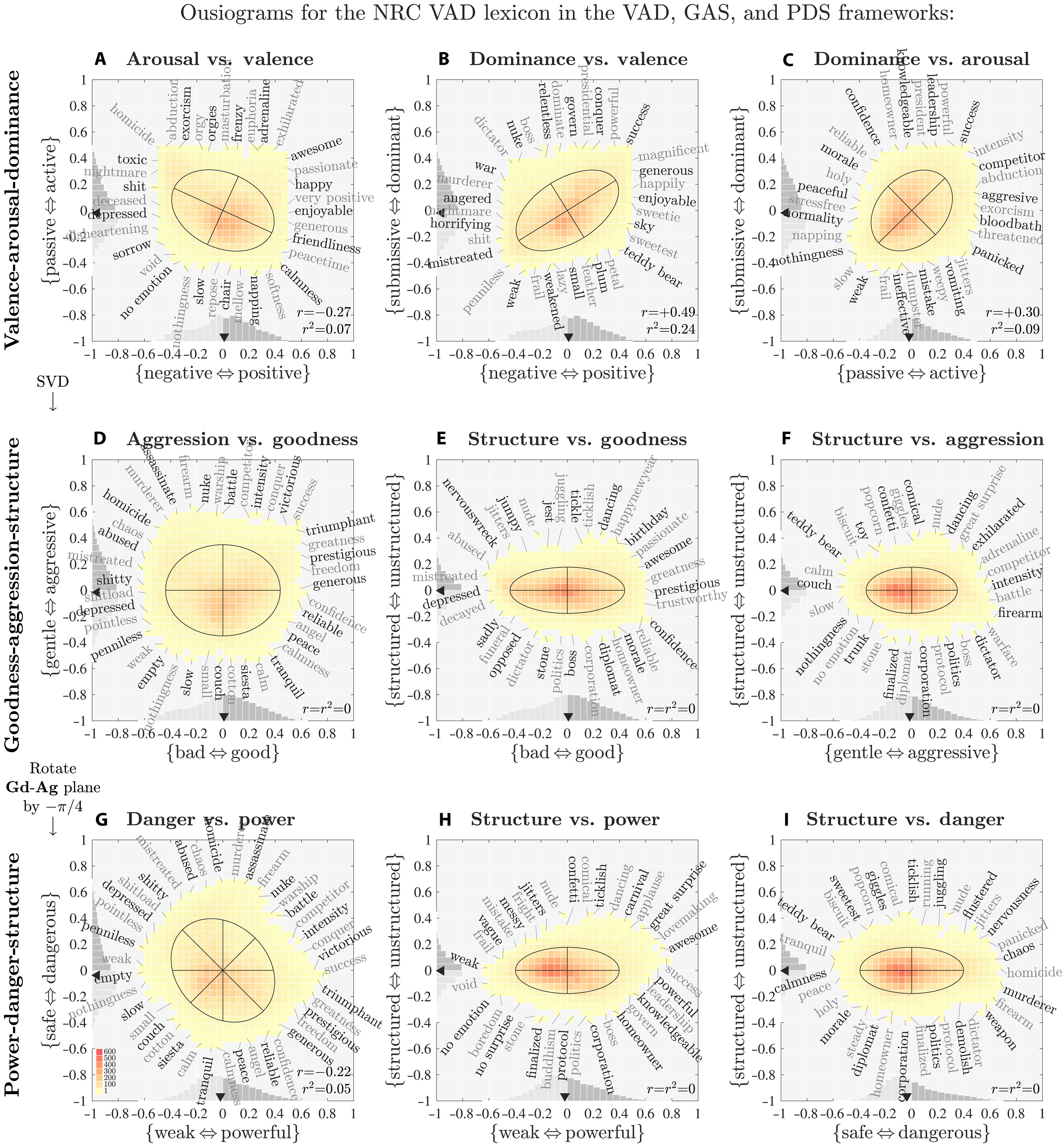
Ousiometrics Analysis Says All Human Language Is Biased

A new tool drawing on billions of uses of more than 20,000 words and diverse real-world texts claims...

Wavelengths Of Light Are Why CO2 Cools The Upper Atmosphere But Warms Earth

There are concerns about projected warming on the Earth’s surface and in the lower atmosphere...

Here's Where Your Backyard Was 300 Million Years Ago

We may use terms like "grounded" and terra firma to mean stability and consistency but geology...

Convergent Evolution Cheat Sheet Now 120 Million Years Old

One tenet of natural selection is a random walk of genes but nature may be more predictable than...

User picture.
News StaffRSS Feed of this column.

News Releases From All Over The World, Right To You... Read More »

Blogroll

Cigarette smoking among obese women appears to interfere with their ability to taste fats and sweets, a new study shows. Despite craving high-fat, sugary foods, these women were less likely than others to perceive these tastes, which may drive them to consume more calories.

Spit-powered, micro-sized microbial fuel cells produce enough energy to run on-chip applications, according to a paper in
Asia Materials.

Microbial fuel cells create energy when bacteria break down organic material producing a charge that is transferred to the anode. Bruce Logan, Professor Environmental Engineering at Penn State, has studied microbial fuel cells for more than ten years and usually looks to wastewater as a source for both the organic material and the bacteria to create either electricity or hydrogen, but says these tiny machines are a bit different.

MADISON – For Simon Gilroy, sometimes seeing is believing. In this case, it was seeing the wave of calcium sweep root-to-shoot in the plants the University of Wisconsin-Madison professor of botany is studying that made him a believer.

Gilroy and colleagues, in a March 24, 2014 paper in the Proceedings of the National Academy of Sciences, showed what long had been suspected but long had eluded scientists: that calcium is involved in rapid plant cell communication.

It's a finding that has implications for those interested in how plants adapt to and thrive in changing environments. For instance, it may help agricultural scientists understand how to make more salt- or drought-tolerant plants.

Sentinel-1A lifted off on a Soyuz launcher from Europe’s Spaceport in French Guyana at 9:02 PM GMT today.

Sentinel-1A has been at the launch site since the end of February and has been through numerous tests to make sure that everything is in perfect condition to provide essential radar imagery for Europe’s Copernicus program, which focuses on providing data to improve the way the environment is managed.

Weather satellites have been providing operational data for years, of course, but the family of Sentinel missions is designed for environmental monitoring.

Wildlife fences are constructed for lots of reasons, including having them killed by cars (and people along with them) to prevent the spread of disease and to protect small small populations of threatened species.

Near more populated areas, the concern is different; predatory animals will wantonly kill livestock and ruin crops, a few threaten human lives.

Separating people and wildlife by fencing is a mutually beneficial way to avoid detrimental effects but a paper in Science, clearly written by people who clearly do not live near bears, wolves or mountain lions, argues it is a last resort.

Oregon State University chemists have discovered how to use the sun as more than just a way to harvest passive energy - they can use it to directly produce the solar energy materials that make energy harvesting possible.

This breakthrough by chemical engineers at Oregon State University could soon reduce the cost of solar energy, speed production processes, use environmentally benign materials, and make the sun almost a "one-stop shop" that produces both the materials for solar devices and the eternal energy to power them.