Banner
The Scorched Cherry Twig And Other Christmas Miracles Get A Science Look

Bleeding hosts and stigmatizations are the best-known medieval miracles but less known ones, like ...

$0.50 Pantoprazole For Stomach Bleeding In ICU Patients Could Save Families Thousands Of Dollars

The inexpensive medication pantoprazole prevents potentially serious stomach bleeding in critically...

Metformin Diabetes Drug Used Off-Label Also Reduces Irregular Heartbeats

Adults with atrial fibrillation (AFib) who are not diabetic but are overweight and took the diabetes...

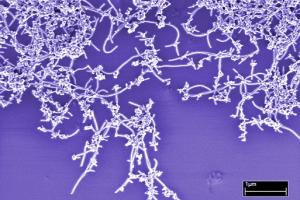
Your Predator: Badlands Future - Optical Camouflage, Now Made By Bacteria

In the various 'Predator' films, the alien hunter can see across various spectra while enabling...

User picture.
News StaffRSS Feed of this column.

News Releases From All Over The World, Right To You... Read More »

Blogroll

The first major global assessment of climate change science in six years has concluded that changes in the atmosphere, the oceans and glaciers and ice caps show unequivocally that the world is warming.

The Intergovernmental Panel on Climate Change (IPCC) concludes that major advances in climate modelling and the collection and analysis of data now give scientists “very high confidence” (at least a 9 out of 10 chance of being correct) in their understanding of how human activities are causing the world to warm.

In an advance that could lead to composite materials with virtually limitless performance capabilities, a University of Wisconsin-Madison scientist has dispelled a 50-year-old theoretical notion that composite materials must be made only of "stable" individual materials to be stable overall.

Writing in the Feb. 2 issue of the journal Physical Review Letters, Engineering Physics Professor Walter Drugan proves that a composite material can be stable overall even if it contains a material having a negative stiffness, or one unstable by itself-as long as it is contained within another material that is sufficiently stable.

For the first time, scientists have observed DNA being damaged by ultraviolet (UV) light.

Ohio State University chemists and their colleagues in Germany used a special technique to watch strands of DNA in the laboratory sustain damage in real time.

They observed the most common chemical reaction among a family of reactions on the DNA molecule that are linked to sunburn, and discovered that this key reaction happens with astounding speed -- in less than one picosecond, or one millionth of one millionth of a second.


An undamaged stack of thymine bases is colored green in the DNA double helix on the left.