

Banner
Synchrotron Could Shed Light On Exotic Dark Photons

There are many hypothetical particles proposed to explain dark matter and one idea to explore how...

The Pain Scale Is Broken But This May Fix It

Chronic pain is reported by over 20 percent of the global population but there is no scientific...
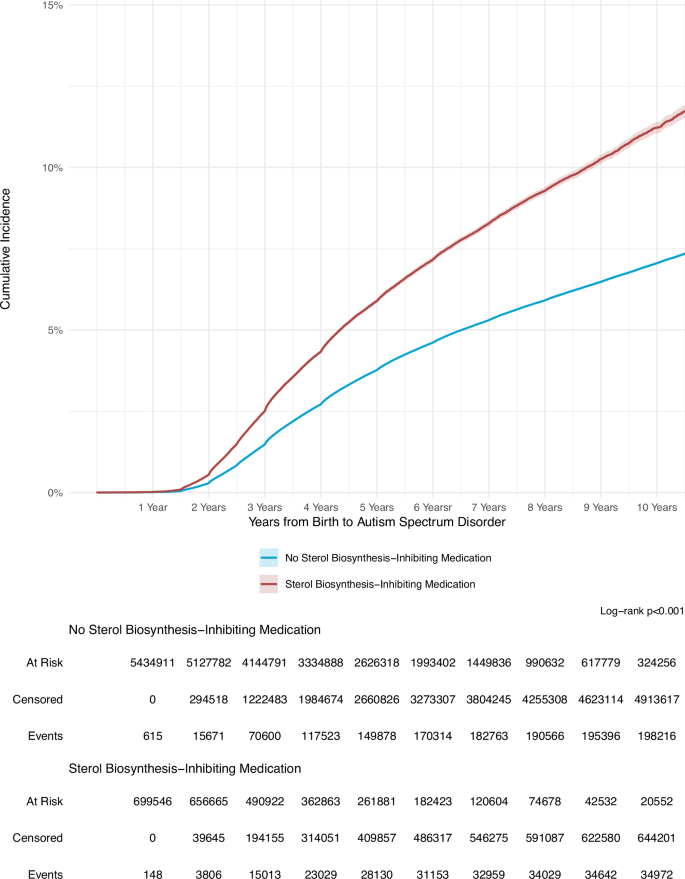
Study Links Antidepressants, Beta-blockers and Statins To Increased Autism Risk

An analysis of 6.14 million maternal-child health records  has linked prescription medications...

Pilot Study: Fibromyalgia Fatigue Improved By TENS Therapy

Fibromyalgia is the term for a poorly-understood condition where people experience pain and fatigue...

User picture.
News StaffRSS Feed of this column.

News Releases From All Over The World, Right To You... Read More »

Blogroll

MIAMI--A University of Miami (UM) Rosenstiel School of Marine and Atmospheric Science-led study shows that the North Atlantic absorbed 50 percent more man-made carbon dioxide over the last decade, compared to the previous decade. The findings show the impact that the burning of fossil fuels have had on the world's oceans in just 10 years.

Taking benzodiazepines (widely used drugs to treat anxiety and insomnia) is not associated with an increased dementia risk in older adults, finds a study published by The BMJ today.

These results do not support a direct (causal) association between benzodiazepine use and dementia, say the researchers. However, healthcare providers are still advised to avoid benzodiazepines in older adults to prevent important adverse health outcomes.

Benzodiazepines are widely prescribed among older adults to manage sleep, anxiety and depressive disorders. Some studies have suggested that benzodiazepine use could be associated with an increased risk of dementia, but results are conflicting.

The system that awards national and academic honors to doctors is called into question by a senior doctor writing in The BMJ this week.

Consultant cardiologist, Peter Wilmshurst, tells the story of Anjan Kumar Banerjee, a surgeon who spent the years 2002 to 2008 erased from the medical register for serious professional misconduct related to research fraud, financial misconduct, and substandard care.

Yet in 2014 he was awarded an MBE "for services to patient safety."

Insects are astonishingly diverse, accounting for nearly three-quarters of all named animal species living today, and their diversity is widely thought to have increased steadily over evolutionary time. A new study, however, finds that insect diversity actually has not changed much over the past 125 million years.

It's not that no new insects have evolved. Rather, as new insects have evolved, others have gone extinct, leaving the overall diversity relatively unchanged, according to paleontologist Matthew Clapham, associate professor of Earth and planetary sciences at UC Santa Cruz, whose team published the new findings February 3 in Proceedings of the Royal Society B.

Washington, D.C.--January 26, 2016-- Researchers have uncovered potent antimicrobial activity in a natural clay deposit found on the central coast of British Columbia, Canada. The research, published this week in mBio, an online open-access journal of the American Society for Microbiology, shows that the clay can kill members of the ESKAPE group of bacterial pathogens, the culprits behind some of the deadliest and most antibiotic-resistant hospital-acquired infections.

The little penguin species (popularly known as little blue penguins) found in southern New Zealand is a surprisingly recent invader from Australia, according to a new study led by University of Otago researchers.

Following the recent discovery that little penguins in the southern province of Otago belong to an Australian species, a team of researchers from New Zealand and the United States set out to determine when the Aussies first arrived.

The Marsden and Allan Wilson Centre-funded study was carried out by Dr Stefanie Grosser as part of her PhD research, and led by Professor Jon Waters from Otago's Department of Zoology.

