

Banner
Synchrotron Could Shed Light On Exotic Dark Photons

There are many hypothetical particles proposed to explain dark matter and one idea to explore how...

The Pain Scale Is Broken But This May Fix It

Chronic pain is reported by over 20 percent of the global population but there is no scientific...
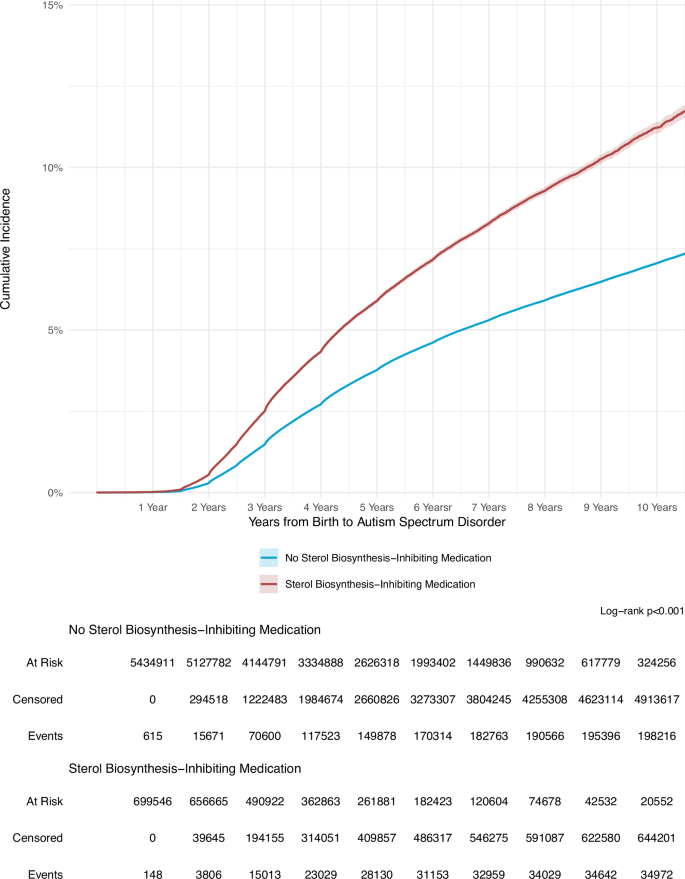
Study Links Antidepressants, Beta-blockers and Statins To Increased Autism Risk

An analysis of 6.14 million maternal-child health records  has linked prescription medications...

Pilot Study: Fibromyalgia Fatigue Improved By TENS Therapy

Fibromyalgia is the term for a poorly-understood condition where people experience pain and fatigue...

User picture.
News StaffRSS Feed of this column.

News Releases From All Over The World, Right To You... Read More »

Blogroll

Citizen science, amateurs who did science for the love of it rather than as a career, were once well-respected. They were often more elite than those who did it as an occupation, much like Sherlock Holmes was a superior detective because he was an amateur in a world where police forces were blue collar and lacked education. 

Washington, D.C., January 12, 2016 - As we continue to shrink electronic components, top-down manufacturing methods begin to approach a physical limit at the nanoscale. Rather than continue to chip away at this limit, one solution of interest involves using the bottom-up self-assembly of molecular building blocks to build nanoscale devices.

A team of astronomers led by Tomoharu Oka, a professor at Keio University in Japan, has found an enigmatic gas cloud, called CO-0.40-0.22, only 200 light years away from the center of the Milky Way. What makes CO-0.40-0.22 unusual is its surprisingly wide velocity dispersion: the cloud contains gas with a very wide range of speeds. The team found this mysterious feature with two radio telescopes, the Nobeyama 45-m Telescope in Japan and the ASTE Telescope in Chile, both operated by the National Astronomical Observatory of Japan.

A new study from the Medical Research Council Lifecourse Epidemiology Unit, University of Southampton, shows lesions, which can best be seen on MRI scans, could help identify individuals who are more likely to suffer from more rapidly progressing osteoarthritis.

Osteoarthritis is the most common type of arthritis in the UK and can cause the joints to become painful and stiff. Almost any joint can be affected, but it most often causes problems in the knees, hips, and small joints of the hands. It can progress at varying speeds.

Occupational exposure to textile dust is associated with a more than doubling in the risk of developing rheumatoid arthritis, finds research published online in the Annals of the Rheumatic Diseases.

And it is also linked to a heightened risk of genetic susceptibility to the risk of developing antibodies to rheumatoid arthritis, known as ACPA, which hasten progression of the disease.

This is the first time that such associations have been identified, say the researchers.

The researchers base their findings on 910 Malaysian women who had been diagnosed with early stage rheumatoid arthritis and 910 women of similar age, but free of the disease.

Spending time in close contact with others often means risking catching germs and getting sick. But being sociable may also help transmit beneficial microbes, finds a multi-institutional study of gut microbiomes in chimpanzees.

Researchers based at The University of Texas at Austin, Duke University, The University of California, Berkeley and other institutions monitored changes in the gut microbes and social behavior of wild chimpanzees. Their research -- linked to a population of chimpanzees studied over eight years in Gombe National Park, Tanzania -- found that the number of bacteria species in each chimp's GI tract increases when the chimps are more gregarious.

The results help scientists better understand the factors that maintain a healthy gut microbiome.

