

Banner
Synchrotron Could Shed Light On Exotic Dark Photons

There are many hypothetical particles proposed to explain dark matter and one idea to explore how...

The Pain Scale Is Broken But This May Fix It

Chronic pain is reported by over 20 percent of the global population but there is no scientific...
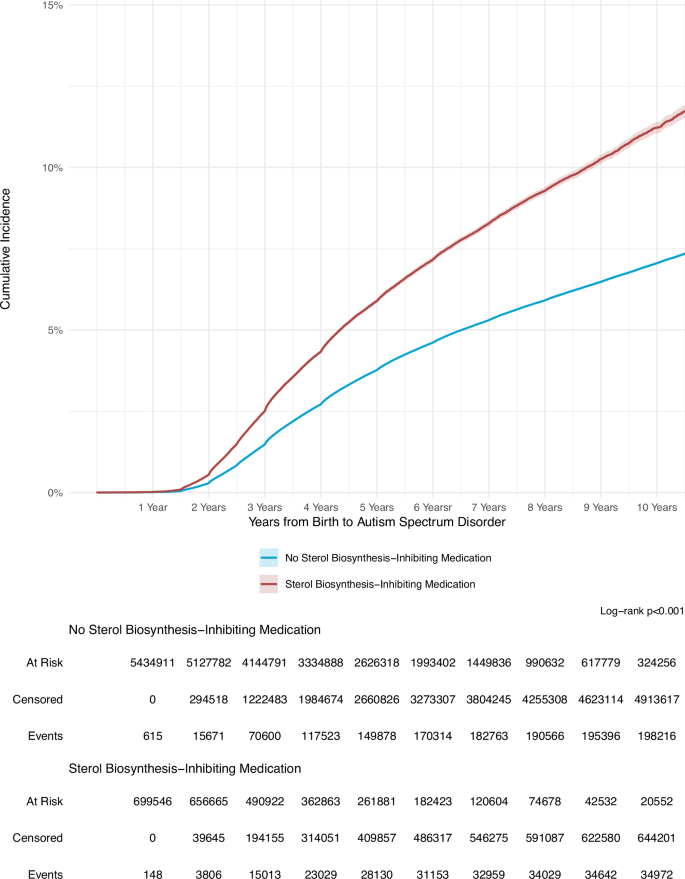
Study Links Antidepressants, Beta-blockers and Statins To Increased Autism Risk

An analysis of 6.14 million maternal-child health records  has linked prescription medications...

Pilot Study: Fibromyalgia Fatigue Improved By TENS Therapy

Fibromyalgia is the term for a poorly-understood condition where people experience pain and fatigue...

User picture.
News StaffRSS Feed of this column.

News Releases From All Over The World, Right To You... Read More »

Blogroll

Fragile bones are usually an old person's affliction, but sometimes children are born with them. Now, a team of researchers led by UConn professor Ernesto Canalis has shown in mice that a specific gene can cause the disease, called Hajdu-Cheney syndrome. Overabundant bone-absorbing cells may be causing the disorder's characteristic bone loss, and the researchers hope to find a potential treatment.

PHILADELPHIA (January 14, 2016) - A new study from the Monell Center, the U.S. Department of Agriculture (USDA), and collaborating institutions reports a uniquely identifiable odor signature from mouse models of Alzheimer's disease. The odor signature appears in urine before significant development of Alzheimer-related brain pathology, suggesting that it may be possible to develop a non-invasive tool for early diagnosis of Alzheimer's disease.

A study was published last week on the DNA of Helicobacter pylori, the pathogen extracted from the stomach of Ötzi, the ice mummy who has provided valuable information on the life of Homo Sapiens. New research at the European Academy of Bolzano/Bozen (EURAC) further clarifies the genetic history of man who lived in the Eastern Alps over 5,300 years ago. In 2012 a complete analysis of the Y chromosome (transmitted from fathers to their sons) showed that Ötzi's paternal genetic line is still present in modern-day populations. In contrast, studies of mitochondrial DNA (transmitted solely via the mother to her offspring) left many questions still open.

Could alcohol abstinence campaigns like Dry January may do more harm than good?

The Dry January campaign estimates that last year over 2 million people cut down their drinking for January, but popular doesn't necessarily mean effective, and the claims lack rigorous evaluation. Like 'don't buy gas on Tuesday', it isn't really changing anything if people engage in the same behavior a little later.

While lithium-ion batteries have transformed our everyday lives, researchers are currently trying to find new chemistries that could offer even better energy possibilities. One of these chemistries, lithium-air, could promise greater energy density but has certain drawbacks as well.

Now, thanks to research at the U.S. Department of Energy's (DOE) Argonne National Laboratory, one of those drawbacks may have been overcome.

All previous work on lithium-air batteries showed the same phenomenon: the formation of lithium peroxide (Li2O2), a solid precipitate that clogged the pores of the electrode.

Farm to fork, locally grown and all of the other progressive terms for agriculture self-identification leave out one important fact: People would starve.

Seattle, for example could feed 4 percent of its population with P-Patches and backyard gardens teeming with kale. Organic agriculture for the masses is a popular myth but urban agriculture is a plain old pipe dream.

And 4 percent may be the high number, it could be more like 1 percent, according to a new University of Washington study - that's even if all viable backyard and public green spaces were converted to growing produce.


