








What makes Americans afraid is the topic of the first comprehensive nationwide study by Chapman University. According to the Chapman poll, the number one fear in America today is not Muslim terrorists or Russian imperialism or Ebola, it's...walking alone at night.

The Chapman Survey on American Fears included 1,500 nationally representative participants. The top five things Americans fear the most are:


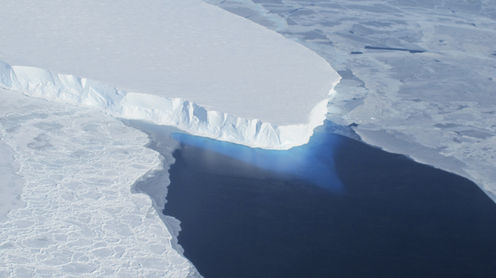
How much more glacial melting can the planet stand? NASA

By Micheal Mann, Pennsylvania State University and Lawrence Torcello, Rochester Institute of Technology


Getting high on own supply. Dance by Shutterstock

By Adam Winstock, King's College London

Despite the language we use about drugs, many people don’t see themselves as “drug users” but as rational adults who aren’t on a mission to seek moral disintegration and cause themselves harm.

People who use drugs are just people who happen to use drugs (they might also do yoga, go the cinema, get degrees, litter the streets or be into base-jumping) – normal people who care about their loved ones, their health and well-being and want to make the most of that wonderful thing that we all share: life.


Not enough tobacco company money is going into public health campaigns. Credit: REUTERS/Daniel Munoz

By Nicholas Freudenberg, City University of New York

The #20 Million Memorial created earlier this month by the United States Centers for Disease Control, is an online tribute to honor the 20 million spouses, mothers, fathers, children, sisters, brothers, and friends who have died of tobacco-related diseases since 1964.

Fewer cords, smaller antennas and quicker video is the goal of a microwave circuit that has set a new world record for data transmission. 

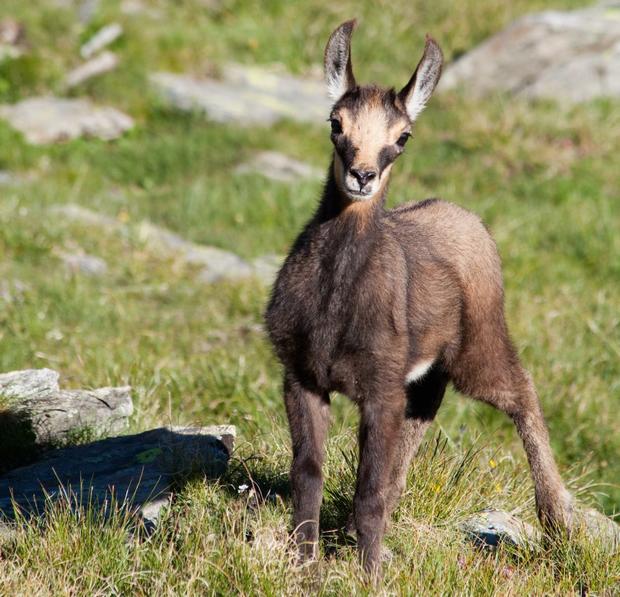
Alpine goats appear to be shrinking in size, according to scholars at Durham University, and that is due to global warming over the past 30 years, they say.  

Young Chamois now weigh about 25 percent less than animals of the same age in the 1980s, they found, and note that in recent years, decreases in body size have been identified in a variety of animal species and have frequently been linked by other scholars to changing climate. 

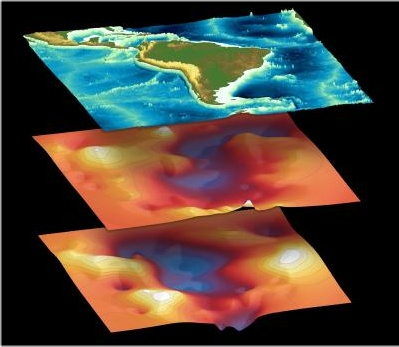
Since December 2004 there have been 18 quakes of 8.0 or greater on the moment magnitude (Mw) scale – a rate more than twice that seen from 1900 to mid-2004.

Some of that difference could be due to unprecedented advances in technological and scientific capacity to detect earthquakes. Like the distance of Babe Ruth's homeruns, anecdotes about past earthquakes have the mist of legend shrouding them, but modern earthquakes have a variety of ways they can be understood - and that helps recalibrate risk for future earthquakes.

Why were so many middle-aged adults hit especially hard by the H1N1 influenza virus during the 2013-2014 influenza season?

 Vaccines work by stimulating the immune system to produce antibody proteins against particles (called antigens) from an infectious agent, such as bacteria or a virus. The immune system saves the cells that produce effective antibodies, which then provide immunity against future attacks by the same or similar infectious agents. Seasonal influenza typically kills 36,000 Americans, alone, and nearly 500,000 individuals around the world each year. 

Sperm donation for fertility issues has been common for some time and ovum donation has become increasingly accepted by women as well.

That leads to sociological questions about selection; everyone says they will love their kids no matter what, but given a book to choose from, what traits in a donor do people consider most important, beauty, intelligence or health?

Some children are allergic to milk, so they drink milk substitutes such as soy or rice. And almond milk has become a well-marketed fad to due health claims.

But there may be negatives: though many of those products are fortified, children who drink them have lower levels of Vitamin D in their blood than those who drink cow's milk, according to a paper in the Canadian Medical Association Journal

