




Dolphins and seals have had eons to adapt to aquatic life, but they can still be taxed while pushing the boundaries, according to a paper in Nature Communications which found a surprisingly high frequency of heart arrhythmias in bottlenose dolphins and Weddell seals - at least during their deepest dives. 

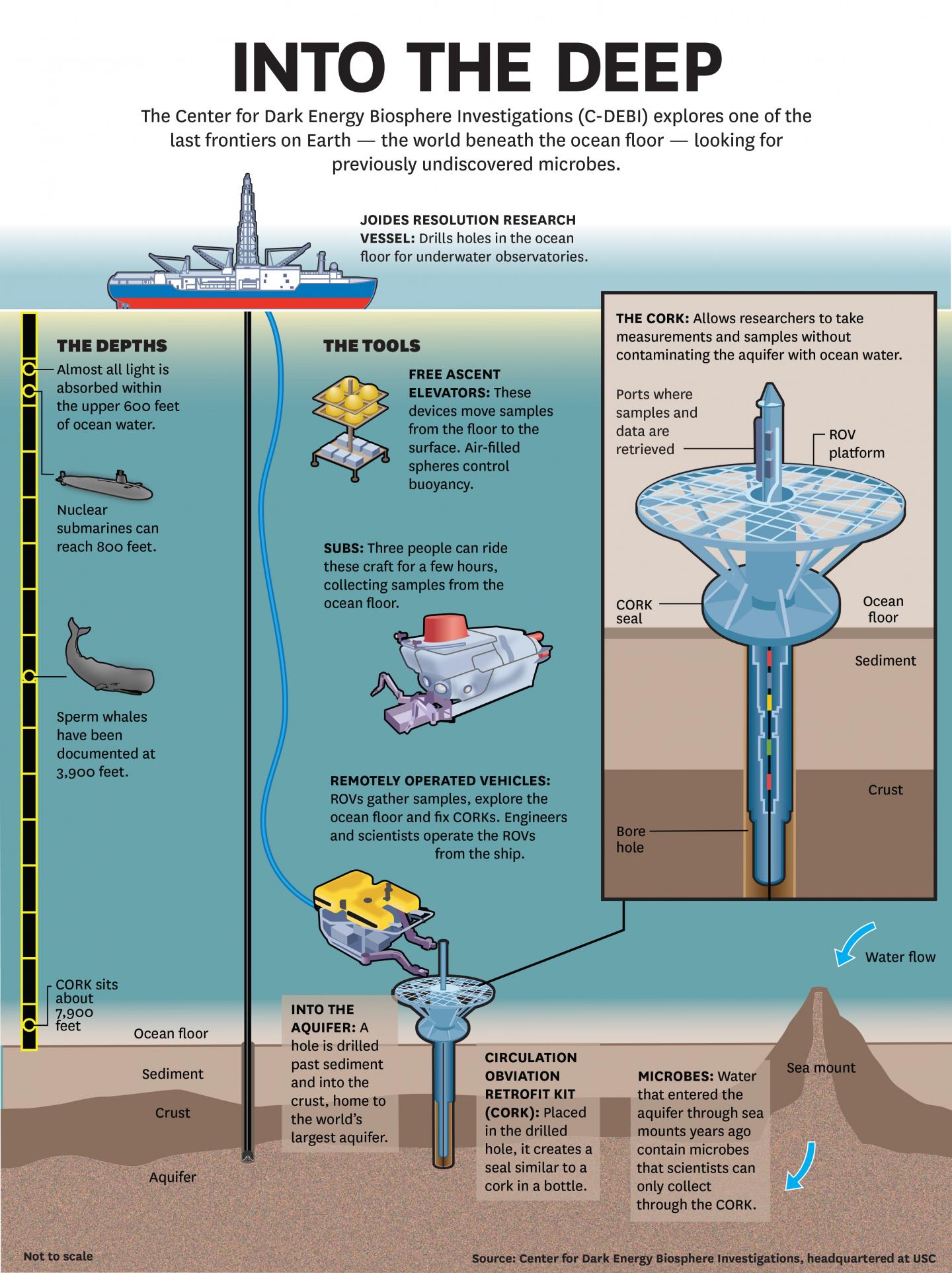
Two miles below the surface of the ocean, researchers have discovered new microbes that "breathe" sulfate. These microbes, which have yet to be classified and named, exist in massive undersea aquifers -- networks of channels in porous rock beneath the ocean where water continually churns.

About one-third of the Earth's biomass is thought to exist in this largely uncharted environment.

Sulfate is a compound of sulfur and oxygen that occurs naturally in seawater. It is used commercially in everything from car batteries to bath salts and can be aerosolized by the burning of fossil fuels, increasing the acidity of the atmosphere.

Evidence from some wrongful-conviction cases suggests that suspects can be questioned in ways that lead them to falsely believe in and confess to committing crimes they didn't actually commit.

The new work provides lab-based evidence for this phenomenon, showing that innocent adult participants can be convinced, over the course of a few hours, that they had perpetrated crimes as serious as assault with a weapon in their teenage years. The research in Psychological Science indicates that the participants came to internalize the stories they were told, providing rich and detailed descriptions of events that never actually took place.

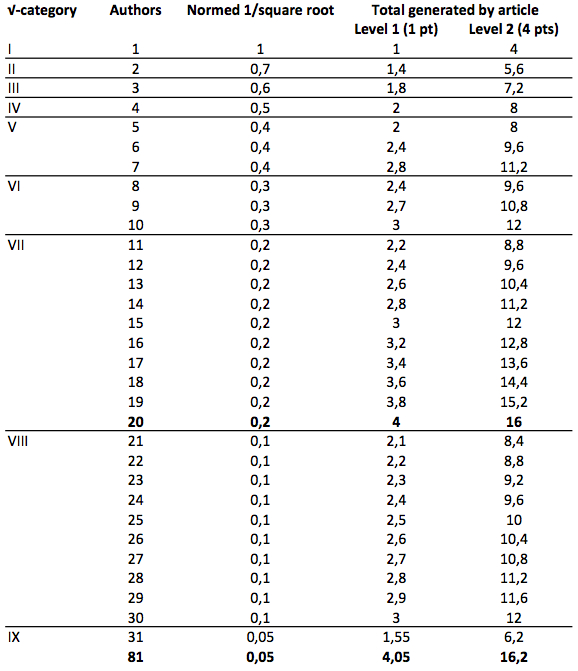
Funding for institutions of higher education in Norway is partially determined by how many publications their employees produce. While there are already six troubling problems with this system, one of them is about to get much, much worse.

A group of experts was commissioned by the Ministry of Education and Research to suggest improvements in the financing system. Their report includes one proposal that is not only mathematically garbled; it is also an incentive to corruption.


Scientists propose a new, potentially more accurate way, to measure the rate of sea level rise. Shutterstock

By Carling Hay, Harvard University

When you ask yourself what the biggest unanswered scientific questions are, “how did sea levels change over the past 100 years?” is unlikely to appear at the top of your list.

By Monica Grady, The Open University

Landing a spacecraft on a celestial body, whether it be the moon, Mars or a comet, is not easy. The European Space Agency found out the hard way in 2003 when its robot Beagle2, which was supposed to send back a signal after landing on Mars, didn’t do so.

But more than a decade after it went missing, the UK Space Agency has announced that the the elusive Beagle2 lander has been re-discovered.

In 1973, during a symposium to celebrate the 500th birthday of Copernicus, Brandon Carter, a post-doctoral researcher in astrophysics at the University of Cambridge, tweaked his audience by stating that humanity did indeed hold a special place in the Universe - the exact opposite of what scientists from Copernicus on have said.

Since then, it has gone in and out of fashion, and the Anthropic Principle, as it was called, was most recently embraced in some M-Theory flavors of string theory.
The 10 warmest years in the instrumental record, with the exception of 1998, have now occurred since 2000, which continues a long-term warming of the planet, according to an analysis of surface temperature measurements by NASA's Goddard Institute of Space Studies in New York.

In a separate analysis of the raw data, NOAA scientists also found 2014 to be the warmest on record. They conclude that 2014 ranks as Earth's warmest since 1880. Since then, Earth's average surface temperature has warmed by about 1.4 degrees Fahrenheit (0.8 degrees Celsius), a trend that is largely driven by the increase in carbon dioxide and other human emissions into the planet's atmosphere. The majority of that warming has occurred in the past three decades.
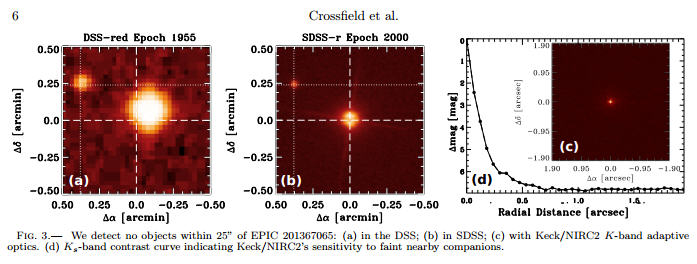
NASA's Kepler Space Telescope has been hobbled by the loss of critical guidance systems but can still find good stuff - most recently a star with three planets only slightly larger than Earth, one in the "Goldilocks" zone, a region where surface temperatures could be moderate enough for liquid water and therefore perhaps life as we know it, to exist.

EPIC 201367065, is a cool red M-dwarf star about half the size and mass of our own sun. It is 150 light years, making it among the top 10 nearest stars known to have transiting planets. The star's proximity means it's bright enough for astronomers to study the planets' atmospheres to determine whether they are like Earth's atmosphere and possibly conducive to life.

The sex ratio in your community may affect what you're looking for in a relationship. Shutterstock

By Ryan Schacht, University of Utah and Monique Borgerhoff Mulder, University of California, Davis


