









Epidemiologists have linked El Niño, a recurring pattern where every 2-7 years warm waters in the Equatorial Pacific change the weather, to short stature, also known as stunting,  which is usually due to chronic malnutrition.

The authors found that children born in coastal Peru during and after the 1997-98 El Niño, the last strong one, have a lower height-for-age than others born before the event. 

El Niño
has also been linked to epidemics of malaria, dengue fever, cholera and diarrhea, though the first recorded one was in 1525, so they have been happening a lot longer than that.. 

How can the weather stunt growth?  


Worry only if you have something to hide. Finchen

By Andrew Smith, The Open University

The computer-security firm Symantec says it may have found some of the most sophisticated malicious software ever made.

The cyber-espionage bug, called Regin, has been making attacks for many years without being caught.

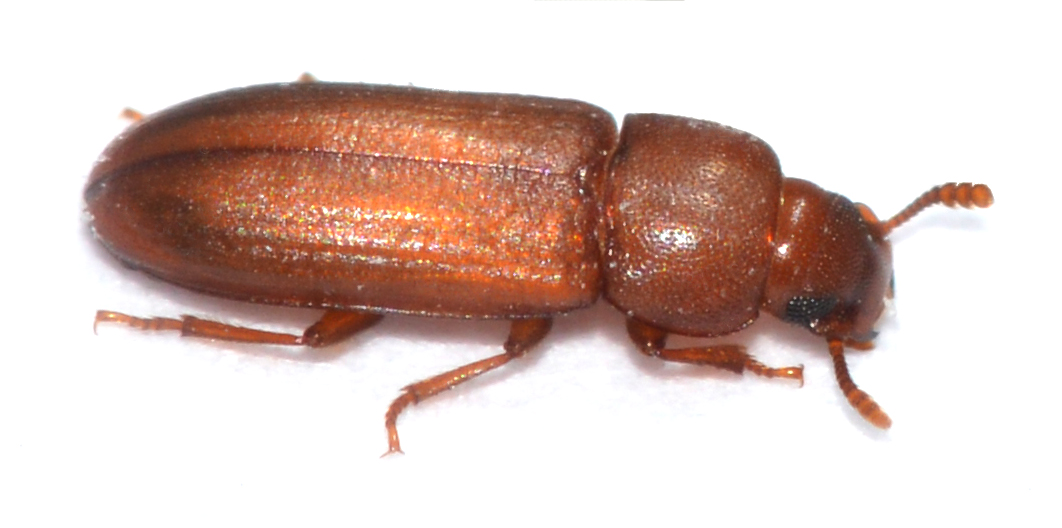
Insects are the most diverse group of animals on earth. They inhabit nearly all terrestrial habitats. One of the factors underlying this success is the ability of insect eggs to survive in adverse conditions.

For a long time the ability to survive these adverse conditions has been attributed to maternal investment in the form of a protective eggshell. However, my research in the red flour beetle (Tribolium castaneum) shows that contrary to common belief, insect eggs are far from helpless.


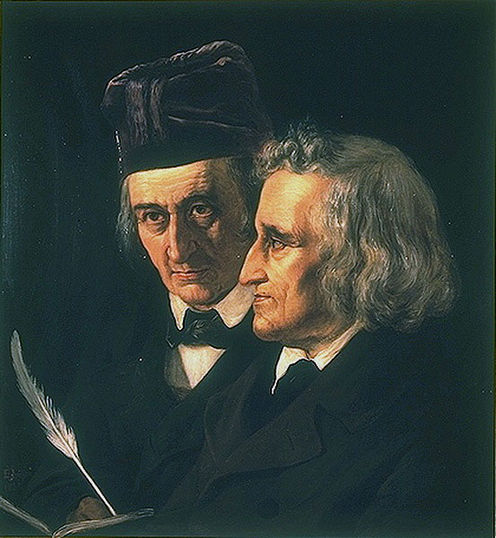
Jacob and Wilhelm were Grimm. Wikimedia Commons

By Marguerite Johnson, University of Newcastle

Fairy tales have a tumultuous and fragile history. They originated as tales told by “folk”. They were passed down over generations to while away long winter nights, to provide entertainment at special occasions and for simple enjoyment.

Inevitably, as more people became literate and scholars began to record fairy tales, they were published. And then, with a wave of a magic wand, they entered the canon of European literature.


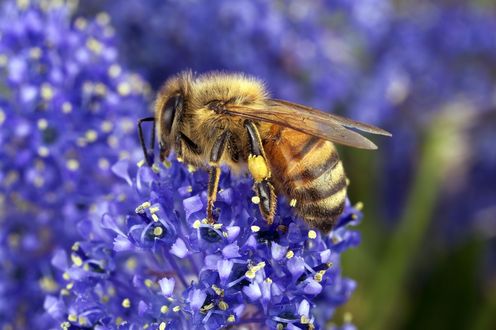
Honeybees pollinate a third of Australia's food crops. Losing them due to varroa might would cost the economy billions of dollars. David McClenaghan, Author provided

By Gary Fitt, CSIRO

A nationwide outbreak of foot and mouth disease; an invasion of a devastating wheat disease; our honeybees completely wiped out. These are just three possible disastrous scenarios facing Australia; they’re considered in the Australia’s Biosecurity Future report published today by CSIRO and its partners.

Take a spot that only gets 6 to 8 inches of rain per year, with erosion causing such blinding dust that there is zero visibility, and build a wheat farm.

Wait, why would you do that? Washington State University researchers do it in the Horse Heaven Hills of south-central Washington to understand summer fallow management practices that can mean efficient water and soil conservation and help farmers everywhere.

There has been concern about a lessening of social engagement, mostly created by older people who see young people behaving differently than they did (and do). Last decade it was noted that young people were
less likely to join clubs, had fewer close friends, and were less likely to perceive others as trustworthy.

So young people don't join the Masonic Lodge in their college years. Does that mean they are less social? 

No, there has been an increase in extraversion and self-esteem, according to a paper in Personality and Social Psychology Bulletin. In a review, the authors examined past studies that utilized the Revised UCLA loneliness scale (R-UCLA) to analyze changes in loneliness over time, and gender differences in loneliness.

Physicists have developed a new cooling technique for mechanical quantum systems by using an ultracold atomic gas, cooling a membrane down to less than 1 degree above absolute zero.

Ultracold atomic gases are among the coldest objects in existence. Laser beams can be used to trap atoms inside a vacuum chamber and slow down their motion to a crawl, reaching temperatures of less than 1 millionth of a degree above absolute zero - the temperature at which all motion stops.

At such low temperatures, atoms obey the laws of quantum physics: they move around like small wave packets and can be in a superposition of being in several places at once. These features are harnessed in technologies such as atomic clocks and other precision measurement devices.

Due to a loss of scientific relevance, which has led to scarcity of personnel
and thus decreasing government funding, Italian natural history museums are on the verge of collapse. 

A new paper in Zookeys proposes that the existing museums associate and collaborate to form a diffused structure, able to better manage their scientific collections and share resources and personnel. Basically, they need to be a little more corporate and start consolidating rather than relying on government to some day boost funding.

What will it take to convince skeptics of global warming that the phenomenon is real? Droughts, floods and heat waves will begin to change minds.


